Get Full Government Meeting Transcripts, Videos, & Alerts Forever!
Get email alerts on the Education Scholarships topic
No spam. Unsubscribe anytime.
Scholarship and grants budget reviewed; board director offers to deliver outcome data
Summary
Legislative analysts reviewed the Office of the State Board of Education Scholarships and Grants program; the executive director said staff will produce additional performance and program outcome data requested by lawmakers, including rural/underserved educator incentives.
The Joint Finance-Appropriations Committee reviewed the Office of the State Board of Education's Scholarships and Grants program, and board staff agreed to return with detailed performance measures and outcome data on specific programs, including the rural and underserved educator incentive.
Kevin Campbell, budget and policy analyst with the Legislative Services Office, presented the budget for Scholarships and Grants, which administers five scholarship and grant programs: the Bridging and Underserved Educator Incentive Program, the Opportunity Scholarship, the Armed Forces and Public Safety Officer Scholarship, GEAR UP (Gaining Early Awareness and Readiness for Undergraduate Programs), and the Idaho Work Study Program. The program is small in staff (about 1.35 FTP) and primarily distributes funds (99.5% of spending is trustee and benefit payments).
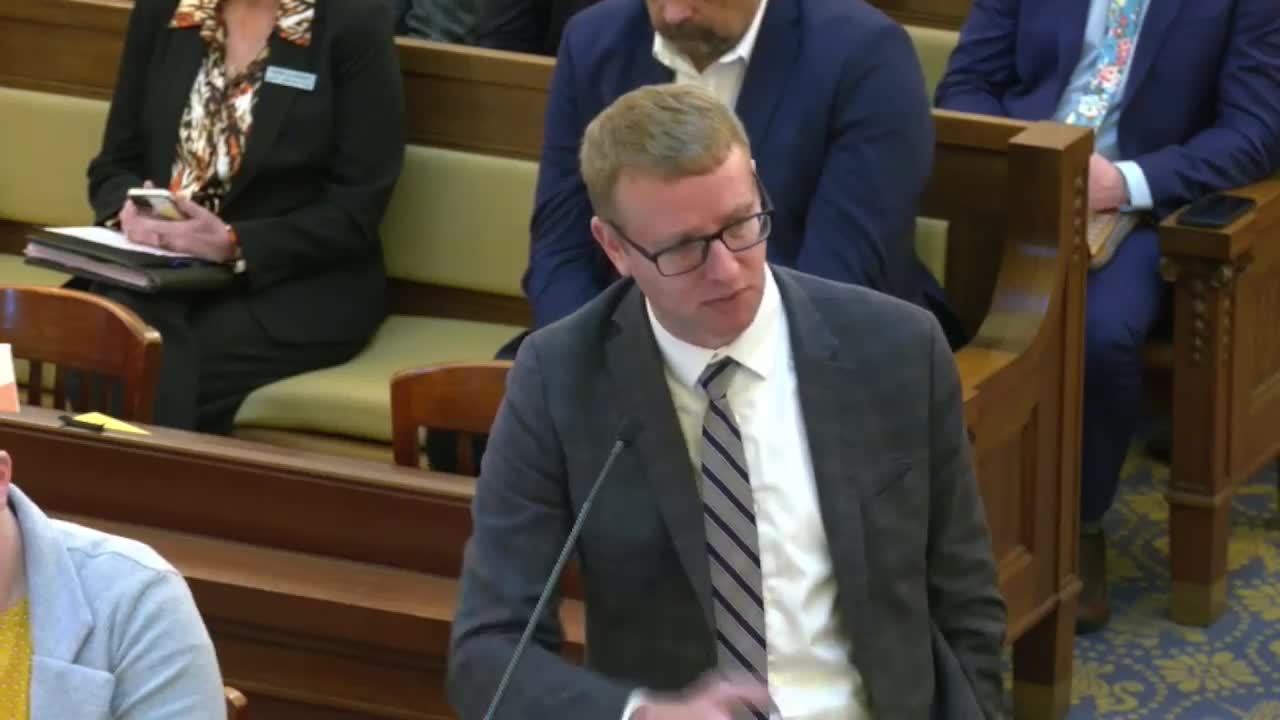
Josh Whitworth, executive director of the State Board of Education, told the committee the board borrows operational staff capacity from other board budgets, which explains the program's low personnel proportion. Lawmakers asked for outcome data. Representative Miller and cochair Horman requested information on program outcomes, retention and whether the rural and underserved educator incentive is meeting recruitment goals; Whitworth said the board would bring back district-level and cohort-level data, including the distinction between "rural" and the board's definition of "underserved."
Campbell noted timing variability in spending because scholarship award cycles do not always match the state fiscal year and that program spending can vary with applicant pools and federal grant receipts. The board requested $1,375,000 for the Bridging and Underserved Educator Incentive Program and asked for a software-engineer position to support public-facing scholarship databases; Whitworth said the program has a vacancy but that available funding may not be sufficient to cover a new permanent hire.
Lawmakers asked the board to return written data about cohort counts, retention, and district placement for incentive recipients. Whitworth said he would provide the requested performance information, and the board reiterated that many scholarship disbursements are routed through the board as a pass-through mechanism. No committee votes were taken during the presentation.