Get Full Government Meeting Transcripts, Videos, & Alerts Forever!
Get email alerts on the Higher Education Community Colleges topic
No spam. Unsubscribe anytime.
College of Southern Idaho seeks $475,700 enrollment adjustment as enrollment jumps 20%
Summary
College of Southern Idaho told the Joint Finance-Appropriations Committee it saw a 20% fall enrollment increase tied to Idaho Launch, added 3,800 students since fall 2021, and is requesting a $475,700 enrollment workload adjustment to hire instructors and reduce wait lists and class sizes.
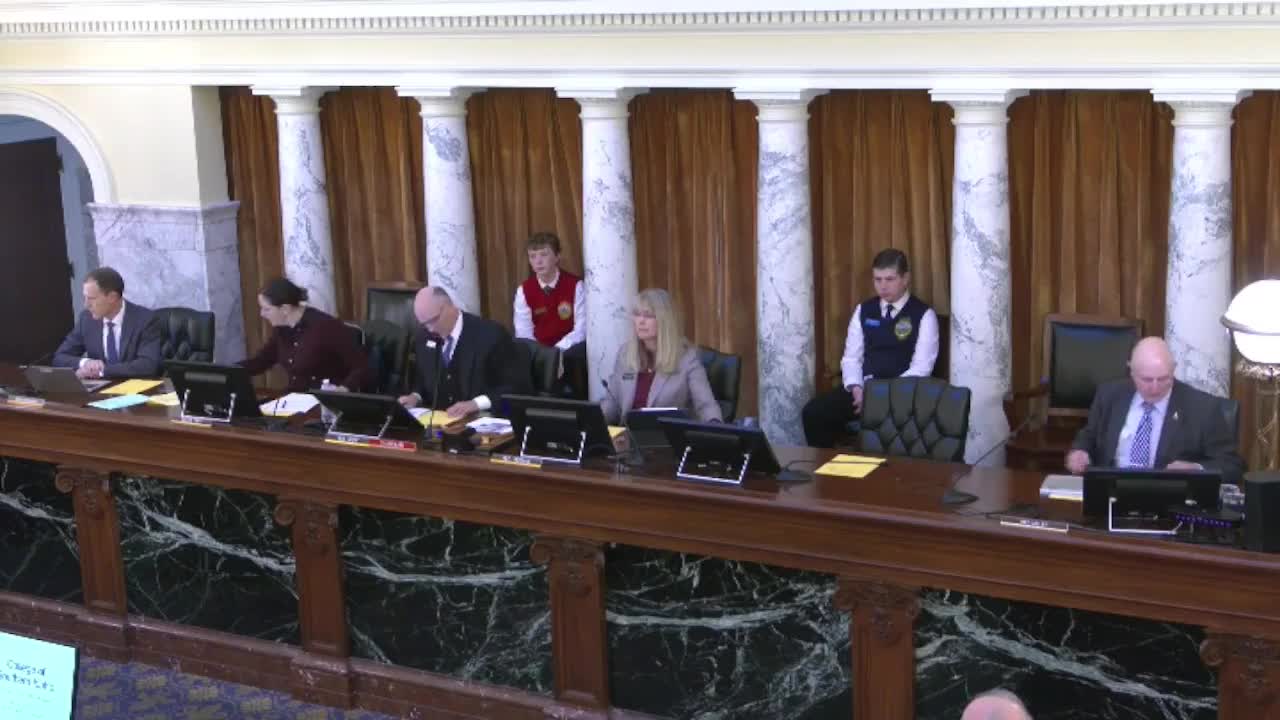
Kevin Campbell, a budget and policy analyst with the Legislative Services Office, opened the College of Southern Idaho (CSI) budget presentation to the Joint Finance-Appropriations Committee, noting the college’s base budget and FY2026 request.
CSI President Dr. L. Dean Fisher told the committee the college saw a 20% increase in fall 2024 enrollment, separate from dual-credit growth, and that CSI has added about 3,800 students since fall 2021. “We experienced a 20% growth in my prepared remarks,” Fisher said. He recommended support for the governor’s proposed capacity-building funds and for one-time infrastructure money to create additional learning spaces for trade and CTE instruction.
The request before JFAC includes a $475,700 enrollment workload adjustment (EWA) for FY2026 that CSI intends to use to hire five additional general-education instructors to reduce class sizes and shorten wait lists. Fisher estimated each new faculty member could serve about 150 students a year and said five instructors would allow CSI to serve roughly 750 additional students annually.
Why it matters: committee members heard CSI’s growth is largely immediate and demand-driven rather than a recruitment push. Fisher and the analyst described constrained instructional capacity—especially in CTE programs requiring specialized equipment and clinical placements—and urged one-time capital support plus ongoing funds for faculty and staff pay.
Key budget and program details: Campbell told members CSI typically spends 100% of its state appropriation; the single trustee appropriation for 2024 was $18,600,000. Over a five‑year span CSI’s base budget averaged 6.4% annual growth, with FY2023 an outlier at 12%. Enhancements and compensation equalization (CEC) were listed in prior years’ budgets. Fisher said CSI’s FY2026 request is focused on the EWA of $475,700.
Capacity examples and workforce needs: Fisher gave program-level examples to illustrate capacity constraints. The radiologic technology program enrolls cohorts of 15 but reportedly had a waiting list of 84 students, constrained by clinical placement availability and faculty; nursing programs also face bottlenecks in clinical supervision and faculty. Welding cohorts are operating from early morning until late evening across multiple sites (Twin Falls, Burley, Jerome) to meet demand. Fisher said CSI’s Bridge to Success program expanded from serving 40 students to about 500 and that CSI reduced textbook costs roughly 50% by adopting open educational resources.
Compensation and retention: Fisher said community-college pay lags regional peer institutions by about 12% and that closing gaps with K–12 faculty and regional community colleges would require roughly $400,000 (as presented at the hearing). He highlighted a fall-to-spring retention rate of about 85%, above the national average he cited as 60%.
Discussion highlights: committee members asked about how Idaho Launch affected enrollment and whether funds requested would cover existing waiting lists or be used to grow programs. Fisher said many of the students are already present and that capacity funding is needed now to serve them; he emphasized that some CTE expansions will also require capital and time to build facilities and hire accredited faculty.
What the college asked from JFAC: support for the governor’s proposed CTE and capacity-building enhancements, one-time infrastructure funding for learning spaces (Fisher referenced a $15,000,000 one-time infrastructure ask), continued work on compensation parity for community-college faculty and staff, and consideration of EWA movements in light of sudden enrollment increases.
Ending note: Fisher closed by noting CSI’s 60th anniversary this fall and reiterated the college’s request for targeted capacity and compensation support to sustain the recent enrollment gains and meet community workforce needs.