Get Full Government Meeting Transcripts, Videos, & Alerts Forever!
Get email alerts on the Water Resources Funding And Recharge topic
No spam. Unsubscribe anytime.
Idaho Water Resources Board and Department of Water Resources outline funding, recharge goals and staffing needs
Summary
The Department of Water Resources and Idaho Water Resource Board briefed the Legislative Budget Committee on agency spending, projects funded with ARPA and other sources, requests for five additional water administration positions, and plans to expand recharge capacity on the Eastern Snake Plain Aquifer.
The Idaho Department of Water Resources and the Idaho Water Resource Board told the Legislative Budget Committee in March that they have committed most existing water-management funds to projects and are asking for ongoing money and additional staff to manage growing workload and recharge efforts.
The Department of Water Resources, Director Matt Weaver said, has seen a recent increase in appropriations driven largely by federal ARPA (American Rescue Plan Act) state fiscal recovery funds and now faces both project delivery and administration demands. "We know of $213,000,000 worth of projects that we've identified that currently don't have any funding," Weaver said, adding that implementing the Eastern Snake Plain settlement and statewide recharge projects will require sustained resources.
Why it matters: lawmakers pressed agency leaders on whether available cash is already committed, which projects are shovel-ready, and whether the agency has the staffing and long-term plans to convert appropriations into completed recharge and infrastructure projects. The answers will shape decisions on a governor-recommended $30 million ongoing transfer into the water management fund, additional FTEs, and whether the Legislature should approve one-time or ongoing funding.
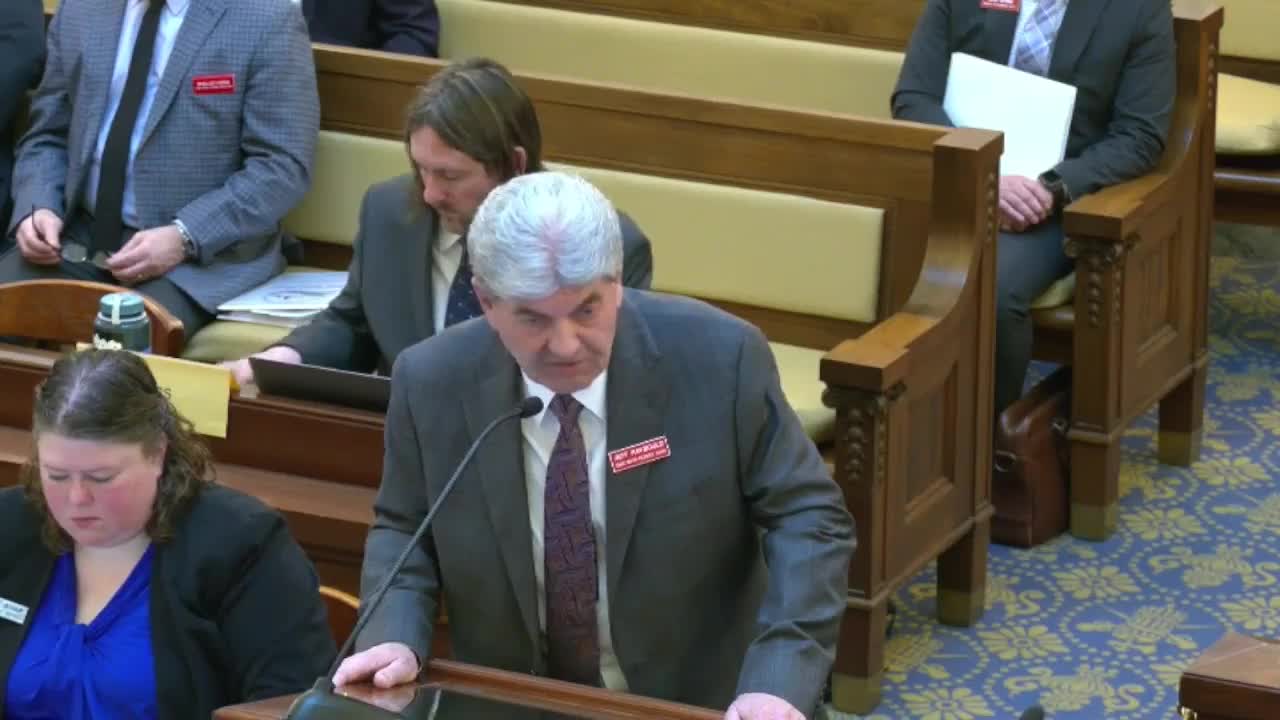
Agency finances and committed projects Jeff Raybould, chairman of the Idaho Water Resource Board, described where board-committed funds are directed and the mechanics of project funding. Raybould said the board has committed roughly $290 million of the water management account and that the uncommitted cash balance is about $29 million. "That total committed fund balance is $290,000,000 so that leaves us with an uncommitted fund balance of about $29,000,000," Raybould said. He listed projects and program areas receiving money: Mountain Home Air Force Base water supply work, Anderson Ranch dam and related work, pipelines such as the Dworshak pipeline for hatcheries, Bear Lake carryover storage, Priest Lake water management, loans and grants to canal conversion and groundwater-to-surface-water projects, and regional sustainability grants and technical assistance.
Raybould described different funding approaches: grants (for example, an aging infrastructure grant that can cover up to one-third of a project cost capped at $2 million), loans with water rights as collateral, and direct board funding for projects where state benefits justify the contribution (for example federal Win Act costs for Anderson Ranch-related storage). He said roughly $13 million of a $20 million groundwater-to-surface-water conversion pool had been directed so far.
ARPA and base appropriations Janet Jessup, budget and policy analyst with Legislative Services, explained how recent ARPA funding has shifted the agency's budget profile. The 2023 appropriations included $50 million one-time and another $50 million made ongoing from ARPA state fiscal recovery funds; those inflows account for large increases in trustee and benefit payments and operating expenditures in FY23–FY25. Jessup emphasized that some “ending balances” shown in fund summaries reflect committed but not yet spent amounts and directed members to detailed PDFs in the committee SharePoint for project-level commitments and cash-flow timing.
Staffing and administrative capacity Weaver asked the committee for five FTEs to create a new Water Administration Bureau (bifurcating functions currently in the Water Compliance Bureau) and a bureau chief and records specialist among the requested positions. He said the department had grown from roughly 2.5 FTEs dedicated to water administration in 2007 to about 11 before the request, and the five new positions would pair with those existing staff to meet demand statewide for creating and supporting water districts and other administrative duties. "Currently right now we are not meeting the demand to create and support water districts across the state," Weaver said, noting particular needs in basins tributary to the Eastern Snake Plain and in the Clearwater tributaries.
Recharge targets and Eastern Snake Plain Aquifer (ESPA) Committee members pressed Weaver and Raybould on recharge plans and targets for the Eastern Snake Plain Aquifer (ESPA). Weaver and Raybould described a multi-pronged approach combining state-sponsored recharge, private recharge, and reductions in pumping. Weaver said state-sponsored recharge averaged about 268,000 acre-feet per year from 2016–2024, private recharge averaged about 116,000 acre-feet per year and private pumping reductions averaged about 212,000 acre-feet per year — an aggregate they said represents roughly 600,000 acre-feet of aquifer-management activity over that period. The board and department described a proposal to increase the average annual recharge goal in parts of ESPA from 250,000 to 350,000 acre-feet, and Raybould said the Upper Valley needs up to an additional 1,000 cubic feet per second of instantaneous recharge capacity to meet targets.
Project delivery timing and grants vs. loans Committee members noted that substantial sums remain unspent while engineering, project design and interagency coordination proceed. Raybould said the board generally disburses funds as projects progress, which can take years for large infrastructure items that require engineering and coordination with federal partners (for example, Bureau of Reclamation projects). He explained the board evaluates whether to provide loans or grants by looking at project viability, state benefit, and applicant ability to pay: some projects have large state benefit shares and may receive higher percentage support, others receive loans with water rights used as collateral.
Outstanding loans and account balances Raybould reported rough loan balances: about $23 million in loans in the revolving development account and roughly $20 million out in loans from the water management account. Jessup and Weaver pointed the committee to SharePoint fund sheets and the department’s interactive GIS map for project locations and committed amounts.
Committee direction and next steps Committee members asked for follow-up materials. Jessup agreed to provide the statewide project list referenced by Weaver and Raybould showing projects that remain unfunded or only partially funded. No formal committee votes were recorded during the hearing on funding requests; members asked for additional detail on project readiness, funding timing, and whether ongoing or one-time appropriations are more appropriate for the $30 million governor recommendation.
Taper: the committee recessed after the Department of Water Resources presentation and moved to the Department of Environmental Quality agenda item.