Get Full Government Meeting Transcripts, Videos, & Alerts Forever!
Get email alerts on the Public Defense Appellate Budget topic
No spam. Unsubscribe anytime.
Analyst outlines staffing, overflow-contract costs for State Appellate Public Defender
Summary
Budget analyst Christopher Lahoset told the Joint Finance-Appropriations Committee the State Appellate Public Defender seeks a deputy attorney position and reappropriation authority to address increased caseload and costly contracted overflow cases.
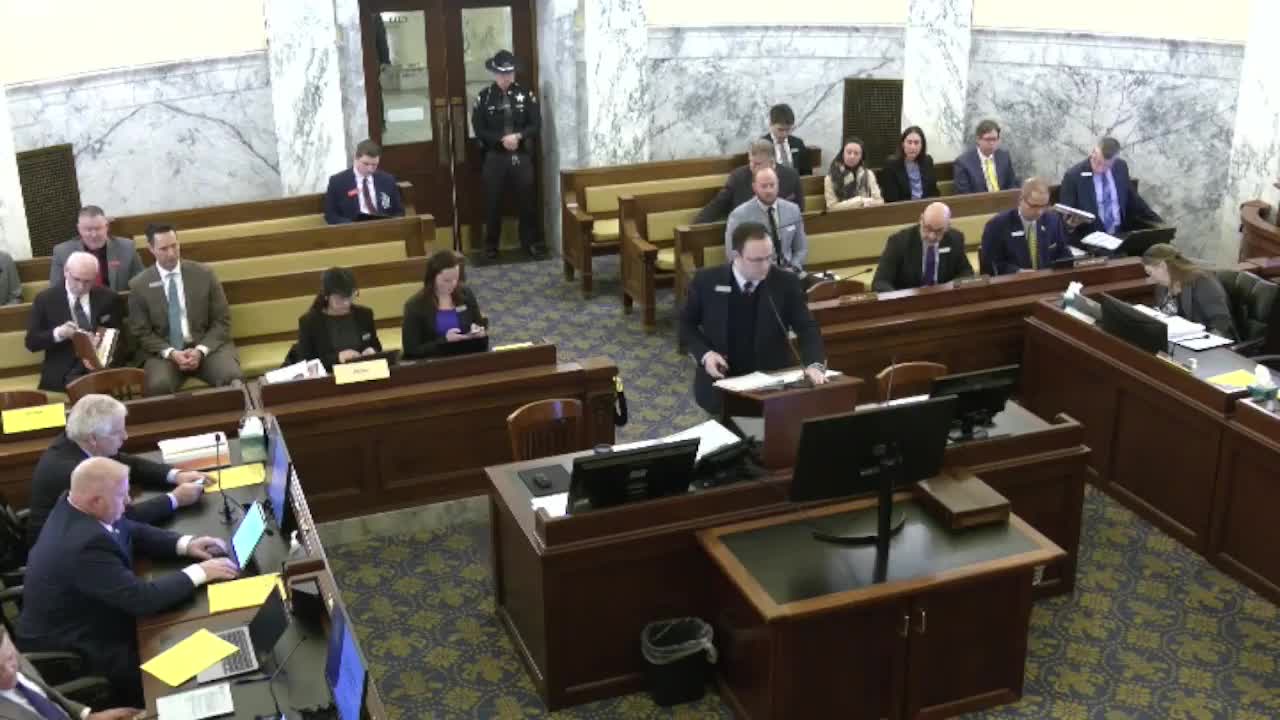
Christopher Lahoset, a budget and policy analyst with the Legislative Services Office, told the Joint Finance‑Appropriations Committee that the State Appellate Public Defender office is asking for an additional deputy attorney position and reappropriation authority to cover case overflow.
Lahoset said the office is responsible for appeals and related hearings and cited Idaho Code section 19-5905 as the statutory authority that defines the office’s role. He said the office currently has 26 authorized full‑time positions and, as of Dec. 15, had no vacancies. The analyst told the committee the agency’s five‑year average personnel appropriation is “just under $2,800,000” and that roughly 95% of that appropriation has been used for personnel costs in recent years.
The analyst reviewed a multi‑year funding history and noted a one‑time legislative supplemental of $1,309,400 in 2023 to address a sudden influx of cases; those funds were reappropriated but are not part of the agency’s base budget. Lahoset said about $1,259,000 remained available from that one‑time authorization as of the presentation and that amount could decline as cases are processed.
Agency representatives said they are currently fully staffed but are seeking an additional deputy state appellate public defender. The office estimates overflow cases handled by outside counsel cost roughly $254,000 per year; hiring an in‑state attorney at a reported salary of about $140,000 would, the agency argues, be less expensive over time.
Eric Leighton, who identified himself as director of the Appellate Public Defender, said the appellate unit assigns cases across its attorneys based on experience and that adding a thirteenth appellate attorney would distribute a large caseload currently estimated near 650 cases for the fiscal year. Leighton and staff told the committee the office routinely must contract for attorneys when conflicts of interest arise and has contracted for overflow cases when in‑house capacity is exceeded. He said contracting is costlier and that contracted matters sometimes span multiple fiscal years, complicating budgeting and use of salary savings to cover outside counsel.
Committee members asked about turnover, the effect of the creation of the State Public Defender on staffing, and how the requested deputy position would change assignments. Leighton said turnover followed organizational changes and competition in the labor market, but that the office was fully staffed at the moment. He confirmed the requested position would absorb a share of non‑capital felony, misdemeanor and juvenile appeals and allow the office to reduce reliance on contracted overflow work.
The analyst concluded the presentation by reiterating the agency’s request for the deputy position and the reappropriation authority for remaining one‑time funds, and said he would stand for questions.