Get Full Government Meeting Transcripts, Videos, & Alerts Forever!
Get email alerts on the Behavioral Health Plan topic
No spam. Unsubscribe anytime.
Lawmakers hear agency explain delays, costs linked to Idaho Behavioral Health Plan and 988 rollout
Summary
Department of Health and Welfare officials told the Joint Finance-Appropriations Committee that legal challenges, contract size and budgeting mismatches delayed the Idaho Behavioral Health Plan rollout and that the department is seeking federal and transfer authority to use available grant funds and manage unforeseen costs.
The Joint Finance-Appropriations Committee heard Friday that the Idaho Behavioral Health Plan (IBHP) experienced significant implementation delays and legal challenges, and that the Department of Health and Welfare has requested supplemental federal authority and transfer exemptions to access grant funds and cover related costs.
Alex Adams, director of the Department of Health and Welfare, told the committee the IBHP contract was “the largest contract in the history of the state,” and that legal challenges delayed award and implementation. “When things get **** ** in court it delays the ability to implement,” Adams said, adding that once the legal issues were resolved the department prioritized doing the work correctly rather than quickly.
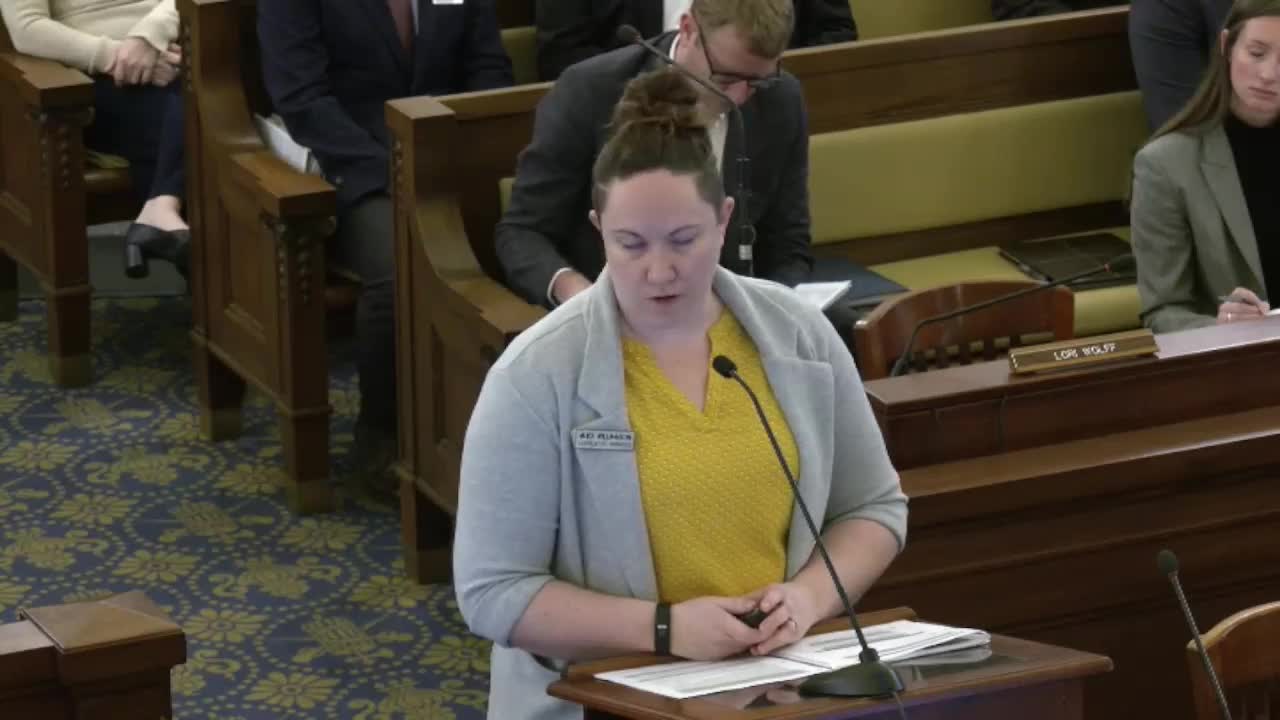
The department and Legislative Services Office analysts described two related budget requests: a one-time federal supplemental of $6,700,000 to allow the agency to access federal grants tied to the IBHP’s delayed “go live,” and an ongoing federal operating increase of $261,400 to cover grant-administered activities. Alex Williamson, budget and policy analyst with the Legislative Services Office, said those federal grants were issued to Idaho when the plan first went live in July 2024 but that the original appropriation year had lapsed, requiring new legislative authority to spend the funds.
Why it matters: committee members pressed the department about how delays and contracting choices affected costs and service rollout. Senator Cook asked why the RFP and award took so long; Adams said the contract size and subsequent court challenges lengthened the timeline. Senator Wintrow and others asked about service impacts and options for the 988 crisis line, which is administered through Magellan under contract with the state. The director said the department is “agnostic” about which vendor ultimately provides services as long as Magellan’s contractor meets contract requirements and service standards.
The department also requested an exemption to Idaho Code section 67-3511 (the 10% program transfer limitation) to permit wider program transfers in fiscal 2025 and in 2026. Williamson said the division of mental health is asking for transfer exemptions “to be allowed to transfer department-wide resources into adult mental health and children’s mental health, for any unforeseen expenditures in the current fiscal year.” Adams framed the request as a tool to manage entitlement-like pressures and to avoid temporary program suspensions: “When the budget is set, we’ll live within that… earlier this year we did have to temporarily suspend some of the services that are available to children’s mental health,” he said, linking that suspension to limits on the department’s ability to move funds across object classes.
Committee members asked whether the department had taken steps to avoid future delays and whether vendor choices reflect state procurement goals. Representative Tanner raised concerns about vendor values and corporate policies—specifically citing Janus—asking whether alternative vendors such as Magellan could provide the same services. Adams replied that Magellan contracts with the vendor that ultimately provides 988 services and that the department would discuss capabilities with Magellan.
The department characterized the IBHP-related budget requests as “gap-filler” funding: services covered by Medicaid remain the primary payer, while these appropriations cover non-Medicaid services (for example, respite care) and services for non-Medicaid-eligible people. Adams told the committee the IBHP budget had been “off by a factor of about 60%,” a figure he said would have implications for the Medicaid budget discussions scheduled for March.
Looking ahead, the committee asked the Department of Health and Welfare to provide additional detail on contractor arrangements for 988, the status of the federal grants tied to the IBHP go-live, and how the requested transfer exemption would be used should it be approved. No formal committee action was recorded during the hearing.
The department said it will follow up to provide more detailed information on Magellan’s role, contractor capabilities, and the specific federal grant balances referenced in its requests.