Get Full Government Meeting Transcripts, Videos, & Alerts Forever!
Get email alerts on the Agricultural Research Extension topic
No spam. Unsubscribe anytime.
University of Idaho research and extension brief JFAC; dean announces retirement, stresses rural outreach and infrastructure
Summary
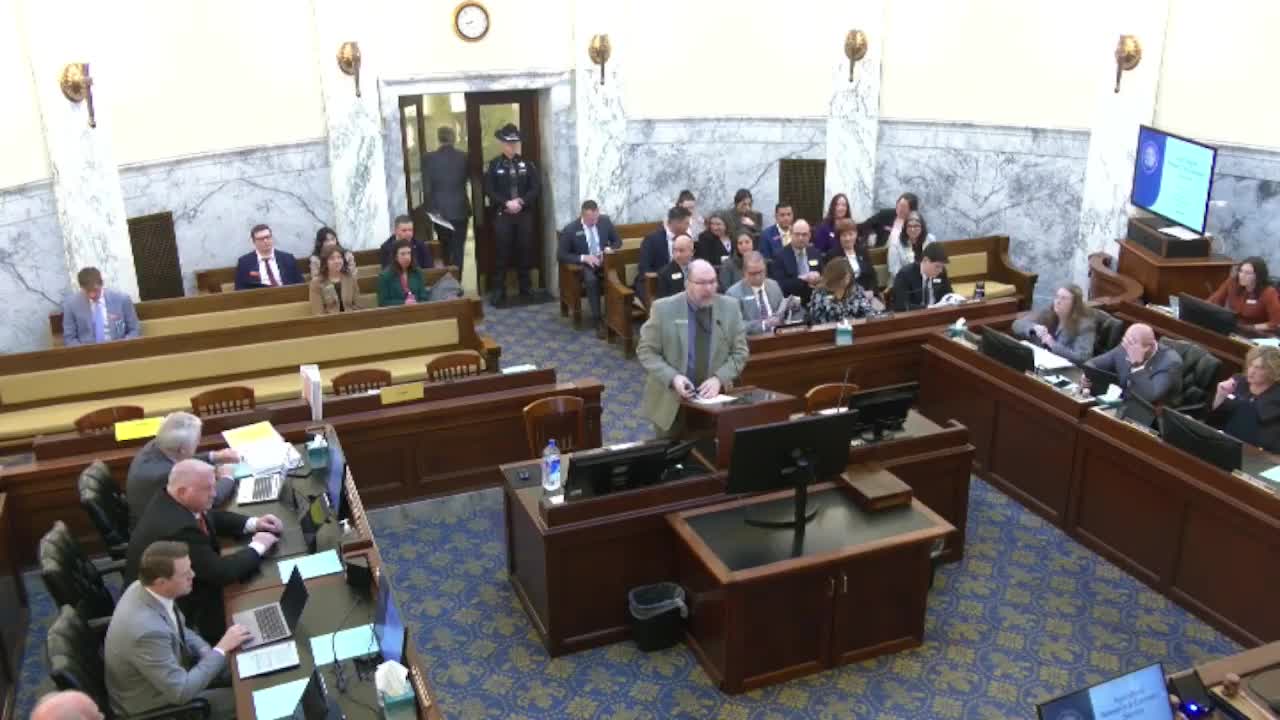
The Joint Finance‑Appropriations Committee received an overview Feb. 10 of the University of Idaho’s Agricultural Research and Extension Service and the College of Agricultural and Life Sciences, with the college’s dean announcing his planned retirement this summer and leaders seeking continued support for faculty and facility needs.
The Joint Finance‑Appropriations Committee received an overview Feb. 10 of the University of Idaho’s Agricultural Research and Extension Service and the College of Agricultural and Life Sciences, with the college’s dean announcing his planned retirement this summer and leaders seeking continued support for faculty and facility needs.
Kevin Campbell of the Legislative Services Office summarized the service’s structure, funding and recent appropriations. Dean Michael Perella, who said Feb. 10 will be his final year and that he plans to retire in June, and several college leaders described research acreage, extension presence and recent capital improvements.
Scope and recent funding
Campbell said the Idaho Agricultural Experiment Station has 10 research and extension centers and access to more than 14,000 acres for research. Extension has a presence in 42 of Idaho’s 44 counties and three recognized tribal communities. The service’s FTP count was reported at about 341.33.
Recent appropriations and requests highlighted by Campbell and Perella included funding for new faculty positions in animal and plant sciences, maintenance funding for the Idaho Center for Agriculture, Food and the Environment in Parma, and a FY2026 request for $157,900 ongoing for a viticulture and small fruits research faculty position and $250,100 for building maintenance costs.
Perella emphasized the college’s research and extension roles beyond crop yields, noting nutrition and human health as growing priorities. “You are what you eat,” Perella said while answering a question about focusing on nutritional value rather than only production. He described investments in lab infrastructure — including the new Idaho Center for Plant and Soil Health at Parma — and the college’s work on soil health, irrigation efficiency and breeding programs.
Extension services, ARPA funds and a pending federal grant
Committee members asked whether adult computer literacy funded with ARPA money should continue as an ongoing state cost. Campbell and Perella said ARPA and other federal funds helped start digital literacy and broadband‑related work tied to rural outreach; the college is seeking competitive federal grants as a follow‑on.
Perella said the college applied for a Federal Communications Commission grant; he said the proposal would bring “$13,000,000” to projects engaging two‑year and four‑year institutions and rural communities to address the digital divide. The college also reported that extension outreach produced more than 450,000 face‑to‑face contacts with Idahoans and engaged over 75,000 youth through 4‑H programming in the prior year.
Committee concerns: sustainability and program tracking
Senators and representatives raised concerns about programs initiated with one‑time federal funds becoming ongoing state obligations after ARPA money expires. Committee leaders said staff will inventory where ARPA and similar funds created new programs that might require state funding going forward and will assess duplication across agencies.
Perella urged lawmakers that state investments leverage additional external funding and that continued base support helps the college compete for national grants: “While grants help fund our programs, your investment provides critical support for our people and our places,” he said.
Closing and transition
Perella thanked the legislature for multi‑year investments in research infrastructure and faculty recruitment; he said those investments had helped the college rise in national rankings for agricultural sciences. He also noted a decline in turnover after a recent change in employee compensation but said recruiting and retaining faculty statewide remains a priority.
There were no formal committee votes during the presentation. Committee staff and college leaders agreed to provide follow‑up information on federal grants, ARPA‑funded activities, and program outcomes and evaluations.
Why this matters
The University of Idaho’s research and extension network supports agricultural production, rural economic development and community services statewide. Funding and staffing decisions affect research capacity for crops, livestock, soil health and rural outreach activities, including computer literacy and workforce development programs.