Get Full Government Meeting Transcripts, Videos, & Alerts Forever!
Get email alerts on the Medicaid Budget topic
No spam. Unsubscribe anytime.
Idaho lawmakers review Medicaid budget as costs, hospital assessment and contract changes drive large supplemental requests
Summary
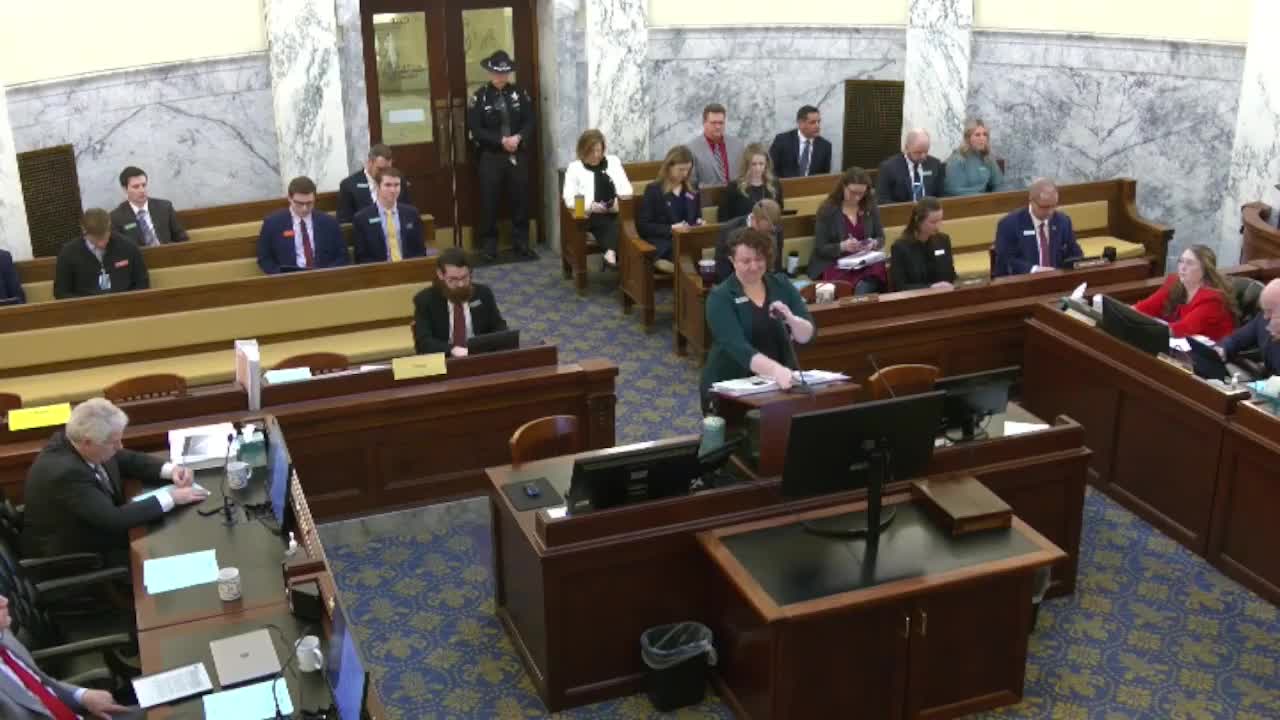
Alex Williamson, budget and policy analyst with Legislative Services, told the Joint Finance-Appropriations Committee on Feb. 26 that the Division of Medicaid’s budget has grown substantially and that lawmakers face a series of supplementals and ongoing enhancements to balance federal requirements, contract transitions and utilization growth.
Alex Williamson, budget and policy analyst with Legislative Services, told the Joint Finance-Appropriations Committee on Feb. 26 that the Division of Medicaid’s budget has grown substantially and that lawmakers face a series of supplementals and ongoing enhancements to balance federal requirements, contract transitions and utilization growth.
The most urgent items presented to the committee include one-time and ongoing requests tied to the state’s Idaho Behavioral Health Plan transition, an ongoing hospital assessment adjustment and a population forecast adjustment. “This will probably feel like information overload,” Williamson said at the start of her presentation.
Why it matters: Medicaid accounted for the vast majority of the division’s fiscal-year 2024 spending and continues to grow because of caseload, provider rate changes, calculation changes to hospital upper payment limits and other factors. Committee members pressed department staff about where costs are rising and what levers the state can use to control spending.
Key figures and requests
- Fiscal year 2024 appropriation: $4,560,000,000; expenditures by the division: $4,270,000,000, Williamson said.
- Personnel and operating for Medicaid administration (FY24): about $67,000,000.
- Vacancies: 24.5 unfilled positions in the division’s 237.5 FTP as of Feb. 10; Williamson said most were actively being recruited.
- Supplementals for FY2025 highlighted by the analyst include: an external quality review (EQR) contract shortfall (presented as a $1.3M–$1.35M request in different slides), $113,800,000 in one-time federal interest in benefit payments tied to updated Medicaid forecast drivers (hospital and DD service expenditures), an $108,800,000 one-time capitation rate increase for managed care plans split across plans, and a $190,000,000 hospital assessment supplemental (of which $77,000,000 is from the hospital assessment dedicated fund and $113,000,000 from federal funds) related to Senate Bill 1350 (2022) and upper payment limit methodology changes.
- Ongoing and enhancement requests for FY2026 included a $367,000,000 population forecast adjustment (which Williamson said includes a roughly $45,000,000 shift from federal funds to the state general fund associated with a FMAP change), MMIS procurement state share of $11,700,000 (with an additional federal share of $105,000,000) and several ongoing contracts and actuarial increases.
Expansion costs and forecasts
Williamson and committee members traced part of the budget growth to the Medicaid expansion population created after a voter initiative and subsequent legislation that went live in January 2020. Williamson said the Milliman forecasting report from 2018 informed early estimates but did not anticipate a global pandemic or subsequent provider rate changes. “Those numbers, like any forecast, were a best guess,” Williamson said.
Representative Tanner and other members pressed for stronger cost controls. Tanner said the state has “no levers to actually pull” over the expansion population and urged the legislature to consider policy changes. Senator Wintrow and others pushed back on repeal or rollback, noting that newly enrolled beneficiaries included people with deferred health needs that drove higher-than-expected utilization.
FMAP, federal share and potential exposure
Director Alex Adams of the Department of Health and Welfare told the committee the department submitted what he described as a near-maintenance budget. Adams reiterated that Medicaid is an entitlement program governed by federal and state law and that eligibility and many benefits are set by statute or federal rule. He noted the federal medical assistance percentage (FMAP) had tightened slightly for Idaho, moving about $45,000,000 from federal to state funding in the current forecast. Adams warned that larger shifts in federal matching—if the enhanced expansion match were reduced—could move hundreds of millions more to state responsibility.
Behavioral health managed-care contract implementation and provider payments
Committee members asked about implementation problems after Idaho’s new behavioral health managed-care contract went live. Juliette Sharon, deputy director for the Department of Health and Welfare, and Director Adams said the contract (implemented July 1) was larger in scope than previous contracts and required significant system configuration and interface work. Sharon said the department has required additional system updates to ensure enrollment, utilization and reporting data are accurate for federal oversight and internal program management.
Several members raised provider payment delays under the new contractor. Sharon said the contractor, Magellan, “addressed those very, very quickly in partnership with our team” and that the department had imposed more than $100,000 in liquidated damages and placed Magellan on corrective action where appropriate. Sharon and Adams said timeliness metrics now show the contractor back in compliance, but added the department continues to monitor payments, denials and provider complaints.
Direct-care workforce, rate increases and the KW settlement
Committee members discussed whether recent provider rate increases and hospital assessment proceeds were reaching direct-care staff, a central concern for home- and community-based services. Deputy Director Sharon said the department has done provider audits and follow-up cost surveys; early results show only a small percentage of prior increases went directly to direct-care workers. The department said it is evaluating whether it has authority to set more specific requirements on how funds are used and will continue to study the issue.
Sharon also briefed the committee on ongoing work related to the KW litigation and a resource allocation tool the department is developing under the settlement; the department requested ongoing funding to continue contractual work and to pay attorney fees tied to the court order.
Postpartum coverage and other program notes
Director Adams said the state’s 12-month postpartum coverage state plan amendment is active and that roughly 2,800 women had benefited so far. Adams said the Biden administration rejected part of Idaho’s plan interpretation related to elective abortions and that the department had filed an appeal; the department expects a federal hearing in early April.
Emergency Medicaid and undocumented immigrants
Adams told the committee that people without legal immigration status are not eligible for ongoing Medicaid coverage but that states must cover emergency Medicaid services. He said Idaho spends about $10,000,000 per year on emergency Medicaid services and that the department tightened its emergency definition last year.
Process, forecasting and next steps
Both the analyst and department leaders stressed forecasting limits. Williamson said the department will include more range-based forecasts going forward. Adams described Medicaid as an entitlement program where major cost drivers—eligibility, covered benefits, utilization and provider rates—are often outside the department’s unilateral control and can require legislative or policy action to change.
The department and analysts flagged several follow-ups for lawmakers: more detailed breakdowns of postpartum services; a provider cost survey update in March; additional MMIS and managed-care transition cost details; and continued monitoring of the hospital assessment methodology and its budgetary impact.
Ending
The committee did not take votes during the hearing. Committee members directed staff and department leaders to provide additional detail on several line items and to continue monitoring provider payment timeliness, the KW implementation work and the cascading budget impacts of FMAP changes and provider rate increases.