Get Full Government Meeting Transcripts, Videos, & Alerts Forever!
Get email alerts on the Career Technical Education topic
No spam. Unsubscribe anytime.
JFAC hears CTE budget pitch; governor recommends $10 million to expand high‑demand programs
Summary
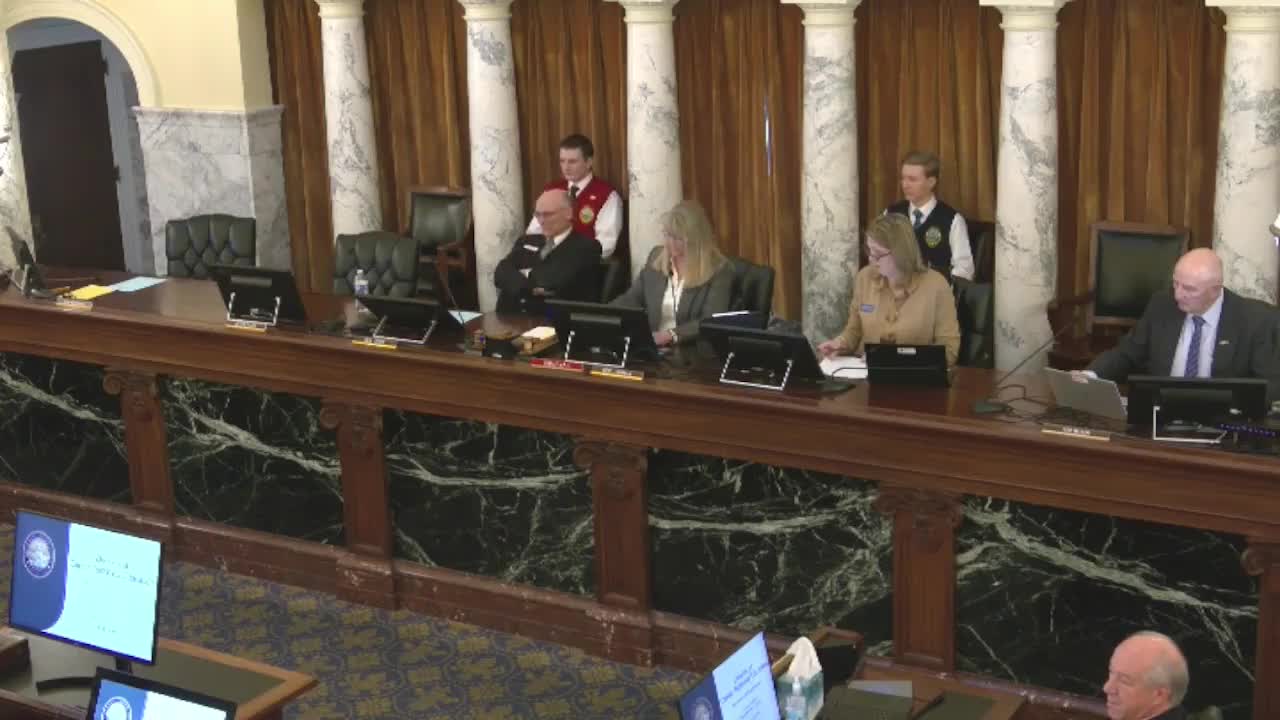
The Joint Finance‑Appropriations Committee heard an overview Feb. 10 of Idaho’s Division of Career Technical Education budget, with agency staff and legislative analysts describing persistent oversubscription in high‑demand programs and a governor recommendation of $10 million ongoing to expand capacity.
The Joint Finance‑Appropriations Committee heard an overview Feb. 10 of Idaho’s Division of Career Technical Education budget, with agency staff and legislative analysts describing persistent oversubscription in high‑demand programs and a governor recommendation of $10 million ongoing to expand capacity.
Kevin Campbell, a budget and policy analyst with the Legislative Services Office, told the committee that CTE “plays a central role in Idaho's ongoing workforce development efforts” and outlined the division’s programs, funding sources and recent appropriations. Joshua Whitworth, the executive director for the State Board and interim administrator for the CTE division, told lawmakers the division is seeing “massive growth of demand” in applied programs from secondary through postsecondary levels.
The funding request and why it matters
The governor recommended $10 million ongoing from the general fund to help scale capacity in high‑demand CTE programs, Whitworth said. The division also requested $664,000 ongoing for additional instructors at technical colleges, $125,400 for a business‑industry engagement manager, and smaller allocations including $50,000 for adult education and literacy.
Whitworth said the $10 million is intended to be awarded through a competitive grant process in which industry partners must match or otherwise participate, not to be distributed equally to every institution. “The grant would require some engagement by industry to participate in that,” he said, adding the intent is to focus dollars where demand is highest and to produce measurable outcomes.
Committee members pressed for specificity about how the $10 million would be distributed, oversight of the grants, and whether funds might go to universities as well as technical colleges. Representative Furness said the committee will need line‑level detail to defend large, flexible appropriations on the House or Senate floors. Whitworth said the division would tie awards to industry engagement and required reporting.
Demand, constraints and wait lists
Lawmakers and staff cited wait lists in several programs. Whitworth and members of the committee identified welding, nursing and other skilled trades among the most oversubscribed. “We’re running about, I think 3 to 400 nurses short on an annual basis right now,” Whitworth said.
Whitworth described the constraints as threefold: student demand, the availability of qualified faculty, and facility capacity. “We see it actually on both,” he said, referring to faculty and facility shortages. He offered to provide the committee a list of oversubscribed postsecondary programs and follow up with secondary‑level specifics.
New positions and program ideas
Lawmakers asked about the $125,400 request for a business‑industry engagement manager. Whitworth said some districts have used ad‑hoc staff to connect businesses with programs and called the requested position “district support” to help rural districts without local capacity link to industry and secure private support such as equipment donations.
Representative Price asked about adult education and workplace English; Tracy Bent, chief administrative officer for CTE, told the committee the program “focuses heavily on adult basic education but also individuals that English is not their first language” and that courses are offered through workforce training centers, including for Department of Corrections populations.
Federal grants and fund balances
When asked about large federal grants that support some CTE line items, Whitworth said the funding remains available but cautioned that guidance and timing determine when the state should draw down federal funds. On the Hazardous Materials and Waste Enforcement Fund, which supports firefighter hazmat training, Whitworth said staff would validate reporting after committee members noted a negative balance and asked for follow‑up on revenues and expenditures.
Representative Tanner described the hazmat fee structure and suggested the apparent negative balance may be a reporting or timing issue rather than a shortfall. On the Motorcycle Safety Fund (supported by vehicle and license fees), lawmakers asked why balances have grown while expenditures appear low; Whitworth committed to review the fund and return with recommendations on aligning revenue and program activity.
Oversight and next steps
Committee members repeatedly requested a clearer distribution plan and performance measures for the proposed $10 million ongoing. Whitworth said awards would require industry engagement and periodic reporting so the division could demonstrate whether grant awards reduced oversubscription in targeted programs.
There were no formal votes during the presentation and Q&A. Staff committed to provide the committee with: (1) a list of oversubscribed postsecondary programs; (2) additional detail on secondary program capacity; (3) clarification and reconciliation of the Hazardous Materials and Waste Enforcement Fund balance; and (4) possible recommendations on Motorcycle Safety Fund expenditures and fees.
Why this matters
CTE supports classroom and hands‑on training across Idaho’s secondary schools and six technical colleges. Lawmakers told the committee they want assurance that large, ongoing state investments are targeted to measurable capacity increases, guided by industry demand, and overseen by the division.
Reporting and evidence
The committee heard from Kevin Campbell of the Legislative Services Office and Joshua Whitworth, interim administrator for the Division of Career Technical Education, with CTE staff on hand to answer questions. No formal appropriation or vote occurred during the committee meeting.