Get Full Government Meeting Transcripts, Videos, & Alerts Forever!
Get email alerts on the State Budget Department Of Insurance topic
No spam. Unsubscribe anytime.
Department of Insurance reviews budget, outlines PBM oversight, 1332 waiver benefits and wildfire insurance challenges
Summary
Director Dean Cameron briefed JFAC on the Department of Insurance budget, progress implementing pharmacy benefit manager reporting under House Bill 596, outcomes from the state’s 1332 waiver and concerns about wildfire‑driven property insurance market tightening.
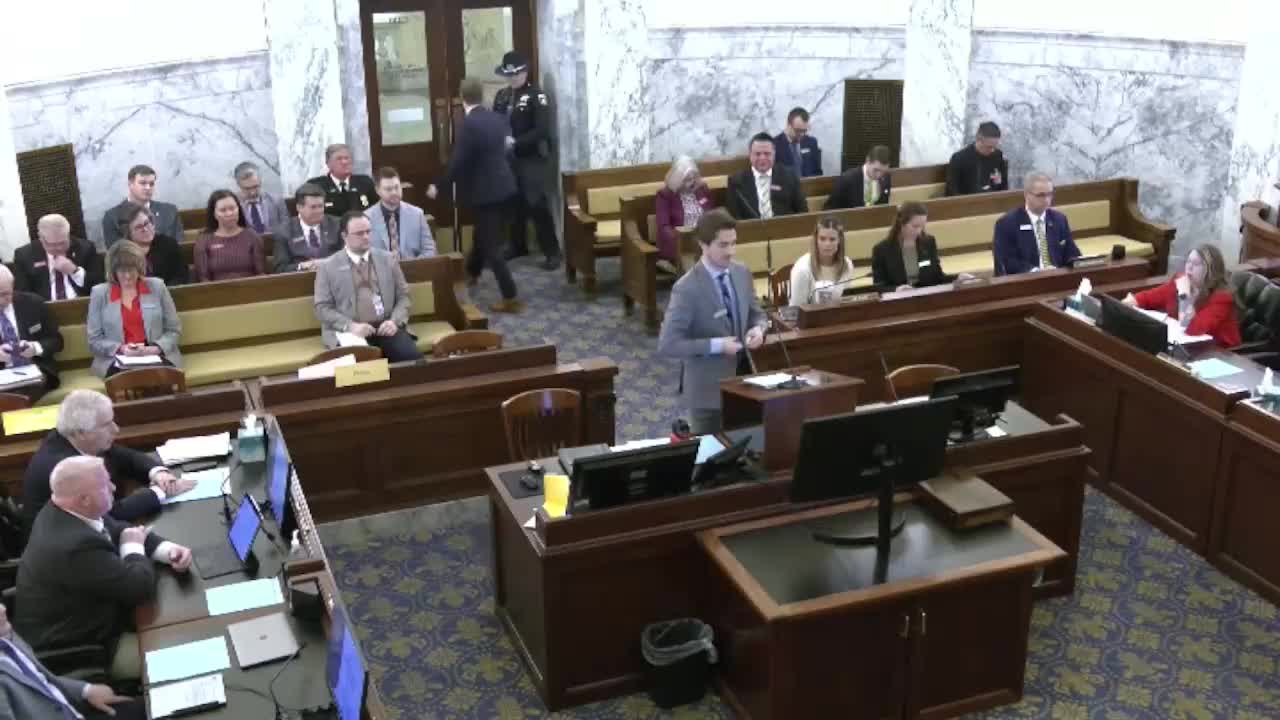
The Department of Insurance presented its fiscal 2026 budget review to the Joint Finance‑Appropriations Committee on Jan. 21, detailing resource requests for actuarial work, regulatory compliance, state fire marshal compensation and equipment, and describing implementation of recent pharmacy benefit manager (PBM) reforms and the state’s 1332 waiver.
Noah Peterson, Legislative Services Office budget analyst, outlined the department’s organizational structure and funds. The department has 75.5 authorized full‑time positions: 63.5 in insurance regulation and 12 in the State Fire Marshal division. Peterson explained the department administers premium tax distributions to multiple destinations, including the general fund, a high‑risk reinsurance pool and firefighter retirement programs, and that the agency reverted roughly $2.2 million of its FY2024 appropriation.
Director Dean Cameron said PBM reporting requirements established by legislation that took effect Jan. 1 are in the early phase of implementation. Cameron said the department hired staff to handle PBM work and is collecting required data from PBMs; “Most have complied and have submitted their data,” he said, but a few have not and the department is working to obtain those filings. Cameron added the unit is receiving numerous complaints but that exact complaint counts were not provided at the hearing.
Cameron also credited the 1332 waiver and the state’s high‑risk reinsurance mechanism with reducing individual health insurance rates and expanding carrier participation on the exchange. “We instituted that…3 years ago…We have doubled the number of carriers participating on the health insurance exchange,” Cameron said, adding the program operates as a form of reinsurance to spread costs of high‑cost claims and help keep premiums lower.
On property insurance, Cameron told the committee Idaho is experiencing market pressure from catastrophic losses elsewhere, reinsurance cost increases and inflationary pressures. He described a tightening of the property insurance market over several years and said some carriers have limited writing in higher‑risk areas or nonrenewed policies for reasons tied to wildfire risk and reinsurance availability. Cameron said the department is proposing legislation to create a pool to help homeowners harden properties against wildfire and to provide mechanisms that could help carriers remain in the market.
Peterson summarized the department’s FY2026 enhancement requests: one staff actuary (1 FTP, $201,900 ongoing; $3,000 one‑time office equipment), a regulatory compliance specialist (pay grade O, $41.03/hour at 80% of policy), compensation increases for the State Fire Marshal’s leadership and deputies ($48,100 ongoing from the Arson Fire and Fraud Prevention Fund), and $162,200 one‑time capital outlay for fire turnout gear, cameras and two medium‑duty pickups.
Cameron described Idaho’s wildfire experience in the prior year: the department responded to large incidents, and state records showed just under one million acres burned statewide; he reported over 140 structures were lost, roughly 40 of them residences. He warned the growth of the surplus lines (non‑admitted) market is a sign of an unhealthy property market because surplus lines policies are not subject to the same consumer protections and can be more easily nonrenewed.
Committee members requested more detailed PBM complaint counts and compliance data. Representative Furness and Senator Cook asked for progress updates on PBM data collection and the effects of the high‑risk pool. Cameron said the agency will provide more detailed breakdowns and noted that converting contracted actuarial work to an in‑house position could save money.
No formal votes were taken during the hearing. The Department of Insurance will follow up with the committee on PBM complaint volumes, PBM data receipts, and further details on the proposed wildfire mitigation/reinsurance pool and its expected effects.