Get Full Government Meeting Transcripts, Videos, & Alerts Forever!
Get email alerts on the Criminal Justice Searches Probation Parole topic
No spam. Unsubscribe anytime.
Senate committee advances bill letting Idaho peace officers search people on parole or probation
Summary
The Senate committee voted to send House Bill 187 to the floor after testimony from law enforcement leaders who said the change would improve officer safety and enforcement; civil liberties advocates and a family member raised concerns about constitutional rights and the bill's scope.
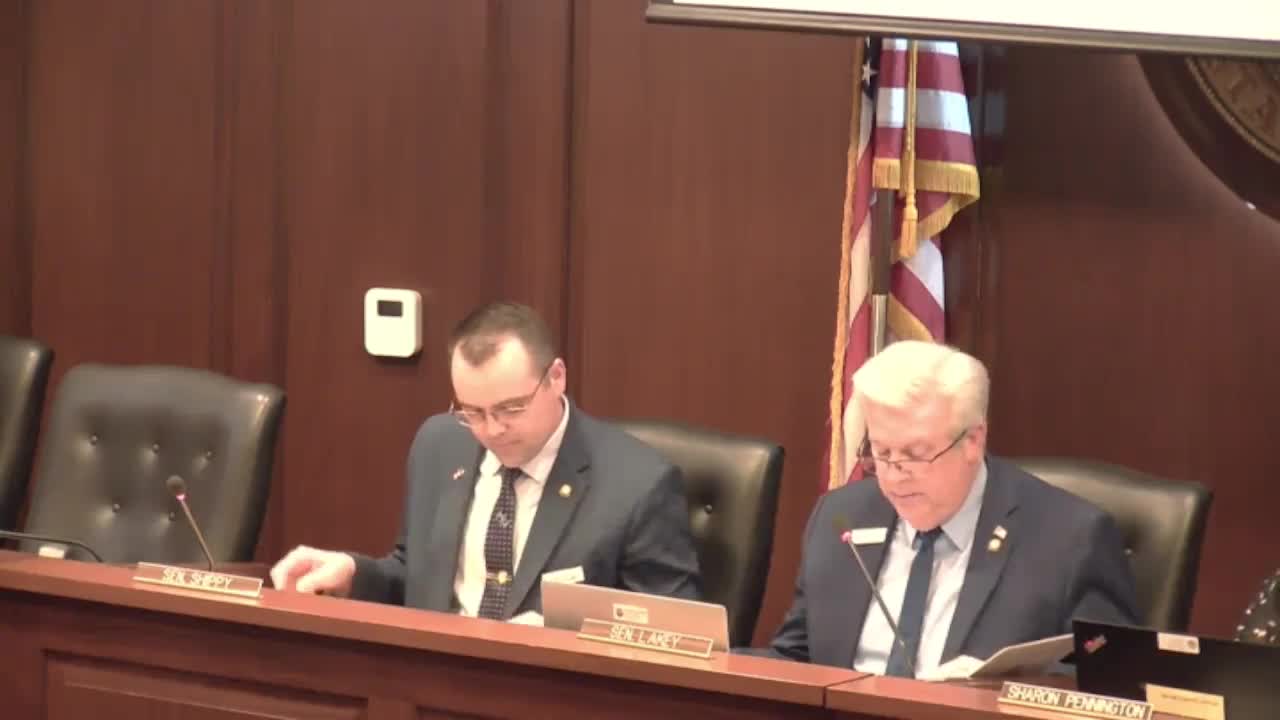
A Senate committee voted to send House Bill 187 to the Senate floor with a "do pass" recommendation after extended testimony for and against the measure.
House Bill 187, presented by State Sen. Todd Lakey, addresses searches of people who have been convicted of a felony and are on probation or parole by clarifying that peace officers, in addition to probation and parole officers, may rely on an existing consent-to-search condition in supervision agreements. "Probation and parole is really the ultimate trust — trust but verify," Lakey told the committee, saying the bill would make search authority uniform and reduce delays when local officers encounter someone on supervision.
Supporters including chiefs, sheriffs, prosecutors and police unions said the change is a practical safety measure. Rex Ingram, chief of the Caldwell Police Department and president of the Idaho Chiefs of Police Association, said officers sometimes encounter parolees in situations where parole officers cannot respond and that the bill would allow timely searches. "This bill equips our officers with the essential tools needed to respond effectively to urgent situations," Ingram said. Robbie Blaszard, deputy prosecutor with the Ada County Prosecutor's Office, said the bill "provides a uniform, unambiguous statement" of the conditions on supervision and is grounded in judicial precedent that allows informed, voluntary waivers.
Opponents questioned whether the statutory language creates a coercive choice for people who must sign supervision agreements to obtain release, and whether extending search authority to all peace officers increases risk of abuse. Michael Law, who identified himself as a Kuna resident, argued that people leaving prison "are still people of the United States" and said the consent required for release is not truly voluntary. Law said the bill allows searches "with or without cause." Lakey and supporters said the consent-to-search language already appears in Department of Correction and county supervision agreements and that the bill merely makes application consistent across counties, while discretion to pursue parole violations remains with parole officers and the courts.
Law enforcement witnesses described operational concerns they said the bill addresses: parole officers often have large caseloads and limited on-call coverage, and officers in rural areas may be required to wait hours for a parole officer to arrive before conducting a search. Louis Sargent, a corporal with the Caldwell Police Department who formerly worked for the Idaho Department of Correction as a probation and parole officer, said probation officers can have caseloads of 80 offenders and that local officers are frequently the first to observe noncompliance.
Committee members asked about safeguards and accountability. Ingram noted existing oversight mechanisms: recording of police actions, internal complaint processes, court review of evidence, and the potential for civil-rights investigations if officers violate constitutional limits. He said sustained, systemic harassment claims have not been common in other states with similar language.
The committee motion to send HB 187 to the Senate floor passed after a motion by Sen. Dan Foreman and second by Sen. Keiser. The committee record includes at least one opposed vote. The committee chair instructed the legislation would next go to the full Senate for further consideration.
The bill now advances to the Senate floor, where further debate and possible amendment can occur.