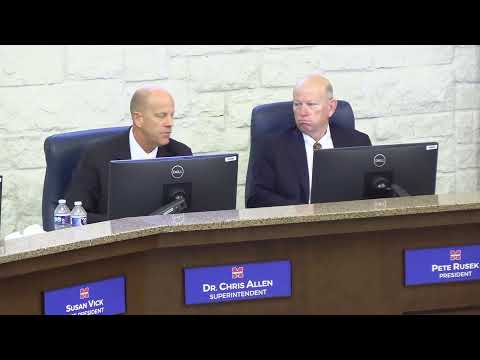
Midway ISD trustees hear debate over student iPads, district stresses filtered, curated use and developmentally appropriate limits
Loading...
Summary
At an October Midway ISD board meeting, a parent urged limits and opt-outs for iPad use in elementary grades while district staff described layered protections, curated apps, parent portals and guidance tying device use to specific pedagogy and age-based expectations.
At a Midway ISD board meeting in October 2025, parents and staff debated classroom iPad use and district technology policy as trustees considered how the 1-to-1 device program fits with student safety, learning and professional development.
A parent who identified herself as Joylyn Covert, a Midway parent and family medicine physician, told trustees she was worried about “explicit content” students can access and asked the district to make opt-out options easier. “I do feel like overall, they're detrimental at the younger ages,” Covert said, adding concerns about effects on attention, anxiety and other health issues.
District staff pushed back against the idea that devices are used without guardrails and described multiple layers of control. “We have a curated catalog,” Sarah Collins, the district’s director of professional learning, told the board, describing a vetting process for classroom apps. Collins said the district uses internet content filtering, monitoring systems and data-privacy agreements for third-party vendors. She said Midway uses Schoology and Seesaw as learning-management systems and that parents can access device activity through a Lightspeed parent portal.
Director of Innovation and Learning Dr. Ojima framed device use around pedagogy and developmental appropriateness, saying the district focuses on “active engagement” and avoiding passive screen time. “It is less about minutes to me and more about meaningful learning,” Ojima said, then outlined the district’s developmental approach to device time: limited, teacher-directed use in pre-K and kindergarten, expanding to longer, project-based uses in upper elementary and in middle and high school as students gain independence.
Presenters described specific local practices: - A district app catalog that requires teacher requests and a vetting process before apps are available to students; - Monitoring and alert systems that district tech staff and principals use to see classroom device activity in real time; - A parent-facing Lightspeed portal and the ability to email parent-facing screenshots or reports when requested; - Classroom-management tools that let teachers push or block apps during instruction.
Collins and Dr. Ojima also discussed instructional models used in teacher training: SAMR and TPACK historically and the PICRAT framework more recently to emphasize passive versus interactive or creative uses. The district said it has a network of learning coaches and teacher leaders who provide ongoing, just-in-time training rather than a single one-time workshop.
Board members asked practical questions during the presentation. Staff said the district’s beginning-of-year assessments are administered in a window starting in August, coordinated by campus testing coordinators, and that BOY (beginning-of-year) reports had been sent to parents “a couple of weeks ago.” When asked whether kindergarten–grade 5 iPads go home, staff confirmed that elementary devices generally remain at school.
On device prevalence in classrooms, Collins cited recent district walkthroughs showing students using iPads only about 35% of the time in observations districtwide and about 25% of the time in elementary classrooms. That data was offered as evidence the district is not dependent on devices every minute of the school day.
Trustees also discussed system reliability and redundancy. When an internet service problem affected platforms, administration noted that the district is studying a proposed data-center project in the bond package that would add local redundancy and mitigate cloud outages.
The public comment and staff presentation left the board with immediate, practical follow-up: the district will keep training and monitoring efforts in focus; staff reiterated the district’s intention to prioritize developmentally appropriate, pedagogy-driven device use; and trustees heard a parent request for clearer, easier opt-out procedures for families who prefer limited device use for young children.
Trustees did not take policy action on device use at the meeting; presenters said the district will continue training, campus-level walkthroughs and parent reporting.
The board’s technology discussion is continuing alongside the district’s bond and budgeting conversations and will reappear in future agenda items as staff update trustees on any recommended policy adjustments or operational changes.