Get Full Government Meeting Transcripts, Videos, & Alerts Forever!
Get email alerts on the Higher Education Community College Budget topic
No spam. Unsubscribe anytime.
College of Western Idaho tells JFAC enrollment up 13% as capacity and EWA cap strain programs
Summary
College of Western Idaho President Gordon Jones told JFAC that CWI’s academic enrollment rose about 13% this year and that capacity constraints in nursing and other career-technical programs are limiting how many students the college can serve.
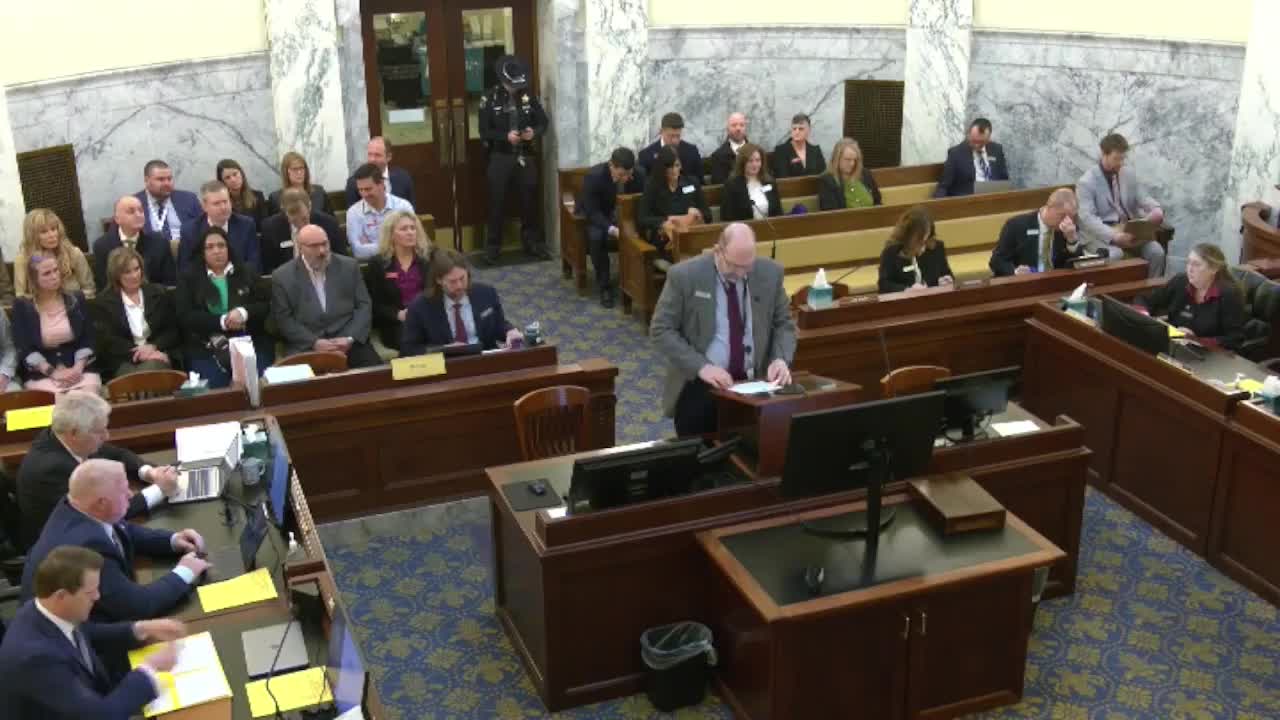
College of Western Idaho President Gordon Jones told the Joint Finance-Appropriations Committee on the college's budget day that CWI's academic enrollment grew about 13% this year and that the college is facing capacity constraints in nursing, automotive technology, welding, cybersecurity and agricultural sciences.
The growth, Jones said, comes as CWI serves nearly 22,000 credit students and more than 30,000 total students in the 2023–24 academic year; LSO budget materials cited a FY2024 appropriation to CWI of $20,816,700. Kevin Campbell, a budget and policy analyst with the Legislative Services Office, presented the college's FY2026 base-budget request and noted CWI typically spends 100% of its state appropriation.
The committee was asked to consider enrollment-driven funding known in Idaho as the Enrollment Workload Adjustment (EWA). Jones told the committee that the EWA “is not the number the formula kicked out. For us, it would have been $493,000 but, because of a 3% cap, you’re seeing the amount that we were able to put in ... $265,000.” He said CWI experienced net ongoing reductions in past years tied to EWA changes, and that the college is requesting an ongoing addition of $265,000 for FY2026’s enrollment workload adjustment.
Why this matters: committee members pressed CWI for a breakout of capacity constraints so legislators can evaluate funding options. Jones described three categories of constraints: limited or specialized facilities, faculty-capacity set by accreditation (for example, nursing instructor-to-student ratios), and support services such as academic advisors. He told the committee he believed CWI had about 1,000 students on wait lists across all programs and “almost a hundred people on our nursing waiting list.”
Jones emphasized CWI’s role in career-technical education and workforce adaptation, citing new programs such as electric-vehicle technician training. “Our faculty go to the factories at Rivian, at Tesla ... and bring that right into our automotive technician programs,” he said, describing partnerships and equipment that prepare students for local employers. He also said CWI’s operating budget is “somewhere in the order of $75,000,000 to educate 31,000 individuals,” a figure he used to contrast community-college scale with four-year institutions.
Committee response and next steps: lawmakers asked LSO and Department of Finance staff to provide a clearer breakdown of how EWA and the 3% cap affected each institution. Representative Petzke requested a comparison after noting that other colleges' EWA amounts appeared different; Campbell said he could provide the data. Co-Chair Herrmann asked LSO to prepare the impact for the committee’s work group.
No formal committee action or vote was recorded during the presentation.
The committee gave college officials time for questions and told members they could follow up with LSO for detailed breakdowns of capacity-related needs and the EWA calculation.