Get Full Government Meeting Transcripts, Videos, & Alerts Forever!
Get email alerts on the Cec Employee Compensation topic
No spam. Unsubscribe anytime.
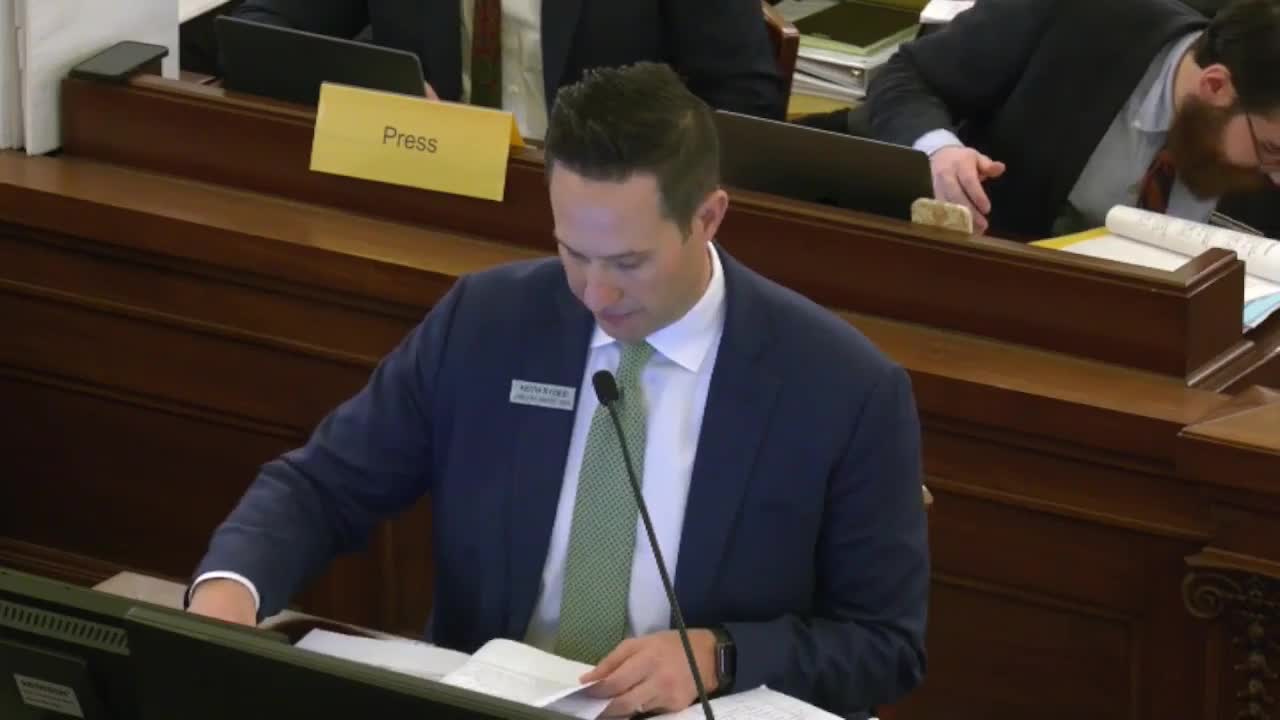
Joint finance committee fails to reach agreement on CEC pay options; four proposals defeated
Summary
After extended debate on four Change‑in‑Employee‑Compensation (CEC) proposals — including dollar‑per‑hour and percentage‑based options and differing merit approaches — the Idaho Joint Finance‑Appropriations Committee did not pass any CEC motion on Jan. 31 and postponed the issue to a future date amid procedural confusion over joint voting rules.
The Idaho Joint Finance‑Appropriations Committee considered four competing Change‑in‑Employee‑Compensation (CEC) proposals on Jan. 31 but failed to adopt any of them, leaving statewide employee raise decisions unresolved.
Analyst Erik Bybee presented four structured motions in the packet describing different approaches: a dollar‑per‑hour floor of $1.55 per hour per FTP (motion 1), a dollar‑55 approach plus a guaranteed 3% minimum for all employees up to a salary threshold (motion 2), a merit‑based up to 4% increase (motion 3), and the governor’s recommendation of a 5% merit distribution (motion 4). The motions varied in how they distributed funds among state agencies, colleges, community colleges and public schools and whether they included specific pay adjustments for troopers, IT/engineering staff and minimum‑pay parity.
What happened: Representative Miller moved a dollar‑$1.55 per hour motion that included community college and K‑12 components; Senator Cook offered a substitute that would provide up to 4% by merit (and would delete a line related to nursing/health‑care worker language); Senator Wintrow later offered the governor’s 5% merit motion; Representative Furness offered another substitute. Committee members debated philosophy and mechanics — flat increases vs. merit, protection for lower‑paid workers, and administrative safeguards for favoritism — but successive votes failed to produce a majority in both chambers and the committee tabled the matter to a future date.
Key arguments and testimony: Mr. Bybee explained the methodology used to calculate the dollar and percent figures, noting differences in how the dollar and percent approaches distribute funding by salary. Senator Cook urged a merit‑based approach, saying “what was America built on was built on merit.” Representative Handy recounted a personnel exercise and cautioned that many employees self‑identify as high performers: “95% of my guys thought they were in the 10% of performance.” Representative Furness, who proposed a motion that attempted to blend dollar and percent protections, walked through reserve and distribution figures. Senator Ward Engelking emphasized that some employers — notably school districts — lack insurance reserves and that actual health‑benefit costs are closer to the governor’s figures.
Votes and outcomes: multiple substitute and original motions were called and voted on during the meeting. Motion 3 (Senator Cook’s merit substitute) failed to achieve a House majority when called; later substitute and original motions also failed in joint roll calls. When the panel attempted the governor’s motion it likewise failed to secure the necessary majority. After repeated votes and a review of a 2023 joint‑voting letter, the chair postponed final action and said the committee will revisit the item at a later date.
Procedural dispute: members spent time clarifying how joint votes are tallied. The committee located a 2023 letter from House and Senate majority leadership stating a joint procedure; the chair ruled that the committee would proceed using the letter’s method for this meeting. Some newer members said the procedure felt unclear and requested more explicit committee agreement before future votes.
Next steps: Chair and staff said they will return to the issue at a future meeting, reissue motions in writing to avoid on‑the‑fly calculation errors and notify agencies whose hearings were delayed.