Get Full Government Meeting Transcripts, Videos, & Alerts Forever!
Get email alerts on the Land Use Telecom topic
No spam. Unsubscribe anytime.
Putnam County legislature approves cell‑tower lease and parkland exchange for Carmel tower
Summary
The legislature approved a negative SEQRA declaration and a parkland-alienation resolution to allow a planned telecommunications tower at the Carmel municipal golf course; staff will supply details on replacement parkland to the state as required.
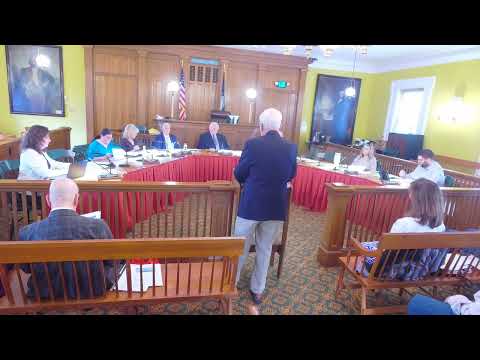
Putnam County legislators on Wednesday approved two related measures to permit construction of a telecommunications tower in the Town of Carmel: a negative environmental review determination and a parkland‑alienation resolution.
County staff said the proposed tower will occupy a small portion of the municipal golf course referred to during the meeting as Bottom Yammy Golf Course and that state approval is required because the site is parkland. The legislature approved a negative SEQRA (State Environmental Quality Review Act) declaration for the project and then approved a resolution authorizing required parkland alienation steps. A motion to pass the items carried in committee with an ‘‘aye’’ voice vote; no detailed roll-call tally was provided at the meeting record.
County IT and planning staff presented minor edits to the lease exhibits before the vote — including an updated square-footage figure adjusted from 2,611 to 2,611.35 square feet — and removed language describing the tower as resembling a tree from the draft documents. Staff said the facility will include antennas and microwave radio equipment; one speaker described potential parabolic radio dishes of roughly 6–9 feet in diameter.
Legislators and staff also discussed the sequence for state approval of the parkland swap. Legal staff said the county must identify a compensatory parkland swap or credits to satisfy state requirements but that the swap’s final design can follow the legislature’s approval steps and the state’s guidance.
Both measures were advanced in committee and will proceed through the normal legislative and state-approval processes; the committee record shows approval but does not include a separate vote count in the minutes provided at the meeting.