Get Full Government Meeting Transcripts, Videos, & Alerts Forever!
Get email alerts on the Wildfire Funding topic
No spam. Unsubscribe anytime.
Committee reviews Department of Lands budget as state considers large transfers to fire suppression fund
Summary
The Joint Finance Appropriations Committee heard a multi-part review of the Department of Lands budget, focusing on the fire suppression deficiency fund, proposed general fund transfers, Timber Protective Association pay parity, staff requests for fire program positions, and the Good Neighbor Authority program funding and revenues.
The Joint Finance Appropriations Committee on Wednesday reviewed the Idaho Department of Lands budget and discussed large proposed transfers and policy changes intended to shore up fire suppression funding and to support wildfire response capacity.
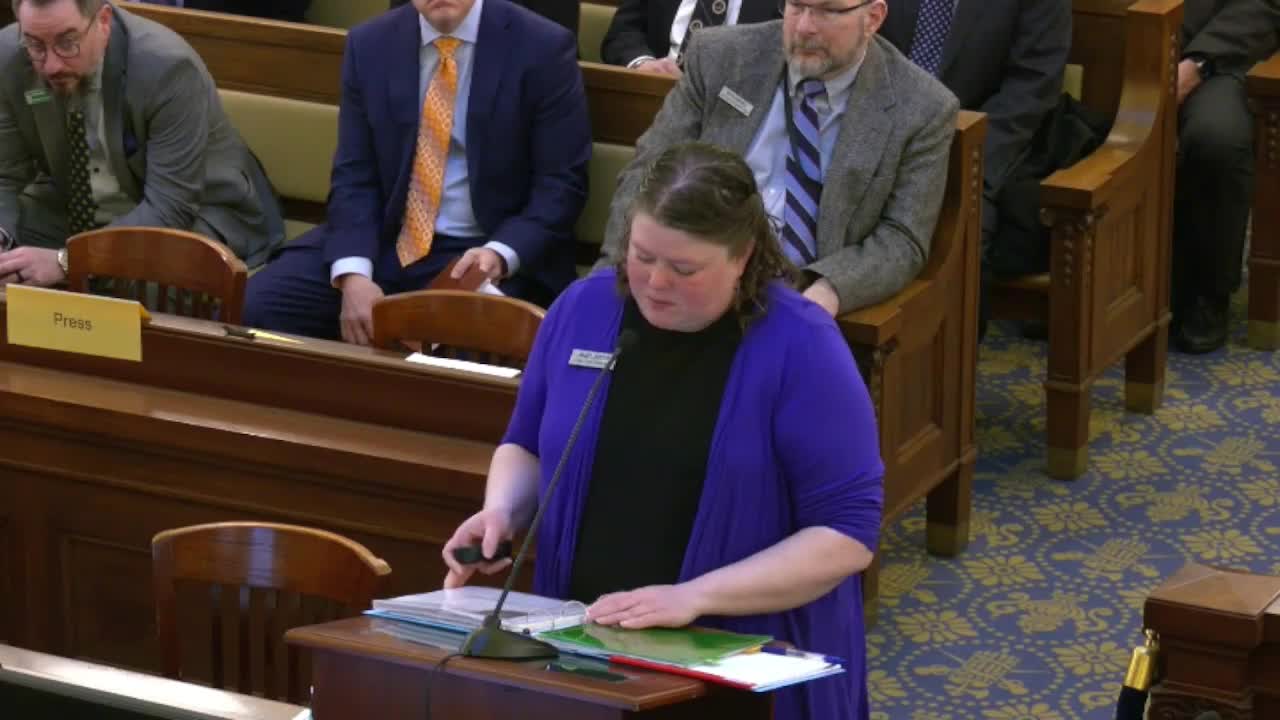
Janet Jessup, a budget and policy analyst with the Legislative Services Office, told the committee the governor recommended transfers to the department's fire suppression deficiency fund and other measures intended to stabilize the fund. She said the governor recommended a $40 million transfer from the general fund to the fire suppression deficiency fund and also recommended a supplemental transfer of $60 million to the fund for the current year.
“Should those monies that are recommended by the governor be added, the projected balance for 2025 … would” increase, Jessup said during her presentation, describing how the transfers would affect the deficiency fund balance.
Department testimony described the state’s current suppression account balance and risks if additional transfers are not approved. Dustin Miller, director of the Idaho Department of Lands, said the current suppression account balance is roughly $35.8 million and that without the additional funds the account could fall to an estimated $13 million in FY2026 after accounting for invoices and partner cost shares.
"That account dropping down to $13,000,000 is going to provide us some challenges," Miller said, noting the department has outstanding invoices and ongoing reimbursements from federal partners that affect the cash picture.
Committee members also discussed pay parity for Timber Protective Association firefighters. Jessup explained that Timber Protective Associations (TPAs) are quasi‑state entities that receive assessments and some state funding to fight fires on private lands. The two TPAs included in the budget were the Southern Idaho Timber Protective Association (based in McCall) and the Clearwater‑Potlatch Timber Protective Association (based in Orofino). The governor recommended a 5% cost‑of‑employment‑adjustment (CEC) equivalent for the TPAs; committee members asked how that would interact with the CEC for state employees. Jessup explained the TPA employees are not state employees, so the CEC the Legislature adopted for state employees does not automatically apply to them; the TPA CEC is a separate line‑item enhancement intended to provide parity.
Jessup said the governor recommended $1 million in firefighter bonuses that would apply to Department of Lands employees but not apply to TPA employees; the TPAs later amended their request to ask for an additional $250,000 aimed at bonuses for TPA firefighters so both groups would receive bonuses.
The department requested several new positions tied to wildfire response and program administration. Jessup listed requests that included a fire emergency support program manager, a fire aviation section manager, a statewide forest assessment program manager, an assistant fire warden for the Ponderosa area, a fiscal/financial specialist and a forest program position. Miller told the committee the positions are part of the department's fire program modernization and were informed by the governor's Wildfire Roundtable recommendations.
On the Good Neighbor Authority (GNA), Miller said the program—used to increase the pace and scale of active management on federal forest lands—has been largely self‑funding. Miller said GNA had generated about $40 million to date from federal timber sales and that roughly $18 million of those receipts had been used to cover program costs. He offered a breakdown the department provided to the committee: roughly $5 million for personnel costs, about $1 million for operating expenses, about $1 million in payments to the U.S. Forest Service, and about $6 million for restoration contracts; the money supports NEPA planning, on‑the‑ground restoration and other costs needed to set up timber sales on federal lands. Miller also said GNA projects last year accounted for about 24% of the national forest timber sale volume in Idaho.
Committee members raised questions about reimbursement timing from federal partners, long‑term trends in fire costs, and the abandoned‑mines program. Miller said invoice and reimbursement timing from federal partners can be slow and that the department has been working to improve timeliness through an electronic fire business system. On abandoned mines, Miller said Idaho has nearly 9,000 abandoned sites that pose water‑quality and public‑safety risks and that funding has not kept pace with the need to close or mitigate those sites.
The committee did not take votes on the items discussed; the hearing was an informational review of the FY2026 request and the governor's recommendations.
Ending
The committee moved on once members had questioned the director and LSO staff. Legislators asked for additional detail on reimbursement timing and historical suppression expenditures to inform further budget decisions.