Get Full Government Meeting Transcripts, Videos, & Alerts Forever!
Get email alerts on the Unemployment Insurance topic
No spam. Unsubscribe anytime.
Idaho Department of Labor seeks $7.33 million in dedicated authority to sustain unemployment operations as federal pandemic dollars decline
Summary
Director Janie Rivera told the Joint Finance‑Appropriations Committee the Department needs additional dedicated‑fund spending authority after federal pandemic grants dropped; the agency also proposed a corrective cash transfer and outlined how the unemployment trust fund and tax mechanisms work.
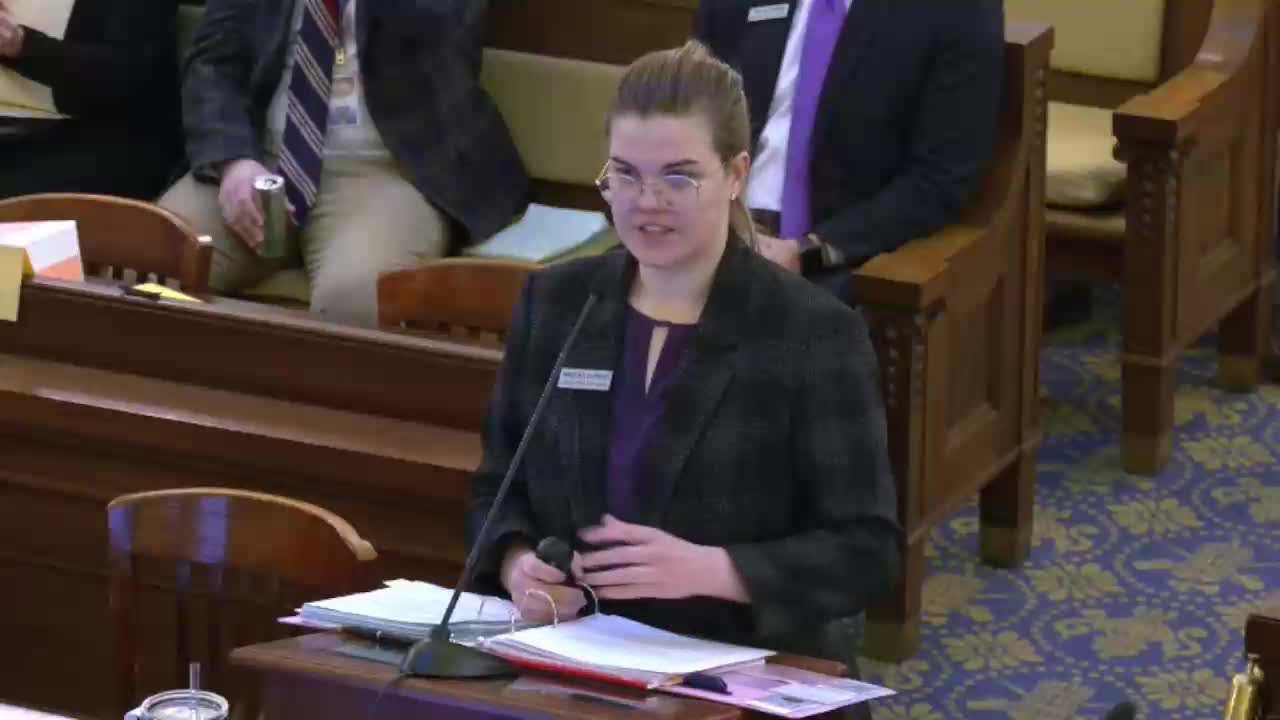
The Idaho Department of Labor told the Joint Finance‑Appropriations Committee that it needs additional spending authority from dedicated funds — not general funds — to sustain core unemployment‑insurance (UI) operations as federal pandemic grants decline.
Brooke Dupree, the Legislative Services Office analyst, reviewed the department’s consolidated fund analysis and said the agency requested $7,330,000 in ongoing spending authority for UI operations in FY26 and a cash transfer of $4,868,600 from the unemployment penalty and interest fund to the employment security fund to correct an overcounting error. Dupree said the governor recommends the enhancements.
Director Janie Rivera said the UI program is a federal‑state partnership that historically depends on variable federal administrative grants. During the pandemic the department hired roughly 100 staff to handle a surge in claims; as federal grant dollars have declined, the department needs dedicated‑fund authority to maintain baseline operations and be positioned to scale quickly if a future downturn occurs. Rivera said the department is not requesting general fund for UI and will use dedicated funds to sustain staffing and operations.
Trust fund, borrowing and tax mechanics: Rivera and other department staff explained how Idaho’s UI trust fund and tax system work. The analyst showed five‑year figures indicating the department’s continuously appropriated fund balance has ranged from roughly $69.7 million to about $202 million in recent years, with the high point in COVID years. Rivera described current projections as solvent and said the state has a reserve formula intended to cover three worst years in a 20‑year look‑back; she also said the department has increased its target (describing it as “1.3 times what we would need”) to improve sustainability. Rivera said the department can borrow federally or use bonding if the trust fund were exhausted, but that current projections show the fund is “very healthy.”
Cash‑flow and program details: Dupree described the requested $4,868,600 cash transfer as restoring an amount to the continuously appropriated employment security fund after an accounting overcount moved too much to an unemployment penalty fund. The department also requested funding for hardware (70 laptops/docking stations and 70 desktops) recommended by the Office of Information Technology Services.
Benefit rules and appeals: Rivera reviewed how UI duration and benefit amounts work under Idaho law. She said Idaho’s duration is indexed to the unemployment rate and currently stands at 21 weeks based on the state’s unemployment level; statute sets minimum and maximum durations and benefit calculations. Rivera offered to provide the committee a fact sheet with statutory references and additional program figures.
Committee follow‑up: Several legislators asked for more specific staffing and budget detail. Senator Galloway and Representative Handy asked for current baseline staff counts, how staffing fluctuated during the pandemic, and how much salary savings have been redeployed versus reverted. The department agreed to follow up with detailed figures on filled FTP, the distribution of salary savings, and the department’s longer‑term staffing assumptions.
Background: The Department of Labor organizes its appropriations into determinations (including UI and disability determinations), workforce and commissions (local office operations and workforce programs), and administrative services. The department reported an authorized filled percentage well under 100% in recent years (about 73%), a practice the analyst said allows the agency to staff up quickly for downturns without seeking emergency appropriations.
No formal committee action was taken at the hearing; analysts and the department agreed to provide additional data requested by committee members.