Get Full Government Meeting Transcripts, Videos, & Alerts Forever!
Get email alerts on the Marriage Equality topic
No spam. Unsubscribe anytime.
Idaho House committee votes to ask Supreme Court to revisit Obergefell after hours of testimony for and against
Summary
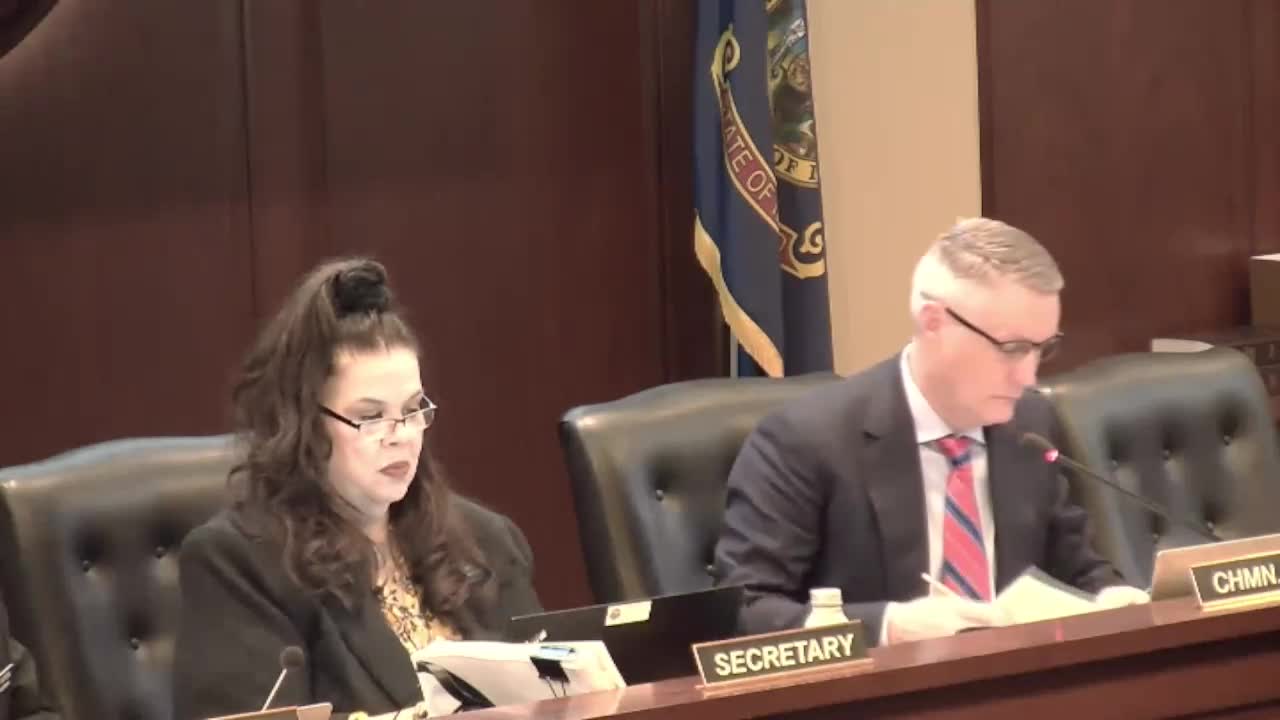
The Idaho House State Affairs Committee on Tuesday voted to send House Joint Memorial 1 to the floor with a do-pass recommendation. The memorial asks the U.S. Supreme Court to reconsider its 2015 Obergefell v. Hodges decision and emphasizes state authority.
The Idaho House State Affairs Committee on Tuesday voted to send House Joint Memorial 1 to the floor with a do-pass recommendation. The memorial asks the U.S. Supreme Court to reconsider its 2015 Obergefell v. Hodges decision on same-sex marriage and emphasizes state authority over matters the proponents describe as not enumerated by the federal constitution.
Representative Heather Scott (R–District 2) presented the memorial, saying the measure is "about upholding federalism and a state's right to make our own decisions. It is not about defining marriage, it's about who should be defining marriage." She said the resolution asks the Supreme Court to "restore our State authority" and urged the committee to send a "clear message from Idaho" that the state should decide marriage law.
Scott's presentation drew sustained questioning from committee members who probed both practical consequences and constitutional theory. Representative Achilles raised the historical concern that "states' rights" has been used to defend slavery and Jim Crow-era discrimination, asking how the memorial would reconcile that history with the fourteenth amendment's protection of fundamental rights. Scott repeatedly framed the matter as a states' rights issue and said she was asking the federal judiciary to reconsider the case.
Public testimony filled much of the hearing. Sue Latta, the lead plaintiff in Latta v. Otter, told the committee she and her spouse have lived and worked in Idaho for decades and described the tangible consequences of nonrecognition before the courts: "We are not asking for special rights, We're asking for equal rights," she said, describing lengthy litigation that led to marriages being recognized in Idaho in 2014 after favorable federal rulings.
Clergy and faith leaders gave opposing testimony. The Reverend Sarah Lawal, representing the Interfaith Equality Coalition and the Boise Fellowship, said "The benefits of marriage are not exclusive to opposite-sex couples; they are the God-given birthright of all who enter into this sacred commitment." By contrast, several speakers urging a yes vote framed the issue as a defense of religious liberty and state sovereignty.
Medical, mental-health and family-service witnesses warned of harm if recognition were withdrawn. Sharon Fritz, a licensed psychologist of 40 years, said the research shows higher rates of mental-health struggles and suicidal ideation among LGBTQ people facing discrimination and that removing legal recognition could worsen those outcomes. Pediatrician Vaughn Archibald said he sees same-sex parents who provide stable homes and urged the committee not to "take a step backwards." Several speakers described the practical legal and financial consequences of losing marriage recognition—inheritance, health-care decision-making, tax filing and immigration protections.
Committee debate produced two procedural votes. Representative Achilles offered a substitute motion to hold the memorial in committee, arguing the text was imprecise, that drafters ignored Idaho's earlier litigation (Latta v. Otter), and that the memorial could be inflammatory and legally ineffective; the substitute motion failed on a roll call recorded as 13–2. The final motion, moved by Chairman Crane, to send the memorial to the floor with a do-pass recommendation carried. Representatives Achilles and Morley were recorded as voting no on the final do-pass motion.
Several witnesses and committee members emphasized the limited legal effect of the memorial. Attorneys and former officials in the committee packet noted a memorial would not bind the courts; proponents said the memorial is intended to prompt the Supreme Court to consider a case that could revisit its 2015 ruling.
The committee debate and the public testimony highlighted the split in Idaho civic life on the issue—some speakers framed the memorial as protecting state sovereignty and religious conscience, while other speakers, including plaintiffs, clergy, medical professionals and young Idahoans, described concrete harms to families and public-health implications if federal recognition were withdrawn. The memorial now goes to the House floor for consideration.