Get Full Government Meeting Transcripts, Videos, & Alerts Forever!
JFAC approves $415.2 million in FY2025 Medicaid supplementals and $674.2 million in FY2026 Medicaid enhancements
Summary
The Joint Finance-Appropriations Committee approved a package of one‑time FY2025 Medicaid supplementals and a separate FY2026 budget package that funds hospital assessments, managed‑care quality reviews, IT modernization and actuarial services, and adds reporting requirements tied to House Bill 345.
The Joint Finance‑Appropriations Committee voted to approve a set of FY2025 supplementals totaling $415,226,800 and a FY2026 Medicaid budget package totaling $674,192,600, taking actions the committee described as funding accrued Medicaid obligations and making several ongoing appropriations and reporting requirements.
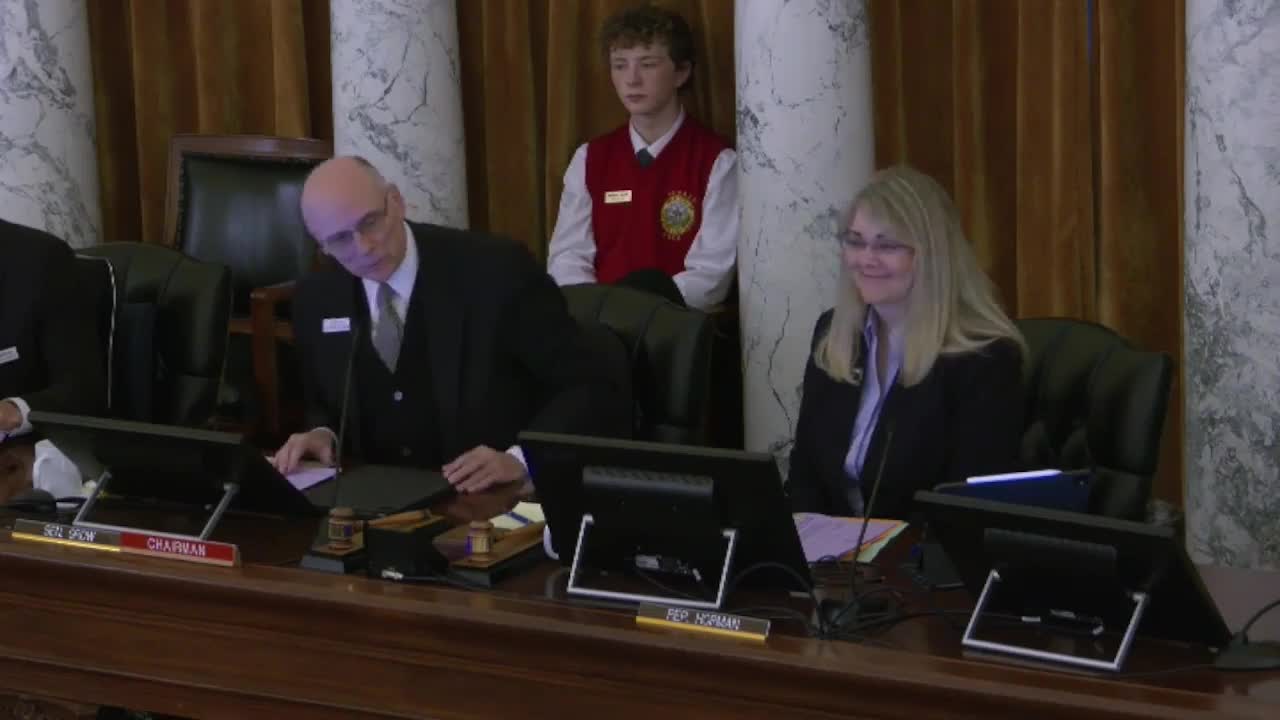
Budget and policy analyst Alex Williamson, Legislative Services, opened the discussion saying, “For the record, my name is Alex Williamson, budget and policy analyst with legislative services. Kicking things off we are going to look at the division of Medicaid and the Department of Health and Welfare this morning.” The committee moved through multiple line items as a collective motion rather than individually.
The supplementals the committee approved for fiscal year 2025 include funding to meet federal requirements and cover higher‑than‑expected Medicaid costs. Williamson told the committee the managed‑care external quality review is a federal requirement and requested $1,350,000 in one‑time funding for the state’s four managed‑care plans. She described other FY2025 supplementals as implementation or residual cost items, including configuration and go‑live costs for the Idaho Behavioral Health Plan, and an updated Medicaid expenditure forecast. As Williamson summarized the forecast change, she explained, “So they gave it their best shot a year ago when they made the forecast. They underestimated—more people used it or the people that did use it had higher costs. These are the residual costs that they are…
Already have an account? Log in
Subscribe to keep reading
Unlock the rest of this article — and every article on Citizen Portal.
- Unlimited articles
- AI-powered breakdowns of topics, speakers, decisions, and budgets
- Instant alerts when your location has a new meeting
- Follow topics and more locations
- 1,000 AI Insights / month, plus AI Chat