Get Full Government Meeting Transcripts, Videos, & Alerts Forever!
Get email alerts on the Public Health Budget topic
No spam. Unsubscribe anytime.
JFAC reviews Public Health Services budget, restoration requests and ARPA-funded one‑time projects
Summary
The Joint Finance-Appropriations Committee heard presentations on the Department of Health and Welfare's Division of Public Health Services budget, including requests to restore previously cut ongoing programs, several one‑time ARPA-related projects, and enhancements such as suicide prevention and WIC modernization.
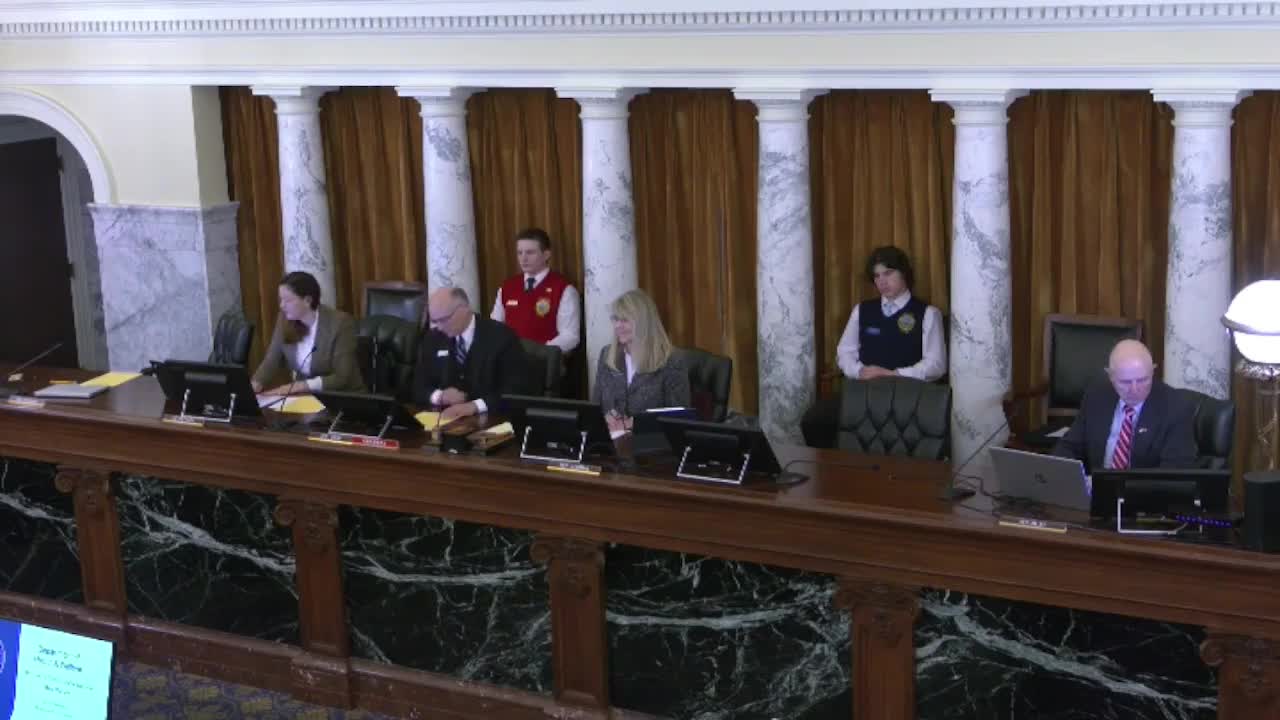
The Joint Finance-Appropriations Committee on Monday reviewed the Department of Health and Welfare's Division of Public Health Services budget, covering requests to restore ongoing programs, one-time ARPA-funded projects and several program enhancements. Division manager Keith Bybee introduced the division and budget lines.
"My name is Keith Bybee. I'm the division manager of budget policy analysis," Bybee said as he opened the presentation. Director Alex Adams said the review was part of a broader exercise to align ongoing spending with program needs. "I would characterize it as a healthy exercise," Adams said of the department's '0based budgeting and program review.
Why it matters: The division administers core prevention and public health infrastructure—immunizations, communicable disease surveillance, laboratory services, vital records, EMS oversight, WIC services, suicide prevention and data modernization. Committee members were asked to weigh restoring programs moved from the base to one-time funding last year, as well as support for multi-year ARPA projects.
Most important details
- Scale and structure: The presentation shows the Division of Public Health had an original FY2025 appropriation of about $164,020,000; the director said the governor's recommended FY2026 request reduces that to roughly $154,000,000 (a reduction tied to structural changes in how programs were budgeted). The division reported 256.52 full‑time equivalent positions established, with four vacancies noted as of Aug. 31, 2024.
- One‑time ARPA and federal items: The department listed about $8,752,500 in one‑time enhancement requests (largely federal/ARPA carryover), all of which the governor recommended. Specific one‑time items highlighted include vital statistics data modernization, WIC system modernization, and a communicable disease prevention grant (year 4) requesting $2,041,800 one time for 4.4 limited‑service positions.
- Ongoing restorations and enhancements: The agency requested roughly $20,846,300 ongoing to restore programs moved to one time; the governor recommended about $21,464,500. Notable restoration requests include: suicide prevention ($1,807,700 general fund and $195,000 federal), the Drug Overdose Prevention Program ($2,820,200 and four FTE), refugee health screening ($991,000 and 1.5 FTE), Alzheimer's and dementia coordination ($275,200), Fit and Fall Proof ($140,000), diabetes prevention ($1,063,700), HIV prevention ($957,300), oral health workforce support ($379,600), integrated hepatitis surveillance ($599,200) and restoration of WIC-related funding ($6,944,600).
- Program and fund specifics called out: The division requested $2,500,000 ongoing from dedicated funds for the Idaho immunization program and $150,000 ongoing for the Bureau of Vital Records and Health Statistics. A home visiting expansion request seeks $725,900 ongoing from federal funds to serve additional counties identified by need assessments.
Questions and concerns raised
- Cost and structure: Committee members pressed the department on why several programs remain under the division rather than moved to other entities (for example, whether certain prevention or clinical programs might fit better under other offices). Adams and Division Administrator Elke Shaw Tullock said the department's focus is prevention and that program placement depends on mission and operational fit.
- Data modernization: Senator Cook asked for a followup breakdown showing what has been spent on prior data modernization work (vital statistics, WIC, and other systems) before additional funding is approved; Adams and staff agreed to circulate a three‑page summary of prior investments and planned next steps.
- Project ECHO and pass‑through grants: Representatives questioned why continuing medical education grants (Project ECHO) appeared in the department's base when the university performs most program functions. Adams said the legislature has previously placed pass‑through funding in the department's budget and suggested such legacy placements be reviewed and possibly moved to sponsoring institutions.
Context and background
- Pandemic-era funding effects: Presenters reminded members that CARES Act and ARPA funding temporarily inflated earlier appropriations and spending, which accounts for dramatic year‑to‑year swings; the department's FY2021 authorized total was shown as high but actual spending fell as federal emergency funding dried up.
- Federal dependency risk: Committee discussion noted that some items rely on federal grants; the director acknowledged that federal funding freezes or changes could affect programs and said some items are still TBD depending on federal actions.
What the committee asked staff to do
- Staff to circulate a 3‑page summary of prior data modernization spending and status. - Committee members were invited to contact analysts for detailed followups on specific program restorations and to discuss possible trailer‑bill language or intent if adjustments are proposed.
The meeting left open decisions: no formal votes were recorded during this segment. The committee paused for questions and indicated members will continue detailed followups with department staff and analysts outside the hearing record.