Get Full Government Meeting Transcripts, Videos, & Alerts Forever!
Get email alerts on the Education Budget topic
No spam. Unsubscribe anytime.
State Board requests $15 million workforce capacity grant, seeks more IT and safety staff in FY2026 budget
Summary
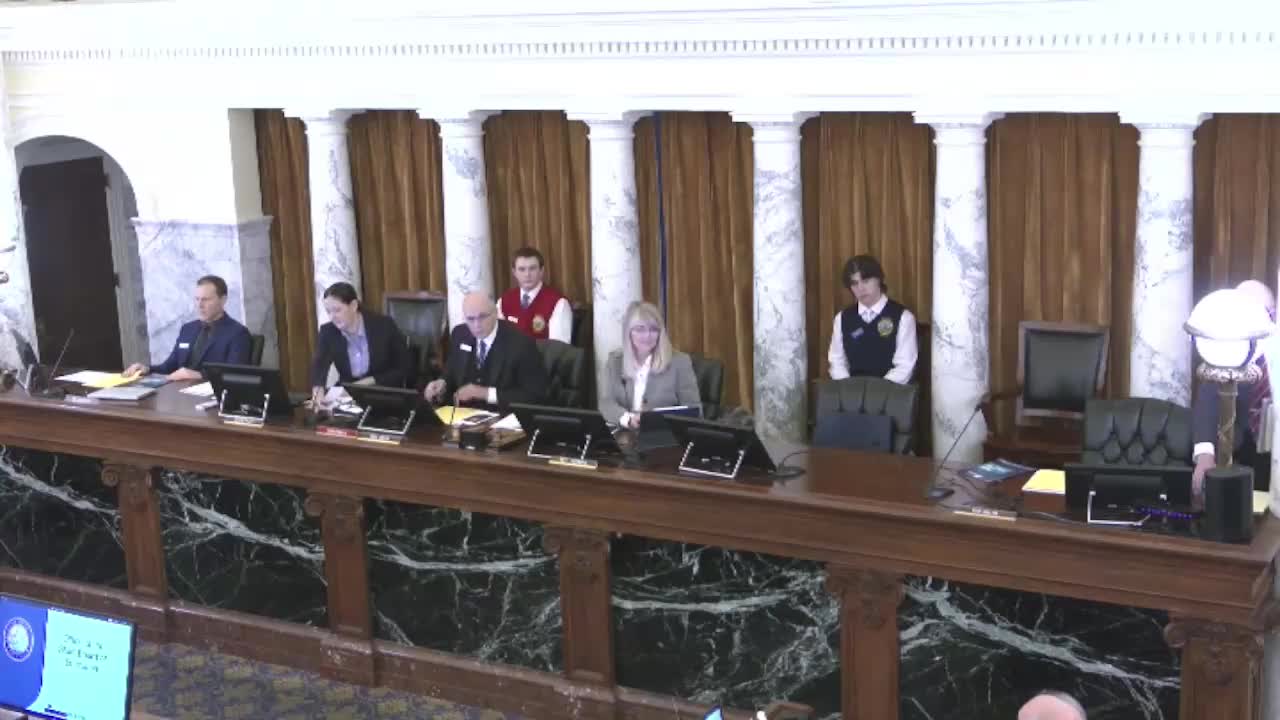
Kevin Campbell, Budget and Policy Analyst with the Legislative Services Office, presented the Office of the State Board of Education (OSB) FY2026 budget to the Joint Finance Committee, outlining staff increases and a suite of enhancement requests the Board is seeking.
Kevin Campbell, Budget and Policy Analyst with the Legislative Services Office, presented the Office of the State Board of Education (OSB) FY2026 budget to the Joint Finance Committee, outlining staff increases and a suite of enhancement requests the Board is seeking.
Campbell told the committee the office currently has 84.25 authorized FTEs with eight vacancies and that OSB "has 49.75" FTEs in administration and 27 FTEs in IT and data management, noting recent transfers of positions into the Board. He said federal COVID and ARPA funds have distorted recent appropriations and expenditures but that personnel costs are the largest ongoing expense.
Joshua Whitworth, Executive Director of the State Board of Education, told members the agency has centralized several functions—internal audit, risk management, IT and the school safety program—to gain efficiencies and consistent policies across institutions. "One of the primary motives of the board’s directive is to look at systemness," Whitworth said, describing the goal of reducing siloed activity and improving coordination.
Whitworth described the single largest FY2026 enhancement the governor proposed: a one‑time $15 million public‑private workforce capacity grant intended to help institutions build infrastructure for workforce‑training programs in high‑demand careers. Under the proposal, Boise State University, Idaho State University and the University of Idaho would receive state funds at a 1:1 state‑to‑private match; Lewis‑Clark State College and the four community colleges would receive funds at a 1:2 ratio, Whitworth said. He said the grant is intended to prioritize programs where industry contributes matching funds.
Campbell and Whitworth also described other FY2026 requests: 14 ongoing enhancements that include five new positions (an IT systems and infrastructure engineer, a database engineer, an education effectiveness program manager, an education policy analyst and an Empowering Parents program analyst), funding for behavioral threat assessment teams for K‑12 schools (a request that committee members were told requires legislation), and proposed adjustments for Independent Study Idaho’s base funding model. Campbell said approximately 90 percent of OSB appropriations historically go to trustee and benefit payments (grants and transfers to institutions) and about 4.7 percent goes to pay and benefits.
Committee members pressed for more detail. Representative Petzke asked why the centralized office has grown from roughly 60 FTEs to more than 80 and whether funds might be spent more directly at institutions. Whitworth answered that several functions previously located at institutions—IT, audit and risk management and the school safety program—were transferred to the Board, and that centralizing those functions supports consistent policies and can be more efficient. Senator Cook asked whether new IT positions are replacements for contractors; Whitworth said many IT tasks are currently performed by contractors and that bringing positions in‑house can be more cost‑effective and provide broader institutional support.
Representatives and senators asked for more detail the committee can use in budget decisions: which FY2026 requests would require enabling legislation; a list of programs that would be eligible for the workforce grant and the expected outcomes; a long‑term IT plan that explains backlog and maintenance needs; and performance metrics for Independent Study Idaho. Whitworth said the behavioral threat assessment request requires legislation and that he would provide follow‑up on which requests need statutory authority and on IT planning and program details.
Committee members also raised the funding source for programs that had been discussed in other forums. Senator Wintrow and others emphasized that, according to prior work‑group reports, funding for many programs tied to diversity, equity and inclusion (DEI) activity comes from student fees rather than state appropriations; Whitworth and other Board representatives confirmed that many such services are supported through student fees and opt‑in mechanisms. Whitworth said the Board is reviewing indirect costs and fee structures and will provide more information to the committee.
Campbell pointed to several previously enacted enhancements that affect the current budget: the FY2024 ongoing $30 million Empowering Parents grant; transfers of IT and audit staff from institutions; and a FY2025 transfer of a $5 million broadband program from the State Department of Education. He told the committee the school safety and security program receives an annual statutory transfer of $300,000 from the public school income fund and is used to conduct annual assessments under guidelines developed by the Idaho Safety and Security Advisory Board.
Committee members requested targeted follow‑ups: a written IT plan and contractor expenditure history, a clearer performance profile for Independent Study Idaho (Campbell said the program charges about $160 per credit and serves a few hundred students annually), a refined eligibility list for the workforce grant before floor debate, and documentation of the net effect of transfers (Whitworth said transfers bringing positions into OSB were generally net‑zero transfers from other state entities). Whitworth and Campbell agreed to provide follow‑up materials to committee members.
The committee did not take votes on OSB matters during this hearing; members directed staff to pursue additional details in the work group process.