Get Full Government Meeting Transcripts, Videos, & Alerts Forever!
Get email alerts on the Adoption Tax Deduction topic
No spam. Unsubscribe anytime.
House committee introduces bill to let parents deduct embryo-adoption costs up to $10,000
Summary
The House Revenue and Taxation Committee voted to introduce RS 32,732, which would extend Idaho’s existing adoption tax deduction to legal and medical expenses tied to adopting a donated embryo that results in a live birth; sponsors say the change is meant to improve affordability and public awareness.
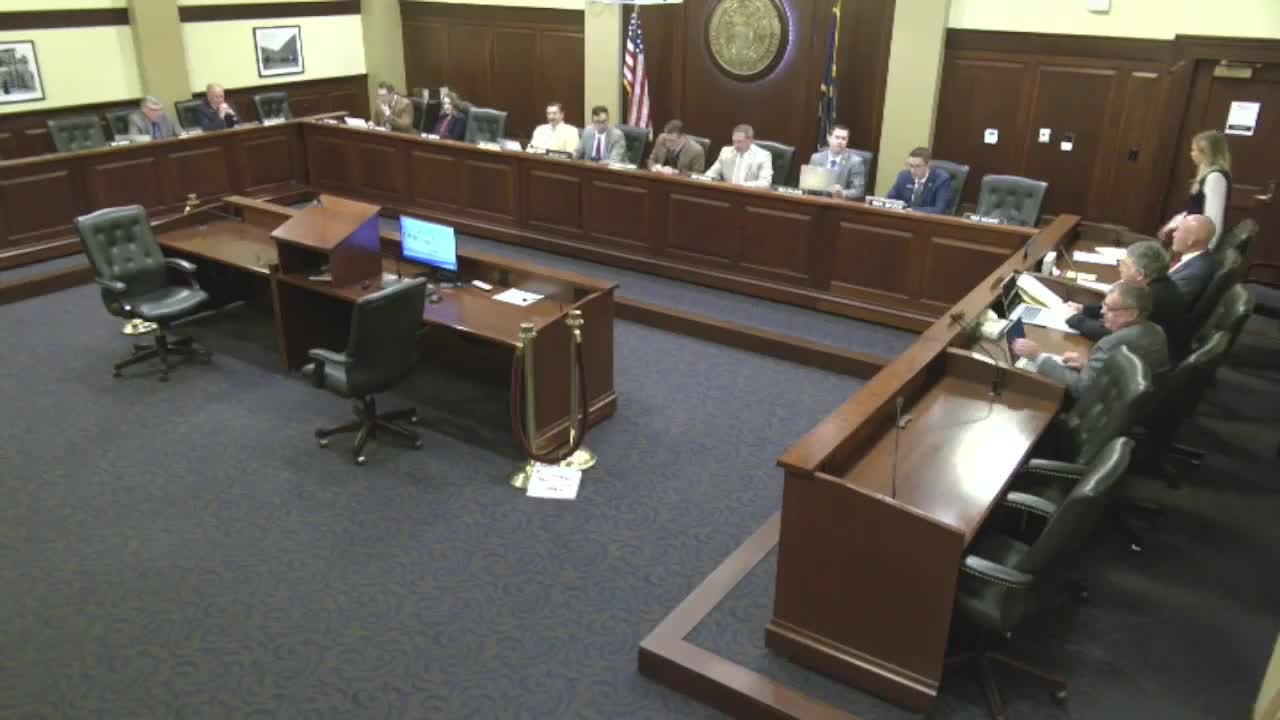
The House Revenue and Taxation Committee voted to introduce RS 32,732 on March 27, a legislative proposal to allow Idaho taxpayers to deduct up to $10,000 in legal and medical expenses related to adopting a donated embryo if that adoption results in a live birth.
The proposal expands Idaho’s existing adoption tax deduction to cover embryo-adoption expenses and is written to allow taxpayers to claim the deduction in the year of the live birth and to carry eligible expenses back up to three years. Representative Brook Green introduced the draft and said the change would both spotlight embryo adoption as an option for growing families and make it more affordable.
"We want to expand the existing Idaho adoption tax credit to ... up to $10,000 [for] legal fees and medical expenses related to the acquisition and transfer of a donated embryo that results in a live birth," Representative Brook Green said during the committee introduction. Green also discussed her personal experience with in vitro fertilization (IVF) while describing the bill’s purpose.
Representative Jeff Ehlers, a cosponsor who handled most of the tax-policy detail, said the $10,000 deduction would reduce state tax liability by about $530 under Idaho’s flat rate, assuming a taxpayer used the full deduction. "The benefit here of a $10,000 deduction ... is about $530 of lower taxes, per filer that gets this," Ehlers said, and he noted the bill’s fiscal note is modest because relatively few filers would claim the deduction.
Committee members asked clarifying questions about the bill’s scope, including whether the deduction would apply only when an embryo results in a live birth, whether surrogacy costs would be included, and whether failed cycles’ expenses could be claimed. Ehlers and Green said the intent is to limit the deduction to expenses tied to a live birth and that the draft’s three-year look-back provision is intended to help accommodate the lengthy timeline of fertility treatments; they also said language could be clarified during drafting.
Committee discussion included general cost and success-rate context for assisted-reproduction procedures. Representative Ayers described a wide range of costs, saying medicines and visits can make a single cycle "probably minimum, more like $12,000 per cycle" and that multiple cycles can increase total costs substantially. Green said her own IVF experience had cost about $32,000. Ehlers said success rates vary and he cited roughly a 50% success rate in general as one factor that makes timing and tax treatment relevant to families.
Committee leadership and the sponsors repeatedly framed the RS introduction as an informational step, not a commitment to carry the bill in the current session. Ehlers said the sponsors "have no intention of carrying the bill forward at this point in this session" and want public feedback.
A motion to introduce RS 32,732 was made and approved by voice vote; the committee did not record a roll-call tally in the transcript. The committee also noted a fiscal estimate associated with the proposal of about $60,000.
RS 32,732 will be available for public review as an RS introduction; sponsors indicated they will use interim feedback to refine the bill’s language, including clarifying whether surrogacy or failed-cycle expenses are eligible and ensuring the $10,000 cap applies as intended.
Votes at a glance: The committee approved introduction of RS 32,732 by voice vote; the motion carried and the RS stands introduced.