Get Full Government Meeting Transcripts, Videos, & Alerts Forever!
Get email alerts on the Education Budget topic
No spam. Unsubscribe anytime.
State education budget hearing spotlights special-education staffing, drivers-education reimbursement and testing contract costs
Summary
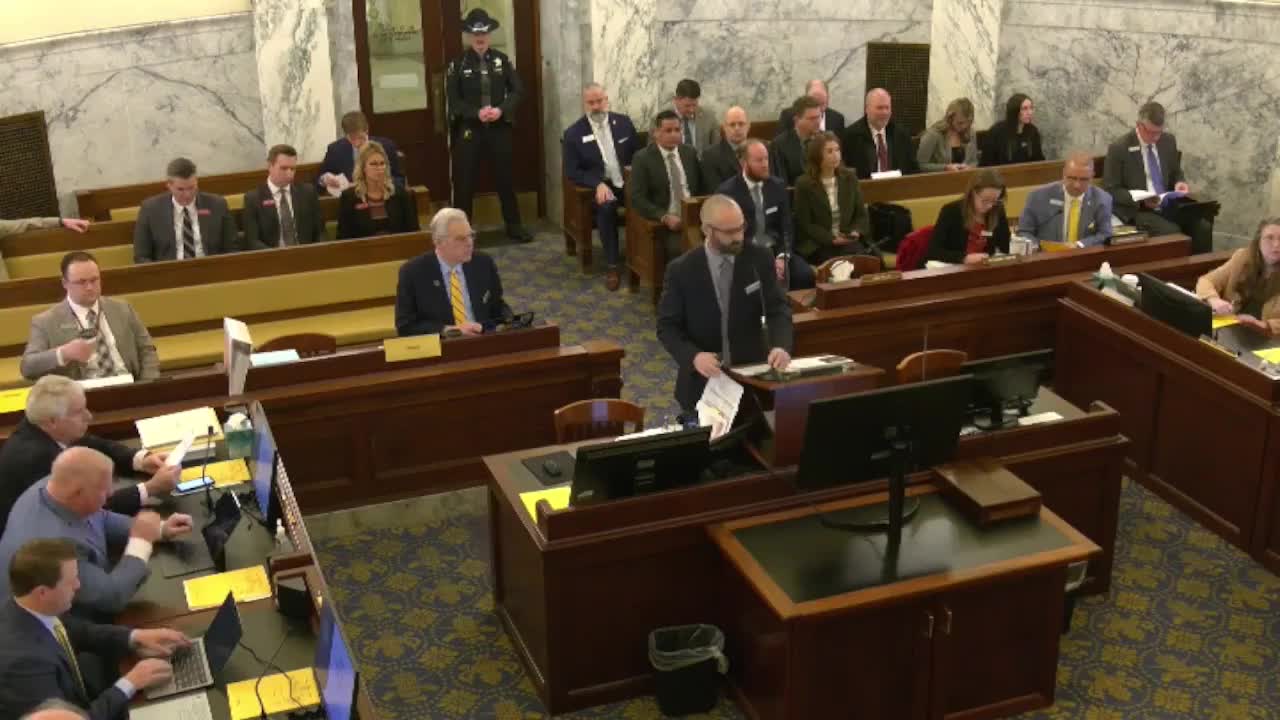
The Joint Finance-Preparation Committee heard a budget presentation from the Idaho State Department of Education on proposals that include new staff for special education dispute resolution, expanded charter and tribal support, higher drivers-education reimbursements and one-time funding to transition the statewide student assessment.
The Joint Finance-Preparation Committee heard a budget presentation from the Idaho State Department of Education on proposals that include new staff for special education dispute resolution, expanded charter and tribal support, higher drivers-education reimbursements and one-time funding to transition the statewide student assessment.
The requests are part of the department’s FY2026 budget package and were presented by Jared Tetro, Deputy Division Manager, Budget and Policy Analysis Division with the Legislative Services Office, and by State Superintendent Debbie Critchfield. The committee questioned several items including the size of dedicated fund balances for drivers education and career-technical programs and the department’s plan to move to a new statewide assessment platform.
Why it matters: Lawmakers pressed department officials about programs that affect districts’ operating costs and special-education compliance. Several of the items—staffing for dispute resolution and charter-specialist work, the proposed rise in drivers-education reimbursement and the assessment transition—carry ongoing budget or policy implications for districts statewide.
The department asked for multiple ongoing personnel enhancements. Superintendent Debbie Critchfield described a sharp rise in appeals and formal disputes that the department currently manages with a single statewide dispute resolution coordinator. “We’ve had a 65% increase in requests for mediation, 77% increase in just general complaints and a 1200% increase in hearings,” Critchfield said, citing recent year-over-year workload growth and longer local wait lists for assessments.
To respond, the department requested 1 full-time position and $84,400 for a dispute resolution specialist to support special-education customer service and timeliness. Lawmakers also discussed requests for a charter school specialist (to help meet IDEA and Section 504 federal requirements for new charters) and a second Indian Education coordinator, the latter budgeted at roughly $114,000 and described as carrying additional travel costs to serve tribal communities statewide.
Career and technical education and the Career Ready Students program drew specific questions. Jared Tetro said many millions have been appropriated to the Career Ready Students program over recent cycles and that much of that money is “obligated” to grants or contracts and therefore does not show as free fund balance. Superintendent Critchfield said 72 grants had been awarded, representing about $62.7 million obligated, and that reimbursement out the door had reached roughly $16 million as districts completed projects and submitted invoices. She described a range of projects from meat processing to ag‑drone and forestry programs intended to link students with local industry pathways.
On drivers education, the department asked to raise the district reimbursement from $150 to $300 per student; staff presented a related ongoing request of about $1.77 million. Tetro pointed to the driver-training fund balance, which he said rose from about $3.8 million in 2022 to an estimated $7.4 million in 2026; committee members pressed why the fund balance had grown while districts still rely on other local funds to cover program costs. Gideon Tolman, the department’s chief financial officer, explained that the current request mainly provides additional spending authority so the department can reimburse districts and thereby reduce the accumulating fund balance.
The committee reviewed several one-time requests. The department asked for $2.7 million in one-time federal spending authority to support transitioning to a new statewide assessment platform (ISAT replacement and development), which it said would pay for piloting a new platform and developing targeted Idaho items; department staff said the current contract with a Smarter Balanced vendor is expiring. Tolman said the department believed base funding would cover ongoing assessment costs but said he would clarify whether the $2.7 million would fully procure a new assessment or primarily cover transition and piloting costs.
Other items discussed include a school bus camera fund supplemental (the fund had roughly $35,000 cash on hand), a four-year Child Nutrition Technology Grant totaling about $746,300 for MyIdahoCNP software, and ongoing federal grants phasing out (ARPA/ESSER-related administration and private-school COVID support). Senator Seiderfeld asked the department to provide a list of private schools that received ARPA COVID support and the amounts; Tetro agreed to provide the report.
Committee members also asked for follow-up on audit findings and the department’s verification of district payments. Superintendent Critchfield noted the department has filled a new auditor position intended to verify student counts and funding formulas and said the office would provide requested audit-related reports.
Where it stands: Several items require legislative action or statutory changes (drivers-education reimbursement increase would need enabling legislation). The committee asked for follow-up documentation on grant obligations, private-school COVID payments, and clarification about how one-time assessment authority would be spent.
The department’s full requests and quoted documents are in the hearing record and the committee asked staff to return with clarifications on fund balances and detailed lists of awardees and reimbursements.