Get Full Government Meeting Transcripts, Videos, & Alerts Forever!
Get email alerts on the Education Funding topic
No spam. Unsubscribe anytime.
Idaho House education chair urges continued investment in rural schools, CTE and literacy
Summary
Representative Doug Pickett told the Joint Finance-Appropriations Committee that Idaho has increased K–12 spending and teacher pay over the last decade but still faces large facility and special-needs funding gaps; he urged continued support for rural schools, career and technical education and early literacy.
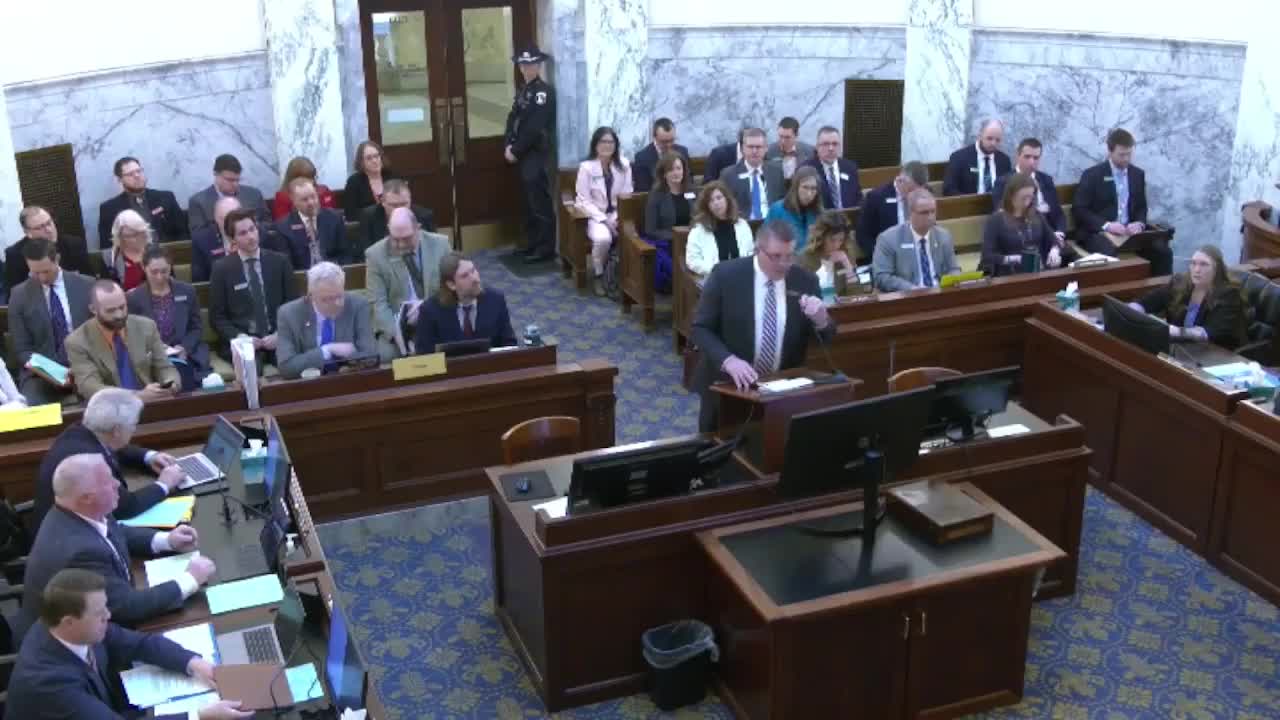
Representative Doug Pickett, chairman of the Idaho House Education Committee, told the Joint Finance-Appropriations Committee on March 7 that Idaho has made substantial gains in public education funding over the past decade but still faces major gaps that require continued legislative attention.
Pickett, a Republican representing District 27, said the state’s K–12 budget has doubled over the past ten years—from about $1.4 billion to about $2.8 billion—while student counts rose by “less than 9%.” He said Idaho’s average K–12 teacher pay has increased to “nearly $63,000 this school year,” which he described as a roughly 42% increase over the last decade.
Why it matters: Pickett framed the numbers as evidence that sustained fiscal policy can allow Idaho to invest in public education. He said legislators must weigh new investments against the need to preserve core academic instruction while expanding career and technical education (CTE).
Pickett warned that CTE demand is strongest at the postsecondary level and that community colleges face capacity constraints and competition with the private sector for qualified instructors. “Qualified instruction continues to be in very high competition with the private sector,” he said, adding that both secondary schools and community colleges struggle to recruit CTE personnel.
Pickett emphasized the distinct needs of rural districts, which he said remain the backbone of many Idaho communities. He cited the state’s statutory definition for rural schools and argued that student-based funding formulas must account for differences in cost and service delivery across low-density districts. “Equal funding does not produce equal opportunity or results,” he said.
He outlined several unmet needs discussed by his committee, including an estimated statewide facilities funding gap of about $3 billion, an $83 million gap for special education services, $5 million to retrain teachers in phonics for early literacy, and $35 million for outcome-based funding. He also noted transportation funding distribution remains a work in progress.
Pickett said his committee supports the Legislature’s recent action to allow school districts to enroll teachers in the state health insurance plan and praised past salary increases. He urged lawmakers not to be reactionary but to plan for high-demand career pathways—HVAC, plumbing, electrical and light industry—while retaining classical academic curricula.
Pickett closed by noting the Joint Legislative Oversight Committee would later that day receive a report from the Office of Performance Evaluations on K–12 characteristics and funding. He also warned of potential federal structural changes at the U.S. Department of Education and said state legislators want any future federal block grants or direct payments to be used for their intended education purposes.
Pickett’s remarks were informational; no committee vote or formal action resulted from his appearance, though members used his testimony in later budget discussions.