Get Full Government Meeting Transcripts, Videos, & Alerts Forever!
Get email alerts on the Budget Finance topic
No spam. Unsubscribe anytime.
Legislative analysts flag dedicated‑fund timing; governor proposes small shift to general fund for State Independent Living Council
Summary
LSO presented the State Independent Living Council(SILC) budget, noting that federal grant timing can cause apparent overspend and that the governor recommends shifting $11,700 of appropriation from the councildedicated fund to the general fund to cover part of statewide benefit and compensation increases.
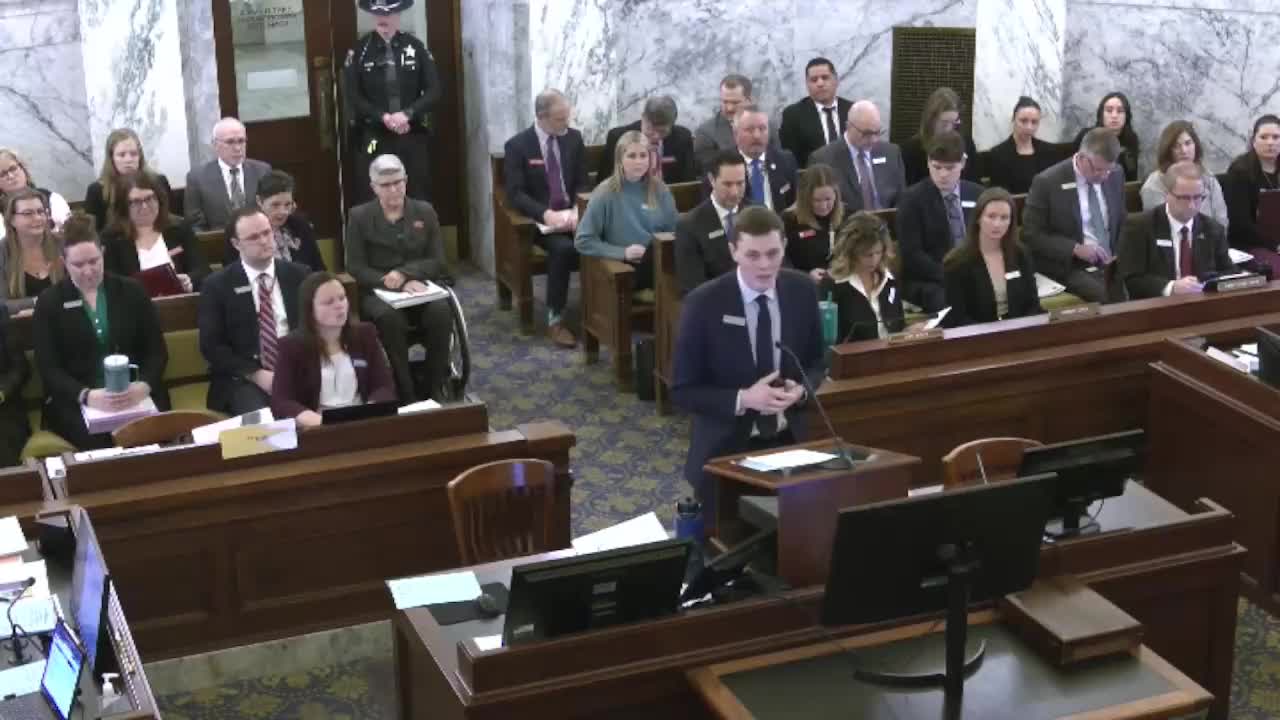
The Joint Finance-Appropriations Committee heard a budget presentation from Legislative Services Office analyst Kellen McGurkin on the State Independent Living Council (SILC), which promotes independent living and coordinates advocacy and training for people with disabilities across Idaho.
McGurkin told the committee SILC operates with four full-time positions, typically spends nearly all of its federal and dedicated‑fund revenue each year, and usually maintains an ending balance of about $280,000—roughly six and a half months of operating expense—to manage timing differences when federal grant periods do not align with the state fiscal year. He said the councilreceives federal funds through Title I of the Rehabilitation Act and Title VII of the Workforce Investment Act that pass through the Idaho Division of Vocational Rehabilitation.
Why it matters: The councilrelies heavily on federal grant flows deposited to a dedicated fund, so differences in grant accounting can make a given fiscal year look underfunded even though the program is operating within its multi‑year cash flow. The governorrecommended shifting $11,700 of appropriation from SILC's dedicated fund to the general fund so that the general fund covers roughly half of statewide increases in health benefits and change‑in‑employee‑compensation (CEC) adjustments for 2026; McGurkin said those costs otherwise would reduce the dedicated fundbalance.
SILC executive director Mel Levitan, who attended the hearing, thanked the committee for a $10,000 increase in the prior year that paid for external audits and noted that with those funds the agency completed audits for fiscal years 2022–24 with no findings. "We make the most that we can with a very small budget," Levitan said, adding the council travels across the state to reach people who cannot come to Boise.
Committee discussion focused on clarifying the difference between appropriation and actual cash receipts when federal grants use different reporting periods than the state fiscal year. McGurkin said apparent overspend in a given year can reflect that timing mismatch rather than program mismanagement.
The presentation material in the LSO packet included five‑year snapshots showing personnel costs typically account for about 69–70% of SILC expenditures, with most operating costs covering travel and rent for statewide outreach and trainings. McGurkin noted SILC had a modest Title I funding increase in FY2023 after about a decade without growth.
The committee did not take a formal vote during the presentation; the governor's recommended maintenance/adjustment proposals, including this fund shift, will be considered as part of the committee's broader maintenance and CEC decisions later in the budget process.