Get Full Government Meeting Transcripts, Videos, & Alerts Forever!
Get email alerts on the Energy Transmission Eminent Domain topic
No spam. Unsubscribe anytime.
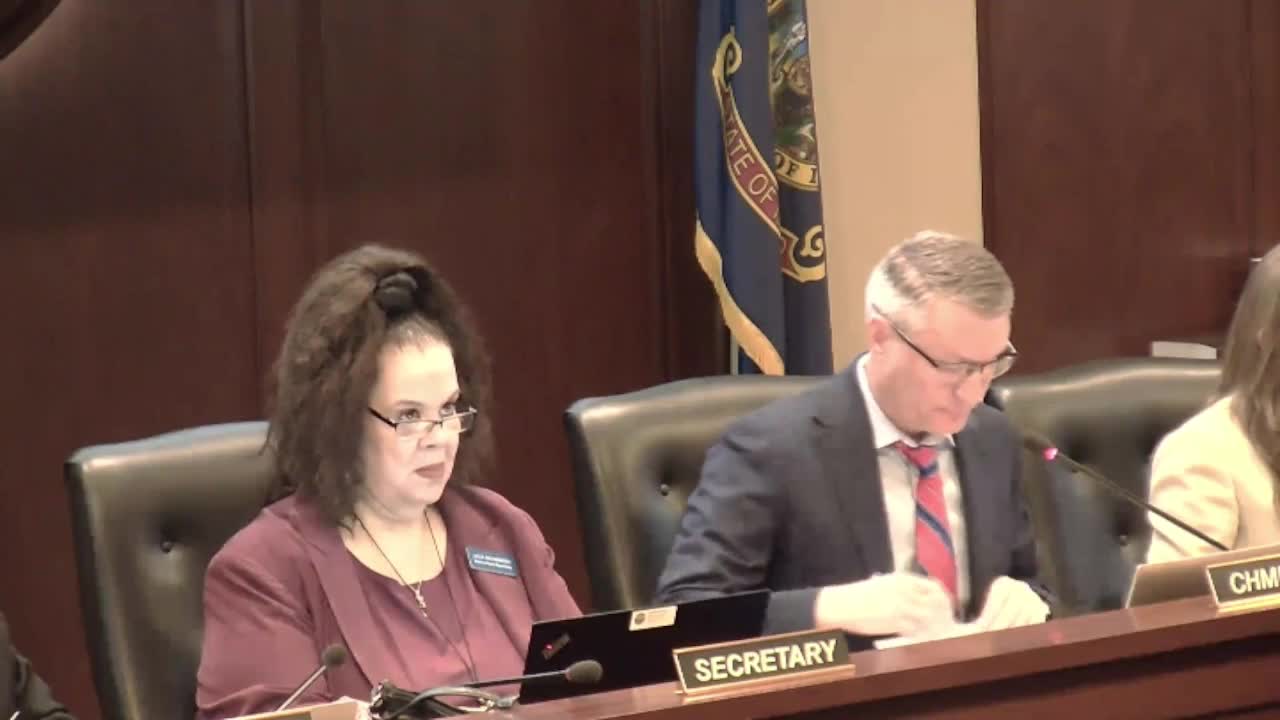
Rep. John Gannon introduces RS 32,218 C1 to limit exports on new transmission lines, seeks 75% in-state requirement
Summary
Representative John Gannon introduced RS 32,218 C1, a drafting request that would require 75% of energy carried on new transmission lines subject to eminent domain to remain in the state, with up to 25% allowed to be exported.
Representative John Gannon (District 17, Boise) introduced RS 32,218 C1, a drafting request that would place limits on the export of energy carried on new transmission lines that could use eminent domain. Gannon said the draft would require that 75% of energy on such transmission lines stay in the state, with up to 25% allowed to be exported.
Gannon framed the RS as prospective and aimed at new transmission projects; he said existing transmission lines would not be affected. He cited examples and sources in the discussion, including a referenced $1,000,000,000 transmission-line project from Southern California to Twin Falls and a U.S. Department of Energy report (October 2024) that he said shows California lags major wind-producing states. Gannon also referenced a 2015 Los Angeles County ordinance that limited turbines in unincorporated areas and said the bill had been reviewed by the Attorney General.
On specifics, Gannon told the committee: "That 75% of the energy in the transmission lines ... has to stay in Idaho. 25 percent of it can go off to California. We're very generous folks." He said the draft would also require that energy be offered to in-state buyers at a reasonable price.
Committee members raised technical questions. Representative Nicholson asked how the proposal would handle the fact that transmission flows change across regions and over time; Gannon replied the RS sets an overall amount and is prospective, and acknowledged there will be times when flows differ from the 75% benchmark. Representative Aquiles said the draft blurred distribution and transmission distinctions and asked the sponsor to provide analysis comparing existing transmission patterns against the 75% benchmark for the full hearing. Representative Barbieri moved to introduce the RS.
The committee approved introduction by voice vote. The transcript does not record a full hearing date or further committee action; committee members asked the sponsor to bring more detailed analysis for a subsequent hearing.