Get Full Government Meeting Transcripts, Videos, & Alerts Forever!
Get email alerts on the Public Defense Appellate topic
No spam. Unsubscribe anytime.
Appellate public defender outlines caseload, seeks deputy attorney to curb outside contracting costs
Summary
State Appellate Public Defender staff told the Joint Finance-Appropriations Committee the office is fully staffed now but has seen a caseload spike since the pandemic. The office requested authorization for an additional deputy appellate public defender, saying hiring would be cheaper than continued contracting for overflow cases.
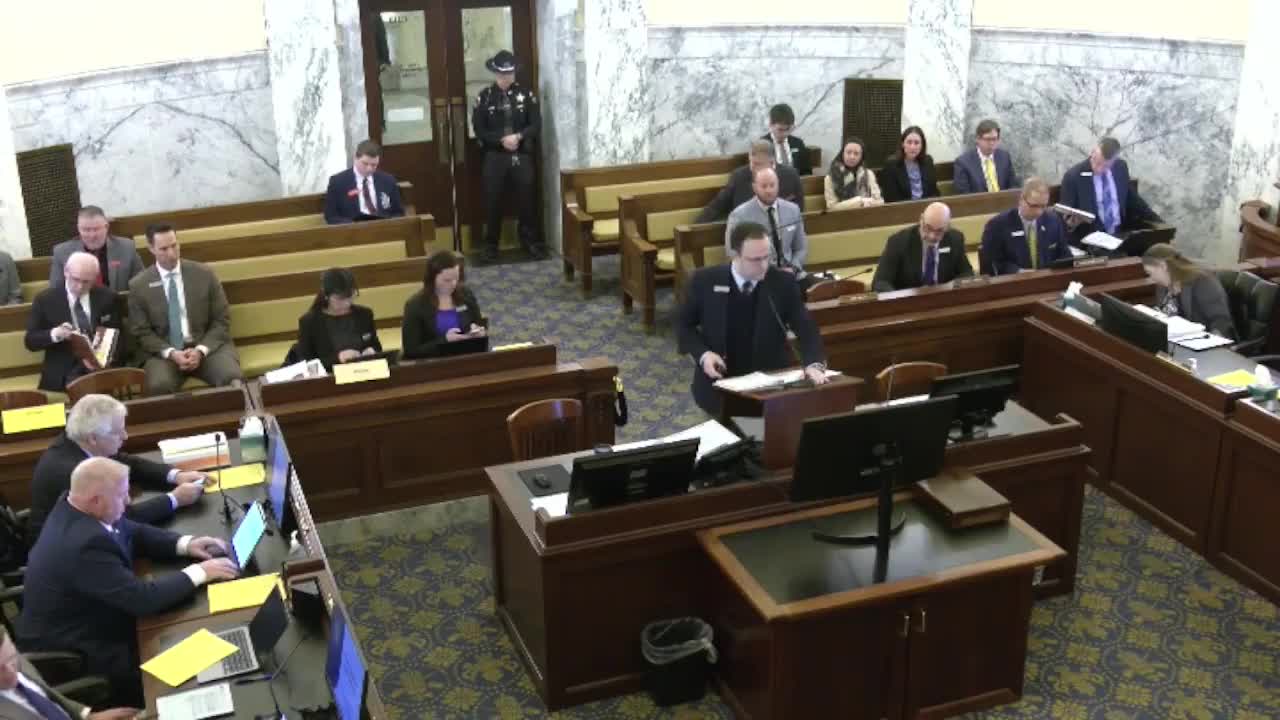
Christopher Lahoset, a budget analyst with the Legislative Services Office, told the Joint Finance-Appropriations Committee that the Office of the State Appellate Public Defender has 26 authorized full-time positions and reported no vacancies as of Dec. 15 in the current fiscal year. The office’s five‑year average personnel appropriation is “just under $2,800,000,” Lahoset said, and roughly 95% of the agency’s personnel appropriation has been used for personnel costs.
Eric Leighton, director of the Appellate Public Defender, said the office has faced turnover while also absorbing a “significant increase in our caseload over the last 3 years.” He told the committee, “we walked into 1,300 withdrawals and cases,” and that post‑pandemic filing levels have increased demand for appellate work. Leighton said the office currently estimates about 650 cases for the fiscal year and tailors assignments by attorney experience.
Leighton and Lahoset described the office’s fiscal request for 2026: authorization and funding for one additional deputy state appellate public defender to be the thirteenth attorney in the appellate unit. Lahoset said contracted overflow work has cost the office about $254,000 annually in recent years and that hiring an attorney with a $140,000 salary would be less expensive than continuing to contract those cases.
The committee’s members asked how the additional position would change internal assignments. Leighton said the unit distributes cases among its attorneys and that newer attorneys are assigned less complex work for training purposes. He and committee members also discussed conflict‑of‑interest cases that must be contracted out regardless of staffing; the office maintains a separate appropriation of roughly $200,000 a year for conflict appointments.
Leighton confirmed the office had used contracting to handle overflow—about 14 cases in the last 18 months—and said contracting is both more expensive and administratively complex because it can cross fiscal years. Lahoset added that the legislature previously approved a one‑time supplemental of $1,309,400 in 2023 to anticipate higher case costs and that reappropriation authority remains for these funds; those reappropriated funds are not part of the base budget.
The presentation closed with Leighton thanking the committee and asking for consideration of the governor’s request for the new position.