Get Full Government Meeting Transcripts, Videos, & Alerts Forever!
Get email alerts on the Wildlife Enforcement Licenses topic
No spam. Unsubscribe anytime.
Senate committee advances bill to bar hunting and fishing licenses for unpaid Fish and Game fines
Summary
The Idaho Senate Resources Committee voted to send Senate Bill 1003 to the Senate floor after debate on using license eligibility to enforce unpaid Fish and Game fines, with agency officials and hunting groups supporting the measure and committee members raising questions about appeals, lifetime certificates and collections.
Senator Dan Foreman, a Republican from District 6, told the Idaho Senate Resources Committee that Senate Bill 1003 would make anyone with outstanding fines for violations of Idaho fish and game laws ineligible to apply for a hunting, fishing or trapping license, tag or permit until all fines are paid.
"This legislation amends ... to make any person with outstanding fines for violations of Idaho fish and game laws ineligible to apply for a hunting, fishing, or trapping license tag or permit until all fines are paid," Foreman said as he introduced the bill and asked the committee to send it to the Senate floor with a "due pass" recommendation.
The bill would treat an attempt by an ineligible person to buy or renew a license as a misdemeanor and add point-of-sale and app notices: vendor systems would display a pop-up directing the would-be purchaser to contact Idaho Fish and Game, and the same pop-up would appear in the Go Outdoors Idaho smartphone application if a blocked person tried to renew. The measure would not make ineligible those on approved time-payment plans who are fewer than 90 days in arrears, Foreman said.
Why it matters: Foreman told the committee there are unpaid Fish and Game fines totaling $282,622 in arrears, and he said tens of offenders who hold or held valid licenses were among those with unpaid fines. The bill aims to use license eligibility as an enforcement tool rather than requiring the department to pursue collections through multiple county courts.
Idaho Department of Fish and Game enforcement chief Greg Wooten testified the agency supports the change and explained how existing processes interact with the bill. "The lifetime certificates are only good for a year. The license that they get with the certificate is good for a year. So they expire on December 31 each year," Wooten said, describing how lifetime certificate holders are still required to obtain an annual license and therefore would be flagged by the system when they renew. He also said, "for all misdemeanors in the state, they require a 45 day appeal period." Wooten added that the department waits for formal judgments before taking action in its system and that misdemeanor convictions commonly carry limited revocation periods.
Committee members pressed on several implementation details. Senator Cook asked whether a lifetime certificate would prevent the system from blocking a user; Wooten explained the annual license associated with the certificate triggers the system check. Cook also asked whether a hunting license is required to apply for controlled special hunts; Wooten replied, "in order for an individual to apply for a controlled hunt ... they have to have a hunting license upfront." Several senators raised concerns about court appeals and timing: if a case is being litigated or appealed, Wooten said people remain eligible to obtain a license until a formal judgment and the lapse of the 45‑day appeal period.
Committee members and the agency described the department's current collection steps: multiple notices sent by the department followed by a letter sent before referral to collections and then an AG's office notice. Wooten said sending debts to private collections is the practical mechanism the agency uses across 44 counties and that those firms remit funds to the department after collecting; he said the collections process makes the agency "whole" but that the system is cumbersome and resource intensive for the department and the attorney general's office.
The Idaho Wildlife Federation's executive director, Nick Fasiano, testified in support, saying, "Hunters and anglers take violations of fish and game code very seriously and this seems like a good enforcement mechanism ..." He asked only that the committee ensure people are not denied licenses because of court timing or delays.
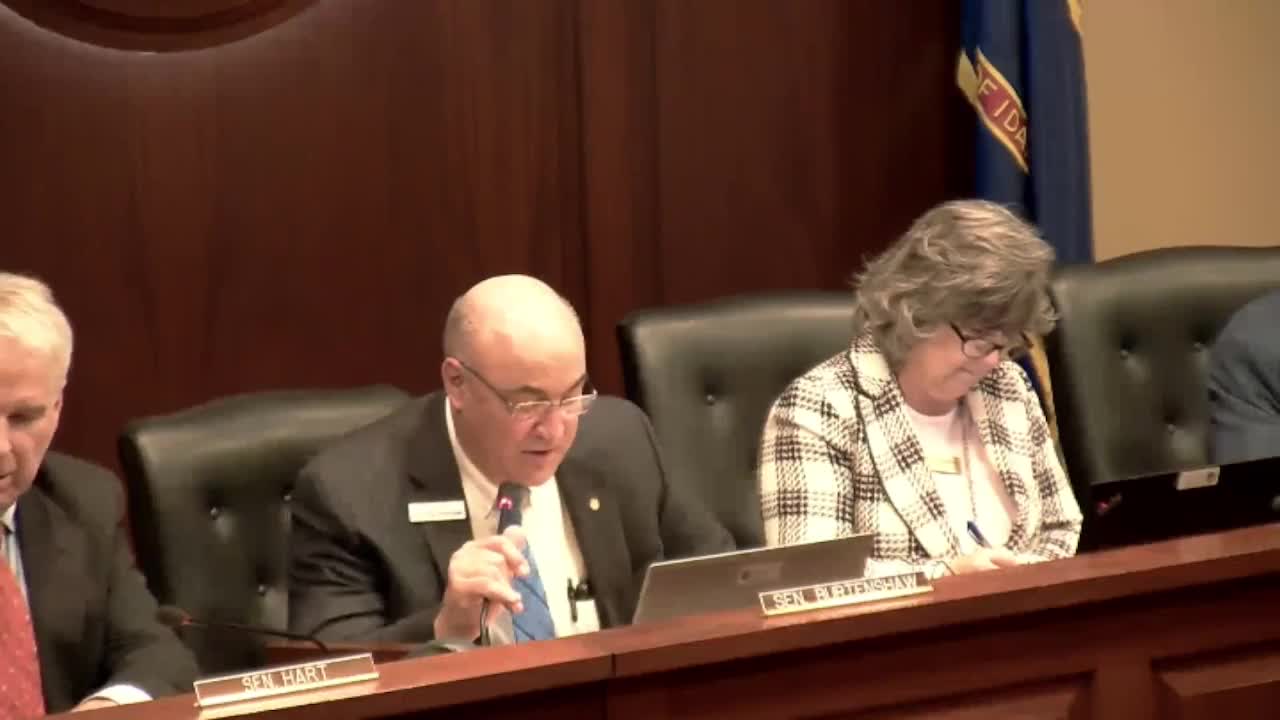
The committee voted to send Senate Bill 1003 to the Senate floor with a due-pass recommendation. Senator Taylor moved the motion; Senator Hart seconded it. The motion carried by voice vote; committee members asked to be recorded included Senator Cole and Senator O'Connorowitz.
The bill, as described to the committee, would apply to state-issued licenses, permits and tags, would not apply to persons current on approved payment plans that are less than 90 days overdue, and would rely on existing vendor and app licensing systems to block applications and purchases for people the department's enforcement records identify as ineligible.
Supporters said the change would reduce the department's reliance on complex, county-by-county collection litigation; critics on the committee sought assurances the measure would not deny access to applicants who are timely pursuing appeals or caught in court-processing delays. The Fish and Game Commission and department staff asked the committee to advance the bill.
The committee discussion provided department clarifications on lifetime certificates, the 45‑day appeal window for misdemeanor judgments, how controlled-hunt applications interact with licenses, and the department's multi-step collections notices prior to referral to collections. The committee did not adopt amendments during the hearing; the measure now proceeds to the full Senate for further consideration.