Get Full Government Meeting Transcripts, Videos, & Alerts Forever!
Get email alerts on the K 12 Funding topic
No spam. Unsubscribe anytime.
Idaho lawmakers hear overview of public school support budget as attendance shifts reduce funded classroom units
Summary
Legislative analysts and the state superintendent reviewed the public school support budget, explaining how a post‑COVID return to attendance-based counts, career ladder adjustments and one‑time federal funds changes are driving funding shifts and staffing questions statewide.
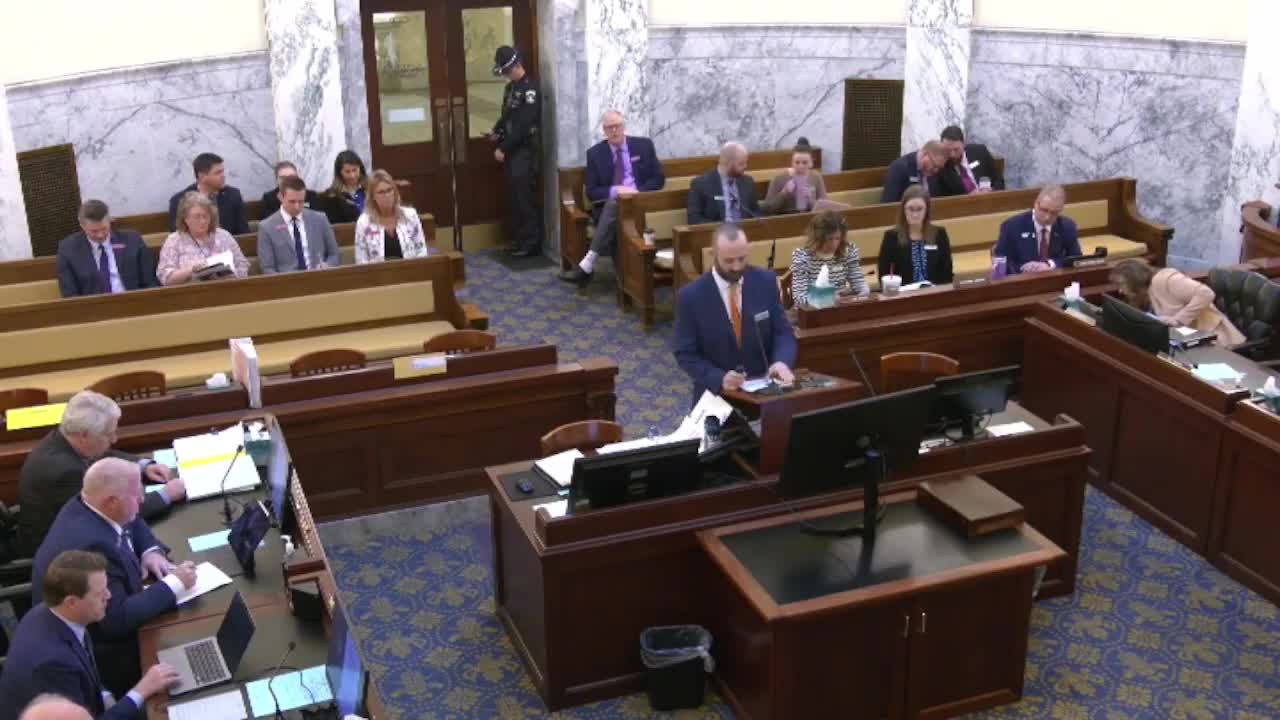
Jared Tetrault, deputy division manager for the Legislative Services Office’s Budget and Policy Analysis Division, told the Joint Finance‑Appropriations Committee on March 4 that the public school support program accounts for the bulk of K‑12 appropriations and serves 115 local school districts and roughly 75 public charter schools statewide. He said most funding is distributed through statutory “support units,” with the state funding 1.55 full‑time equivalent positions per support unit and an average per‑support‑unit allocation of about $147,000.
Tetrault said the program’s funding comes from general fund, dedicated and federal sources and that the Public Education Stabilization Fund (PSIF) is used to reconcile differences between appropriation and distributions. “If there’s an under appropriation, then a withdrawal can occur from the fund. If there’s an over appropriation, then there’s a deposit,” he said.
Why it matters: The committee heard that even without higher total appropriations, fewer funded support units can reduce money distributed to districts because Idaho law requires distributions be based on average daily attendance. “During COVID the counting process changed from attendance to a hybrid of enrollment with an attendance component,” Superintendent Debbie Critchfield said during the hearing. “Post COVID… percentages are closer to 94 percent. Whereas pre‑COVID, they were closer to 95.” That shift from enrollment counts back to attendance accounts for an estimated 200 fewer support units and corresponding reductions in certain appropriation lines.
Major cost drivers and recent actions - Career ladder (salary‑based apportionment) and salary/benefit costs remain primary drivers for the teachers and student support divisions. The legislature approved maintenance and additional change‑in‑employee‑compensation (CEC) adjustments in recent sessions; the committee was shown a table of multi‑year CECs and career ladder impacts. - One‑time federal funds (ESSER/ARPA) largely phased out; Tetrault told the committee the current year includes roughly $99.9 million as the last year of COVID/ARPA dollars in the public schools budget. Superintendent Critchfield said she declined a federal extension of ESSER spending and that districts should plan to phase out reliance on one‑time funds. - The pupil transportation request for 2026 is $7.7 million based on the statutory formula in Idaho Code §33‑1006 that uses prior year expenditures. Tetrault also reported a proposed internal shift of $10 million from the general fund to the “other income” dedicated fund to reflect additional interest and royalty revenue.
Facilities and the school district facilities fund Committee members asked about the House Bill 292 school district facilities fund, established in 2024 and now on budget. Tetrault said distributions from that fund and the larger one‑time $1 billion allocation (passed as House Bill 521) are sent on a per‑student basis and may be used to pay off bonds, existing levies, or for maintenance/renovation and new construction. Districts were allowed to take their facility funds as a lump sum; Tetrault said most districts elected lump‑sum payments and may retain the funds and accrue interest. The committee was told that House Bill 374, if enacted, would make the facilities fund a continuous appropriation and could require a technical appropriation change by this committee.
Discretionary funds, health insurance and staffing questions Tetrault and committee members clarified that “discretionary” dollars are flexible local funds and that health‑insurance allocations are made per staff allowance (support unit) rather than on a per‑FTE basis. When asked whether the state tracks how many school employees do not receive district‑paid health insurance, Tetrault said the state can obtain that information for staff who are on the state plan but that district reporting is largely self‑reported.
Pending legislation and enhancements Tetrault listed several proposed bills and budget enhancements that would require statutory changes (weighted student funding, transportation funding formula, a special needs student fund). Several items in the department’s request — including optional statewide transportation routing software and enhancements for central services (professional learning communities, data dashboards) — were described as contingent on legislative action.
Committee questions also focused on professional development and literacy funding. Critchfield explained a proposal to move some state professional‑development dollars into discretionary funding to give districts local control and to repurpose a portion of existing professional‑development funds toward coaches for K–3 literacy and phonics if legislation is enacted. She said federal professional‑development funds also remain available to districts.
What the committee will do next: Members requested district‑level breakdowns of facility fund distributions, information on how many employees are on the state health plan, and further detail about the pending bill language for funding formula changes. No formal votes were recorded during the presentation.
Ending The public school support budget remains the largest portion of the committee’s appropriations work. Staff and the Department of Education told lawmakers they will provide more detailed district‑level distributions and supplemental data on staffing and benefits as the committee considers statutory and appropriation changes in the coming weeks.