Get Full Government Meeting Transcripts, Videos, & Alerts Forever!
Get email alerts on the Teacher Unions topic
No spam. Unsubscribe anytime.
House committee advances bill limiting use of public resources for teacher-union activity
Summary
The House State Affairs Committee voted to send House Bill 98 to the floor with a "do pass" recommendation after a lengthy hearing that divided lawmakers, school administrators and unions over whether school districts should be allowed to use payroll and paid release time to support union activities.
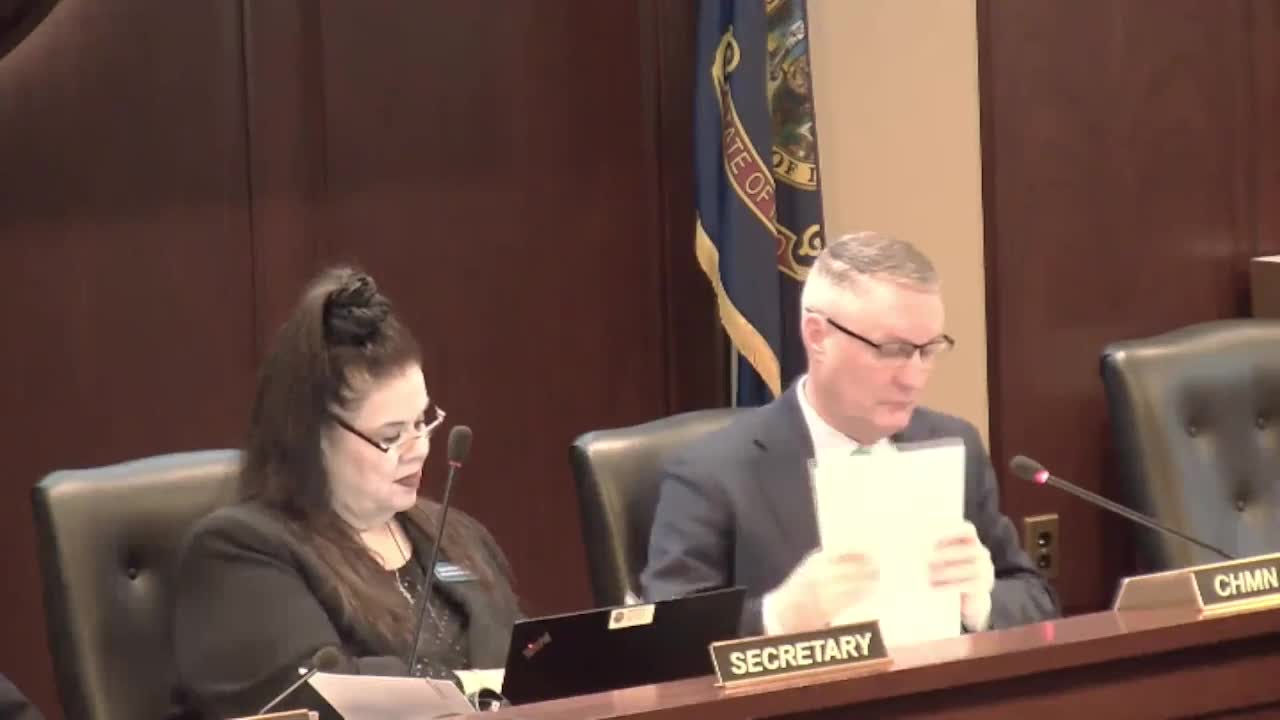
BOISE, Idaho — The Idaho House State Affairs Committee voted to send House Bill 98 to the House floor with a "do pass" recommendation after a two-hour hearing that sharply divided lawmakers, teachers' unions and school administrators.
Representative Judy Boyle, a Republican from District 9, introduced the bill, saying it would "ensure that taxpayer dollars do not go to fund teacher unions." The measure would bar districts from using public payroll systems, paid release time or other public resources to support union activities, and it creates civil penalties for violations.
Supporters said the bill draws a clear line between taxpayer-funded public services and private union activity. Max Nielson of the Freedom Foundation told the committee the measure would "restore balance and fairness" by preventing districts from using public time and resources for union purposes. Jason Mercier and witnesses from the Heritage Foundation and other organizations argued the bill would protect taxpayers and make unions more accountable to members.
Opponents, including testimony from the Idaho Education Association and school administrators, said the measure would harm teacher retention, interfere with local control and impose heavy compliance costs on districts. Paul Stark, executive director of the Idaho Education Association, told the committee the bill singles out one organization and raises constitutional concerns about viewpoint discrimination. Andy Grover, representing the Idaho Association of School Administrators, said the law would increase administrative burdens and legal exposure for already-stretched district offices.
The hearing included multiple examples and contested estimates. Representative Boyle said 115 traditional public schools exist in Idaho, with 83 of them unionized and "50 of them allow union activity using taxpayer dollars." The Freedom Foundation and related witnesses estimated taxpayers currently subsidize union activity by roughly $500,000 annually; the IEA said an $1.8 million figure that circulated earlier was a tax-filing error and that the association receives no taxpayer funds.
Lawmakers questioned enforceability and scope. Representative Andy Dygert and others asked how the state would determine whether a pay increase or payroll deduction was intended to support union dues. Boyle said portions of the bill would rely on written policy and an "honor system," while opponents warned that the statutory language and civil penalties could create a chilling effect on routine district-union interactions such as grievance representation or professional-development coordination.
Several witnesses described how release time is used in districts. Sean Laughlin of the Professional Fire Fighters of Idaho and others said release time can function as an employee-relations and human-resources mechanism that helps districts avoid lawsuits and administrative costs. Boyle cited district contract examples she said exist: one district reportedly provides 25 days of paid release time; another allows an association president a full year of paid leave; a third gives two days per week off with the first 38 days paid by the district. Witnesses on both sides said practices vary widely.
Committee debate tracked political and procedural concerns as well as substance. Representative Nick Scott moved that the committee send the bill to the House floor with a due pass recommendation; the motion carried. The record shows at least two committee members voting no (Representative Todd Achilles and Representative Schubin were recorded as voting against the motion). Committee members who supported the bill cited taxpayer protection and the need to stop districts from subsidizing union operations; opponents cited local control, administrative burden and constitutional concerns.
What the bill would do: it would bar districts from (among other items described in testimony) deducting union dues via district payroll, using public funds to compensate teachers for union activities, providing personal employee contact information to unions without consent, and distributing membership solicitations using district resources. The bill includes exceptions for unpaid negotiated release time, personal leave, and situations where a union reimburses the district, and it prescribes civil penalties for repeat violations.
The measure will next be considered by the full House. Committee members and witnesses said that many of the bill's outcomes, enforcement details and legal limits likely will be further hashed out on the House floor and in potential amendment language.