Get Full Government Meeting Transcripts, Videos, & Alerts Forever!
Get email alerts on the Budget Funding topic
No spam. Unsubscribe anytime.
Idaho Independent Living Council asks committee to shift $11,700 from dedicated to general fund to cover statewide benefit costs
Summary
The State Independent Living Council told the Joint Finance-Appropriations Committee it generally spends nearly all available dedicated-fund revenue, holds roughly $280,000 in reserve, and supports a governor-recommended $11,700 appropriation reclassification to let general funds cover part of rising statewide benefit and salary costs.
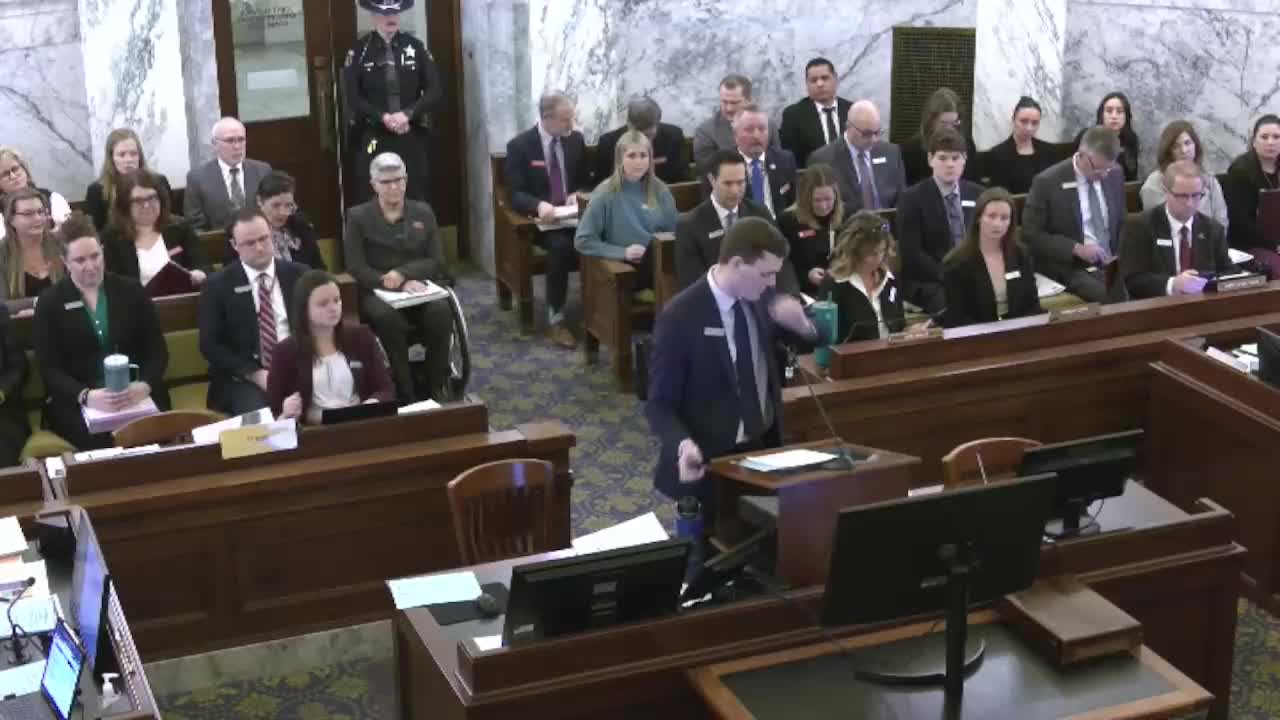
The State Independent Living Council told the Joint Finance-Appropriations Committee on Jan. 15 that it typically spends nearly all of the federal and state-dedicated revenue it receives and is asking lawmakers to approve a modest reclassification of $11,700 in appropriation from its dedicated fund to the general fund for fiscal year 2026.
Kellen McGurkin, a budget and policy analyst with the Legislative Services Office, described the council’s funding and staffing profile and explained the requested change. He said the council has four full-time positions – including director Mel Levitan – and that the dedicated fund primarily comes from federal independent living grants passed through the Idaho Division of Vocational Rehabilitation. McGurkin told the panel that revenue timing from federal grants can make a single fiscal year look like expenditures exceed receipts even when total available funding is being spent prudently.
“The difference between appropriation and expenditure is largely due to differences over the years in the amount of appropriation for personnel costs that the agency receives into its dedicated fund versus a lower amount of revenue that SILC has available through its fund sources,” McGurkin said during the presentation.
McGurkin told legislators SILC usually maintains an ending balance near $280,000 – roughly six and a half months of the agency’s expenses – to buffer against funding freezes. He noted the agency’s Title I federal rehabilitation grant grew by about $30,000 in fiscal 2023, the first increase in roughly a decade.
The governor’s recommendation for fiscal 2026 would shift $11,700 of appropriation from the council’s dedicated fund to the general fund, McGurkin said. He explained the technical effect: the shift would reduce the dedicated-fund appropriation and increase general-fund appropriation so that the general fund would cover roughly half of the statewide health benefit and change-in-employee-compensation (CEC) increases that otherwise would be charged to the dedicated fund.
Mel Levitan, executive director of the Idaho State Independent Living Council, thanked committee members for prior support and said the agency has reduced audit findings after a one-time $10,000 enhancement that funded an external audit. “We make the most that we can with a very small budget. We travel all over the state, and we get to meet folks... We wanna go to them,” Levitan said, noting the council’s role in outreach and training across Idaho.
Committee members asked for clarification about the apparent year-to-year “overspend.” McGurkin clarified the figures are a timing artifact of federal grant periods and state fiscal-year accounting, not evidence of chronic overspending.
No formal action or vote took place during the presentation. The committee moved on to other scheduled agency hearings after questions and closing remarks.
Meeting context: the presentation was part of a series of replacement and enhancement hearings the Joint Finance-Appropriations Committee held on Jan. 15 to review agency requests ahead of program-maintenance budget setting scheduled later in the week.
Why it matters: the requested appropriation reclassification is small in dollar terms but illustrates how timing and fund-source rules determine whether personnel and benefit cost increases hit an agency’s dedicated fund or the state’s general fund. The council’s reserve level and near-full spending of available revenue are relevant to the committee’s decision on whether to approve the governor’s recommended reclassification.