Get Full Government Meeting Transcripts, Videos, & Alerts Forever!
Get email alerts on the State Public Defender Implementation topic
No spam. Unsubscribe anytime.
New State Public Defender office asks for supplements, dedicated fund authority after rapid caseload increase
Summary
Legislative Services Office and State Public Defender Eric Frederickson told the Joint Finance‑Appropriations Committee the new office faces unexpected costs as counties transition representation to the state and asked for one‑time and ongoing appropriations, including authority to spend a $39 million cash transfer into a dedicated fund.
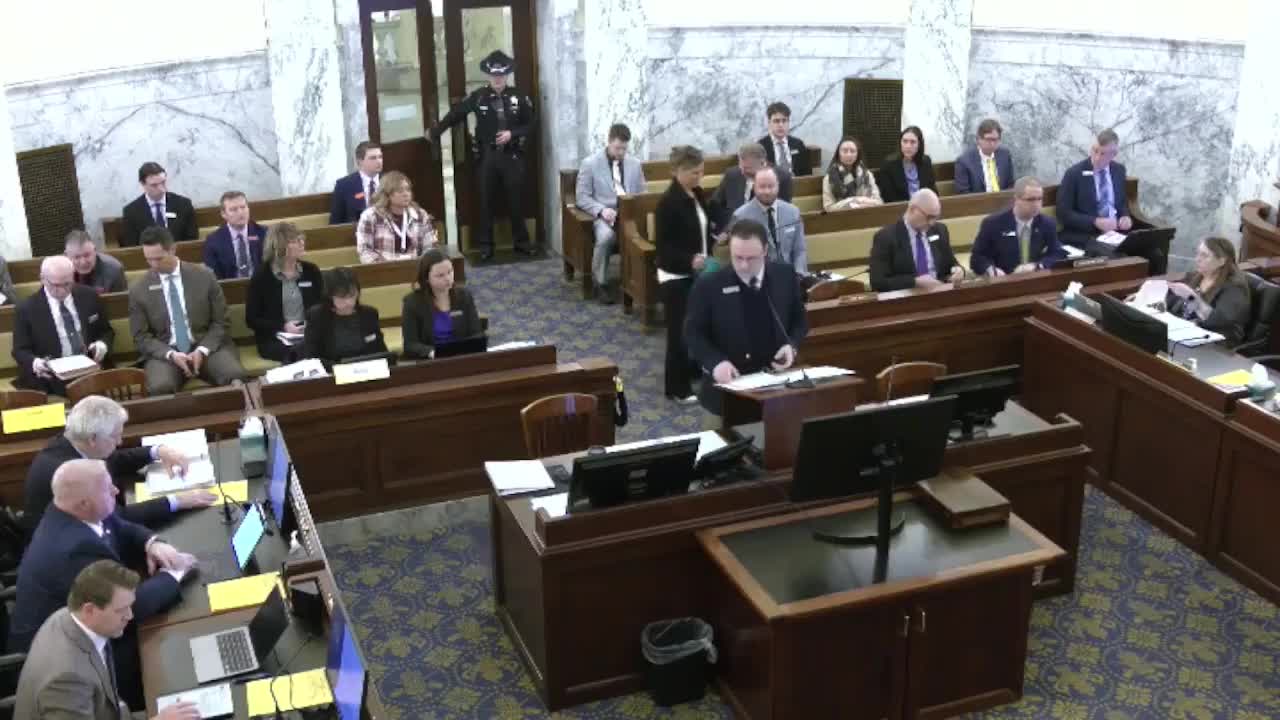
BOISE — The newly formed State Public Defender told the Joint Finance‑Appropriations Committee it needs one‑time and ongoing funding after a rapid rise in demand and gaps between initial fiscal assumptions and current case volumes.
Christopher Lahoset, budget and policy analyst with the Legislative Services Office, said the office was created in “title 19 chapter 60 section 3 of Idaho Code” and that a dedicated State Public Defense Fund was established in Idaho Code section 57‑8207. Lahoset said the state controller was directed to transfer $39 million from the tax relief fund into the new dedicated fund, but that last year’s appropriation omitted authorization for $2.5 million in spending authority the agency now requests as a supplemental so it can fully use the transferred cash.
Lahoset outlined several requests. For the current fiscal year the agency requests a one‑time supplemental of $2.5 million to fully utilize the $39 million cash transfer; the governor also recommended a one‑time supplemental of $390,200 for transcript costs related to the Idaho Supreme Court decision in State v. Blasick (issued Dec. 5, 2024) that placed transcript costs on the state. The governor additionally recommended a one‑time supplemental of $5,427,600 for personnel and contracting costs in the current fiscal year.
For fiscal 2026 Lahoset said the agency requested $2.5 million ongoing to use the cash transfer, requested $16,000,380 plus $80,800 from the General Fund to increase public defense operating budgets for contracts, experts and capital litigation, and sought authorization for an additional 17.96 full‑time positions and $226,700 ongoing to open four new institutional offices in Benewah, Elmore, Jerome and Shoshone counties.
Eric Frederickson, the State Public Defender, told the committee the agency walked into a heavier caseload after its Oct. 1 start and that some numbers used to create the agency’s initial fiscal plan reflected pandemic case volumes, which were lower than post‑pandemic levels. “We walked into 1,300 withdrawals and cases,” Frederickson said, describing a period in which agency leaders and district defenders had to litigate and handle cases directly while the new agency stood up offices, hired staff and transitioned contract attorneys.
Frederickson said the office has about 29 vacant positions and a personnel budget of about $37.7 million; the agency’s total authorized appropriation for fiscal 2025 was reported as about $52,000,015.30. He told the committee the agency needs resources to recruit and retain employees, raise contract rates for attorneys and investigators, and pay increased capital litigation costs and expert fees. Frederickson cited psychosexual evaluations as one example of evaluation costs previously paid by counties, noting they run about $2,500 each.
On transcript costs, Lahoset told the committee that the Idaho Supreme Court ruling in State v. Blasick shifted responsibility for paying court transcripts from counties to the state and that the governor had proposed both one‑time and ongoing funding to cover those costs.
Committee members pressed the agency on several operational points: whether counties would continue to provide facilities (Frederickson said statute requires counties to provide facilities until 2029), how and when the state will onboard counties (the agency described a phased approach with four counties scheduled for onboarding and said more counties may be added later), and whether the agency was being asked to provide representation in matters outside its statutory scope (Frederickson said the office is being appointed to some civil and custody matters in practice and is litigating to clarify scope).
Frederickson said the agency is implementing a statewide case management system to improve workload measurement and planning and that consolidating pay rates across counties was necessary to recruit attorneys for rural offices. He told the committee the office had increased contract rates because many flat‑fee contracts were deemed unethical and unsustainable.
Committee members asked for additional details on specific line items, including the agency’s $2 million budgeted for experts and $3,581,000 labeled for training, transcripts and miscellaneous expenditures. Frederickson answered that some costs — especially expert and evaluation fees — were difficult to fully forecast and that some previously county‑paid items would require statutory clarification to shift to state payment.
The committee did not take a final appropriation action during the hearing; legislators asked for supplemental detail and further documentation of cost breakdowns, county facility arrangements, and projected staffing needs as counties are onboarded.