Get Full Government Meeting Transcripts, Videos, & Alerts Forever!
Get email alerts on the Criminal Defense Appellate topic
No spam. Unsubscribe anytime.
Appellate public defender asks for deputy attorney to cut outsourcing costs
Summary
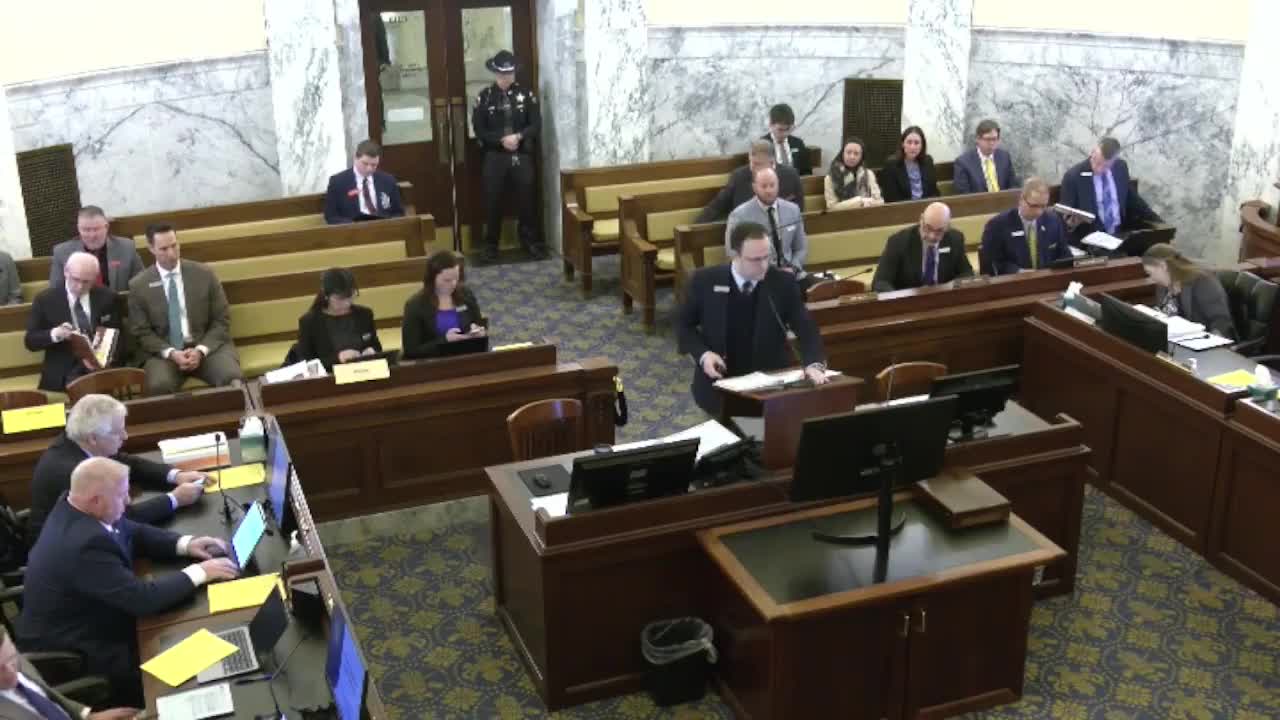
At a Joint Finance-Appropriations Committee hearing, the State Appellate Public Defender requested funding for a deputy appellate public defender to bring overflow appeals in‑house, arguing a hired attorney would cost less than current contracted overflow counsel.
BOISE — The State Appellate Public Defender asked the Joint Finance‑Appropriations Committee for funding to add a deputy attorney to handle noncapital appeals, saying hiring would be cheaper than continuing to contract overflow cases.
Christopher Lahoset, a budget and policy analyst with the Legislative Services Office, told the committee the office has 26 authorized full‑time positions and reported no vacancies as of Dec. 15. Lahoset said the office’s average personnel appropriation over five years was just under $2.8 million and that about 95% of personnel appropriation has been used for personnel costs.
“The agency requests an additional position in funding for a deputy state appellate public defender,” Lahoset said, describing the proposed position as intended to take “all non capital felony, misdemeanor, and juvenile district and post conviction appeals.” He added the agency currently spends on outside counsel for overflow cases and seeks the position to reduce those costs.
Eric Leighton, director of the State Appellate Public Defender, told the committee the office has seen a “significant increase in our caseload over the last three years” and that turnover tied to the creation of the State Public Defender had made staffing more difficult in the recent period. Leighton said the office is “for the moment, fully staffed,” but acknowledged staff departures were imminent.
Leighton explained how the office assigns appeals internally and that adding a 13th appellate attorney would distribute the roughly 650 cases currently projected for the year across more staff. “Depending on the experience level of the attorney, we tailor the caseload,” he said, noting new attorneys are not assigned the most complex capital or first‑degree murder appeals.
Committee members asked whether the office contracts out cases and whether hiring would save money. Leighton said the office must always contract conflict cases, and it has an earmarked fund of about $200,000 for that purpose. He said the office also contracts overflow cases when necessary, describing contracting as “an imperfect solution” that is generally more expensive than in‑house handling. He estimated contracted overflow attorney costs at about $254,000 per year and suggested a state salary near $140,000 would be less costly.
Leighton said about 14 overflow cases have been contracted out in the last 18 months. He described the fiscal management challenge when contracted cases extend across fiscal years and when salary savings used to cover contracts in one year may not be available the next.
The analyst closed by noting the agency had requested reappropriation authorization for remaining one‑time funds provided in fiscal 2023 to cover overflow case costs and that roughly $1.26 million remained in that account at the time of the hearing.
The committee heard the request but took no formal vote during the session.