Get Full Government Meeting Transcripts, Videos, & Alerts Forever!
Get email alerts on the Recidiviz And Transparency Software topic
No spam. Unsubscribe anytime.
Idaho corrections seeks ongoing funding for Recidiviz partnership, transparency tools and training equipment
Summary
Department of Correction requested ongoing funding to continue and expand data partnership with nonprofit Recidiviz, subscribe to transparency and legal-access software, buy training mannequins and pilot a North Idaho special assistant U.S. attorney position.
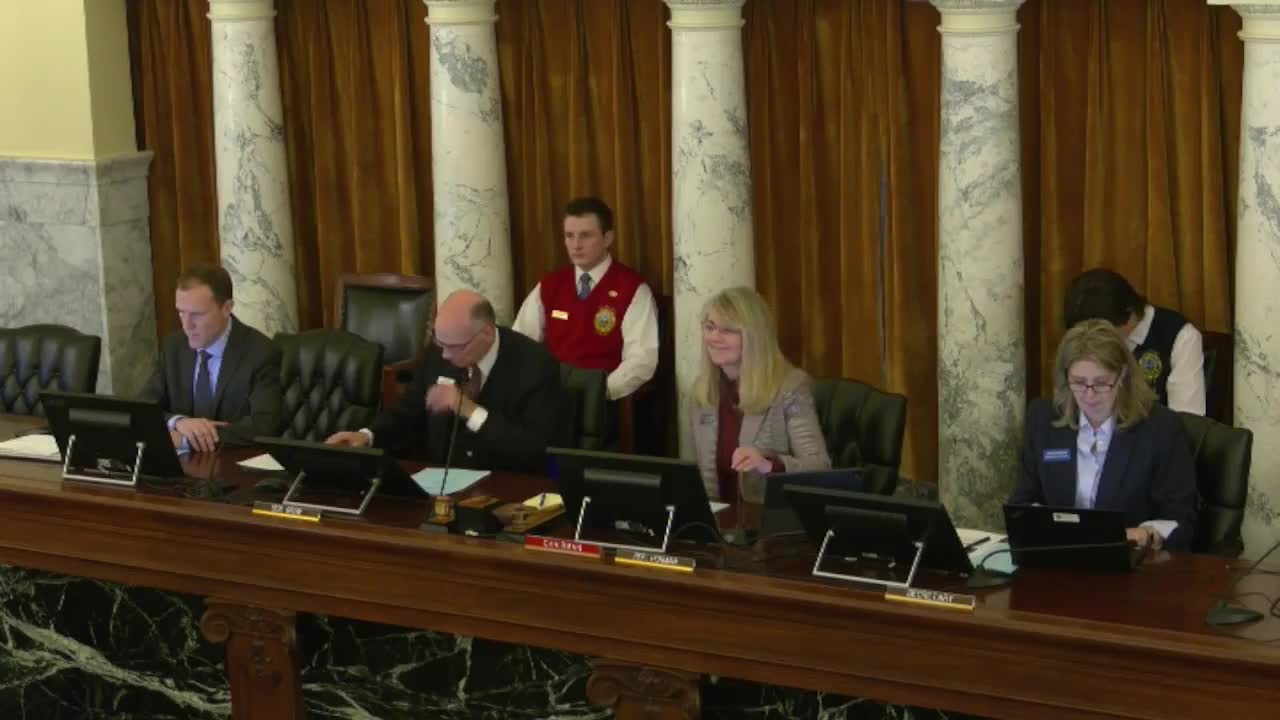
The Idaho Department of Correction asked the Joint Finance Preparations Committee on Feb. 4 for ongoing funding to expand a data partnership with the nonprofit Recidiviz and to maintain multiple transparency and legal-access software subscriptions.
The funding requests are part of the Management Services Division budget presentation by Legislative analyst Noah Peterson and Director Josh Tewalt. The agency seeks recurring general-fund support for “recidiviz case management software” and related development, plus $668,100 for transparency software and $1,515,000 for IT replacement items recommended by the Office of Information Technology Services.
Why it matters: agency leaders say Recidiviz is being used to surface disparate data across systems and to automate clerical tasks that currently take substantial staff time. Director Josh Tewalt told the committee Recidiviz has been “probably the most transformative partnership we've entered into as an agency in my entire tenure there,” and that the nonprofit matches public dollars with philanthropic funding to leverage impact.
How the tools will be used: Tewalt and the legislative analyst described three main uses. First, Recidiviz-built case triage tools produce reports that help probation and parole officers prioritize work. Second, the agency wants to transition similar tools into prisons so case managers can account in near real time for completed programming and use that information for classification decisions. Third, transparency software (GovQA), an online legal research subscription (LexisNexis) and an “access to courts” database (ATC) aim to streamline public-records requests, inmate access to case law and staff responses to subpoenas.
Costs and prior spending: Peterson said the agency previously received about $1.5 million in one-time federal funds to build Recidiviz tools in 2021 and 2023; the current request would shift to ongoing state support for continued development and operations. The transparency package totals $668,100 (about $611,000 ongoing and $57,000 one-time); GovQA was listed at $58,700 ongoing, LexisNexis at $69,700 ongoing, and ATC phase 2 implementation at $57,000 one-time and $33,000 ongoing.
Questions from legislators focused on measurable return on investment and control of data. Noah Peterson said he did not have hard ROI figures in hand. Tewalt said the data remain under state control through data-sharing agreements and that Recidiviz pulls data from agency systems rather than replacing or altering agency records: “we control the data,” he said. He also offered to provide the committee dashboards and visualizations used by staff to judge effectiveness.
Other Management Services requests included $77,400 one-time for Meridian training equipment (16 mannequins at $1,900 each and a light-duty “crab” truck listed at about $47,000) and a one-time, $85,000 appropriation to pilot a special assistant U.S. attorney position in North Idaho focused on drug trafficking.
No formal vote was taken on these budget items during the presentation.
The department agreed to provide follow-up materials showing Recidiviz dashboards, any available outcome data, and details on philanthropic matches for transparency to the committee.