Get Full Government Meeting Transcripts, Videos, & Alerts Forever!
Get email alerts on the Revenue Forecast topic
No spam. Unsubscribe anytime.
Committee adopts FY2025 revenue projection; FY2026 projection fails to secure both-house majorities and is postponed
Summary
The Joint Finance-Appropriations Committee adopted a $5.99 billion general fund revenue projection for FY2025 by a unanimous 20–0 vote and postponed a FY2026 revenue decision after competing motions failed to secure majority support from both chambers.
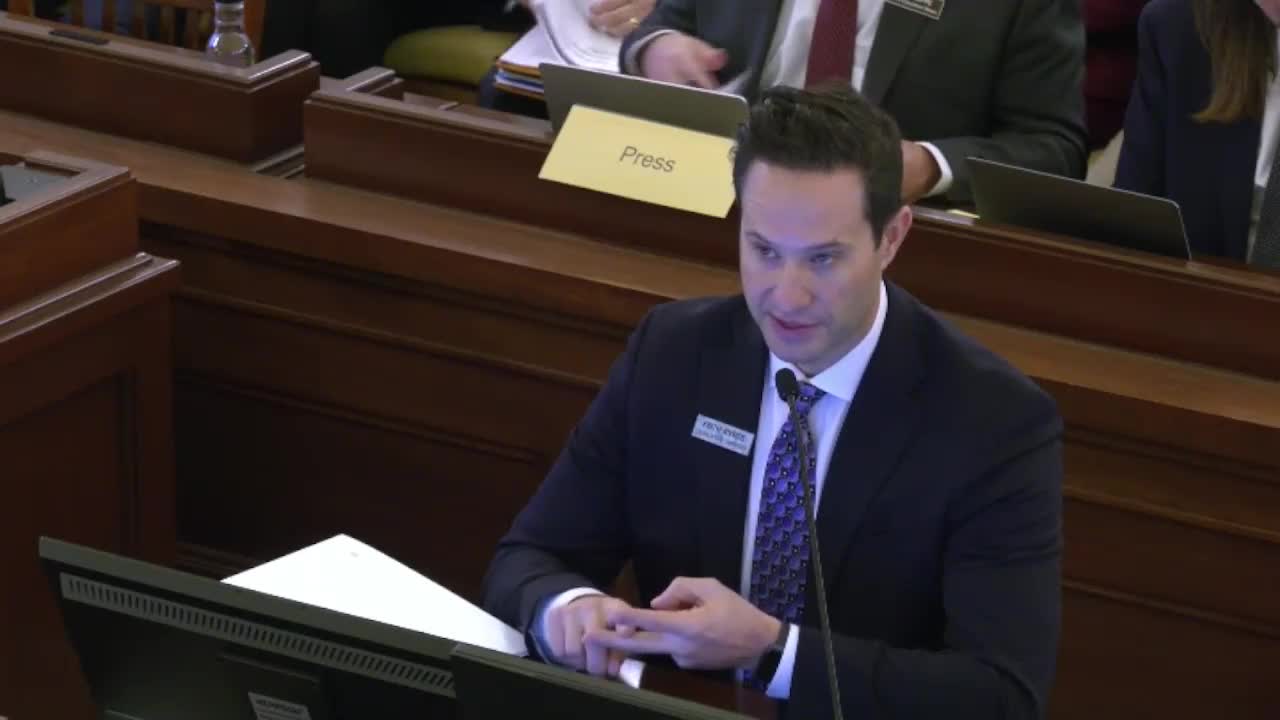
Keith Bybee, Division Manager of the Budget Policy Analysis Division, presented the committee’s revenue choices and reminded members that the committee would vote first on a FY2025 general fund revenue number and then on FY2026.
For fiscal year 2025, Senator Woodward moved that the Joint Finance and Appropriations Committee adopt the Economic Outlook and Revenue Assessment Committee’s recommended general fund revenue projection of $5,990,000,000 for setting state agency budgets. The motion was seconded by Co-chair Horman. After a voice roll-call vote, the clerk reported a unanimous result: 20 ayes, 0 nays, 0 absent or excused. Chairman Groh said “The majority having voted in the affirmative from both house and senate. This motion passes.”
The committee next debated FY2026 revenue numbers. Bybee presented two competing figures on the packet: the Economic Outlook and Revenue Assessment Committee recommendation of $6,400,000,000 and the governor’s recommended planning number of $6,261,000,000. Representative Petsky moved to adopt the economic outlook committee’s $6,400,000,000 projection, and that motion drew a separate substitute from Senator Woodward proposing $6,330,000,000 instead.
Members debated the substitute and the original motion. Those arguments included characterization of the 6.3bn option as a compromise and reminders that the committee had sought majority support from both chambers in past years to strengthen floor passage. Representative Tanner and others urged the committee to adopt conservative baseline figures to avoid recurring supplemental requests; Representative Petzke and others said they would follow the economic outlook committee’s original recommendation.
The substitute motion ($6,330,000,000) failed on a combined tally of 9 ayes and 11 nays; the committee then took up the original motion (the $6,400,000,000 economic outlook recommendation). The original motion recorded a final tally of 14 ayes and 6 nays but did not secure a majority from both the Senate and the House under the committee’s adopted voting practice. Chairman Groh said the original motion therefore failed and that the committee would postpone the FY2026 revenue decision to a later time.
No revenue bill text or spending adjustments were enacted at the meeting; staff and members said the FY2026 vote would be revisited later.
Key votes at the meeting included the FY2025 adoption (20–0) and the unsuccessful FY2026 motions; committee staff advised members that the differing FY2026 totals reflected a range of economic outlook inputs.