Get Full Government Meeting Transcripts, Videos, & Alerts Forever!
Get email alerts on the State Administration topic
No spam. Unsubscribe anytime.
Committee advances bill to add Office of Administrative Hearings to statewide cost allocation billing
Summary
Senate Bill 1116, which would add the Office of Administrative Hearings to the Statewide Cost Allocation Plan billing process, was recommended to the Senate floor with a due-pass recommendation in a unanimous vote.
The Senate Finance Committee voted unanimously to send Senate Bill 1116 to the Senate floor with a due-pass recommendation. The bill would change how the Office of Administrative Hearings (OAH) bills for services by adding it into the Statewide Cost Allocation Plan billing process.
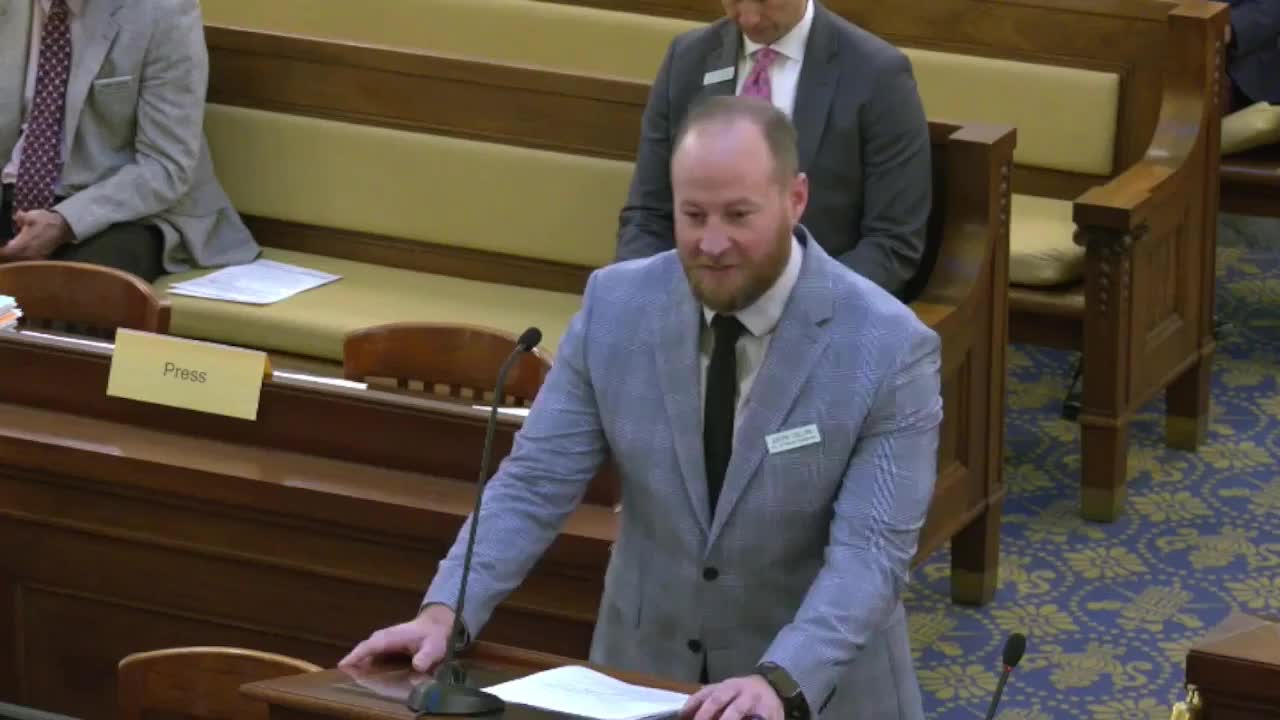
Justin Collins, state financial officer in the Division of Financial Management (DFM), told the committee the measure would allow the Office of Administrative Hearings to recoup allowable costs into the general fund through the Statewide Cost Allocation Plan (referred to in the transcript as SWICAP/SWICAP/SWEICAP). Collins described three main components: (1) add OAH to the set of agencies that are billed through the statewide cost allocation after budgets are final; (2) repeal specific, existing billing language in code (transcript references a provision described as "60 seven-fifty two-eighty 5"); and (3) add new language requiring OAH to work with DFM to include its billings in the statewide cost-allocation budget for the following year.
Collins said OAH would bill only the agencies it serves, similar to current practice for the Attorney General's Office: DFM collects billable hours, allocates costs to recipient agencies, and those allocations are reflected in the next year's budgets and then billed after budgets pass. Collins said that currently DFM pairs budgets and bills for three agencies (the treasurer's office, controller's office and the attorney general's office) while other agencies direct-bill into dedicated funds; the bill would put OAH into the DFM-managed billing bucket.
Senator Janie Ward Engle King moved to send S 1116 to the Senate floor with a due-pass recommendation; the motion was seconded and the committee voted unanimously (10-0). Miss Heiner called the roll during the vote.
Senator Wintrow asked about capacity at the Attorney General's Office to handle billable work across agencies; Collins said DFM can describe the allocation process but deferred to the Attorney General on capacity and staffing questions. The committee did not change the bill language at the hearing.
If the Senate advances S 1116 and it becomes law, affected agencies would be billed through the statewide cost-allocation mechanism for allowable OAH costs in accordance with the code changes; the transcript does not specify a fiscal amount or list affected agencies by name beyond the general description that OAH would bill only the agencies it serves.