Get Full Government Meeting Transcripts, Videos, & Alerts Forever!
Get email alerts on the Pension System Persi topic
No spam. Unsubscribe anytime.
PERSI reports recovery, 87% funded ratio and requests software upgrade funding
Summary
The Public Employee Retirement System of Idaho told the Joint Finance‑Appropriations Committee it ended the fiscal year with an approximate 9% return, a funded ratio of about 87% and requested continued funding for a multi‑year pension system software upgrade.
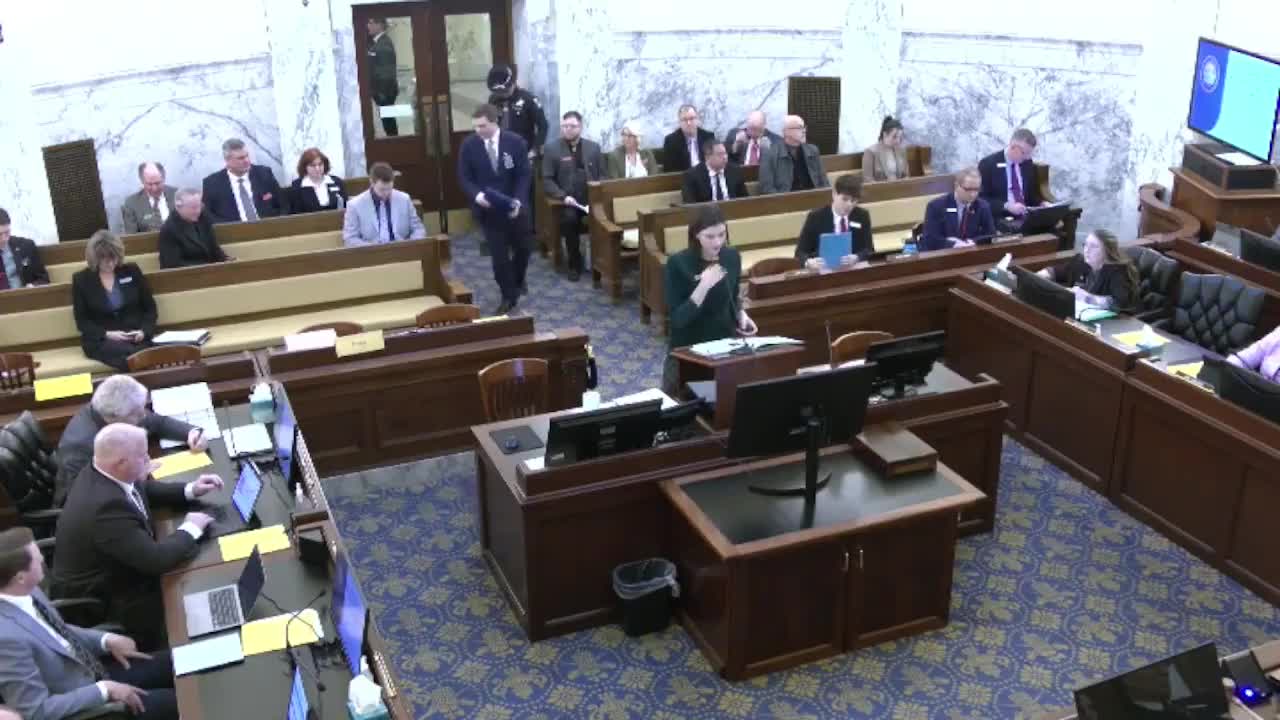
The Joint Finance‑Appropriations Committee heard a budget and operations briefing from the Public Employee Retirement System of Idaho (PERSI) on Wednesday that reviewed investment returns, funded status, personnel needs and a multi‑year pension software upgrade.
Why it matters: PERSI administers retirement benefits for roughly 185,000 public employees and retirees in Idaho; changes in funding, contribution policy or major IT investments can affect long‑term liabilities and the system’s administration.
Presentation highlights Frances Lippitt, a budget and policy analyst with the Legislative Services Office, told the committee PERSI operates with authorized staffing of 81 full‑time positions across offices in Boise, Pocatello and Coeur d'Alene and that the agency typically fills about 89% of those positions. Lippitt said total appropriated expenditures for PERSI in FY2024 were about $11.4 million from appropriated funds and that PERSI expended 245.9 million in pension payments from continuously appropriated funds during the same period.
Mike Hampton, PERSI director, told members the fund recorded about a 9% return in the most recent year—part of a two‑year recovery following a market correction in 2022—and that PERSI’s funded ratio stood at about 87% at the end of the last fiscal year. Hampton said the fund has about $22 billion in assets and roughly 185,000 members, with an amortization period of about 10.7 years under current contribution and actuarial assumptions.
Software upgrade and staffing requests PERSI has been implementing a multi‑year pension software upgrade; Lippitt said the legislature previously approved a $3.0 million one‑time appropriation for the upgrade that runs over five fiscal years, and PERSI requested another $3.0 million for year four of that project in its FY2026 request. Lippitt said the total multi‑year project is budgeted at approximately $12 million.
On staffing and operating costs, Lippitt said the retirement administration program accounted for 56.6% of appropriated expenditures and that the agency had a roughly 10% vacancy rate and a 24.6% turnover rate in FY2024. The legislature approved ongoing enhancements in FY2024 to add nine full‑time positions for member services and salary adjustments to retain investment staff.
Cost‑of‑living adjustment and governance Committee members asked about PERSI’s approach to post‑retirement allowance adjustments. Hampton explained the board’s longstanding practice: Idaho statute includes an automatic 1% annual adjustment if the CPI‑U exceeds that threshold; the board can recommend additional adjustments (Hampton cited the board’s recommendation this year of a 0.3% retroactive adjustment, which combined with the automatic 1% would present as a 1.3% adjustment if the legislature approves). Hampton said the board balances such recommendations against the fund’s long‑term sustainability and statutory amortization limits.
There were no formal votes during the presentation; members used the briefing to ask technical questions about ongoing IT costs for the pension upgrade, funding classifications for investment management fees, and the fund’s relative standing compared with other states.
Operational context and outreach Hampton summarized PERSI’s operational footprint: staff handled about 66,000 phone calls in the last year, provided education to more than 14,000 members and completed more than 44,000 administrative workflows (retirements, benefit estimates, beneficiary changes). He said Idaho’s single statewide pension system is a comparative strength and that the fund is consistently among the better funded public pension systems nationally.
The committee did not take formal action; PERSI staff and analysts remained available for follow up during budget deliberations.