Get Full Government Meeting Transcripts, Videos, & Alerts Forever!
Get email alerts on the Charter Credit Enhancement Hb331 topic
No spam. Unsubscribe anytime.
Senate panel advances bill to expand charter school credit-enhancement capacity
Summary
The Senate Education Committee voted to give House Bill 331 a due-pass recommendation to the floor after testimony from charter-school leaders and finance partners; the bill changes the formula and lifts a cap on a state-backed credit enhancement program that lowers charter-school borrowing costs.
The Idaho Senate Education Committee voted to send House Bill 331 to the full Senate with a due-pass recommendation after testimony from charter-school leaders and finance partners about the state’s public charter school credit-enhancement program.
Senator Lori Denhartau, the bill sponsor, told the committee the measure changes the program’s formula and lifts the cap so more high-performing charter schools can participate. “We have had 18 charter schools that have been able to use this credit enhancement tool and it has lowered the interest rate on their bonds by approximately 2%,” Denhartau said. She added that the statutory transfer into the Charter School Facilities Fund has already occurred and that the bill itself does not require new appropriations.
Multiple charter-school executives and finance specialists told the committee the program lowers borrowing costs and directs savings into classrooms. Monica White, CEO and co-founder of Elevate Academy, described facility costs and the potential savings: “We're budgeting about 18 million dollars to purchase land permit construct and outfit each campus... If we finance this $18,000,000 of debt in the bond market without the credit enhancement at 7% interest... being able to access the credit enhancement program would decrease our interest rate to 5%... This would decrease our annual interest payments to 567,000 or by 289,000 each year.” Emily Downey, chief financial officer for Sage International Charter Schools, said use of the program saved her schools “$119,000 per year” at one campus and “$239,000 a year” at another.
Robin Odlin, president of Building Hope Finance, said the credit enhancement serves as an important takeout source of capital and attracts long-term lenders. Blake Yood, speaking for the Idaho Charter School Network, said Idaho’s proposed parameters compare conservatively to programs in Colorado and Utah and emphasized the protections already built into Idaho’s program: qualifying schools must meet strict criteria, including a deposit equal to 12 months of payments and an intercept of state payments to lenders.
Denhartau described the current statutory figures discussed in the hearing: the “maximum aggregate annual debt service” under the existing calculation is $11,400,000 and the Charter School Facilities Fund held $1,100,000, with an additional statutory transfer scheduled that would substantially increase program capacity; she said carried language in code sets those transfers. Witnesses estimated the legislative change would raise program capacity to the neighborhood of $700 million to $750 million, though the precise program capacity can vary with interest rates and financing structures.
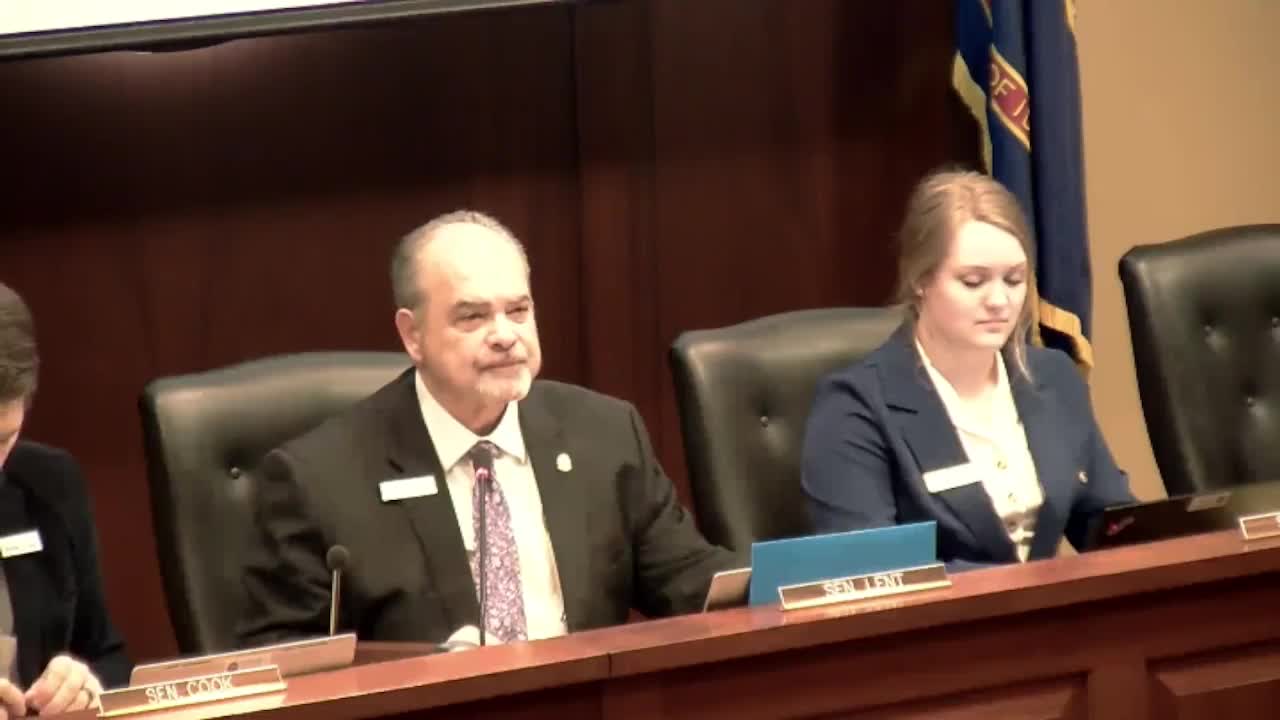
Senator Jen Hartog closed by asking the committee to send HB 331 to the floor with a due pass. Senator Hartog moved the motion; it was seconded and carried by voice vote.
Committee discussion included questions about when the state’s backing could meaningfully affect the state credit profile; witnesses said the program includes multiple safeguards, that the state treasurer and rating agencies were consulted in constructing the formula, and that other states have used similar programs without credit-rating problems. The committee did not amend HB 331 at the hearing.
The bill’s changes, if enacted, would alter how the Idaho Housing and Finance Association reviews applications and calculates program capacity for participation in the credit-enhancement program and would affect charter schools that seek to refinance or issue bonds for facilities.