Get Full Government Meeting Transcripts, Videos, & Alerts Forever!
Get email alerts on the Education Finance topic
No spam. Unsubscribe anytime.
Lawmakers Hear Overview of Idahopublic school support budget, funding drivers and enrollment shifts
Summary
Analysts told the Joint Finance-Appropriations Committee the statepublic school support budget is driven by statutory formulas, career-ladder costs and changing support-unit counts; lawmakers pressed officials on the drop in funded support units, one-time federal funds and school facilities distributions.
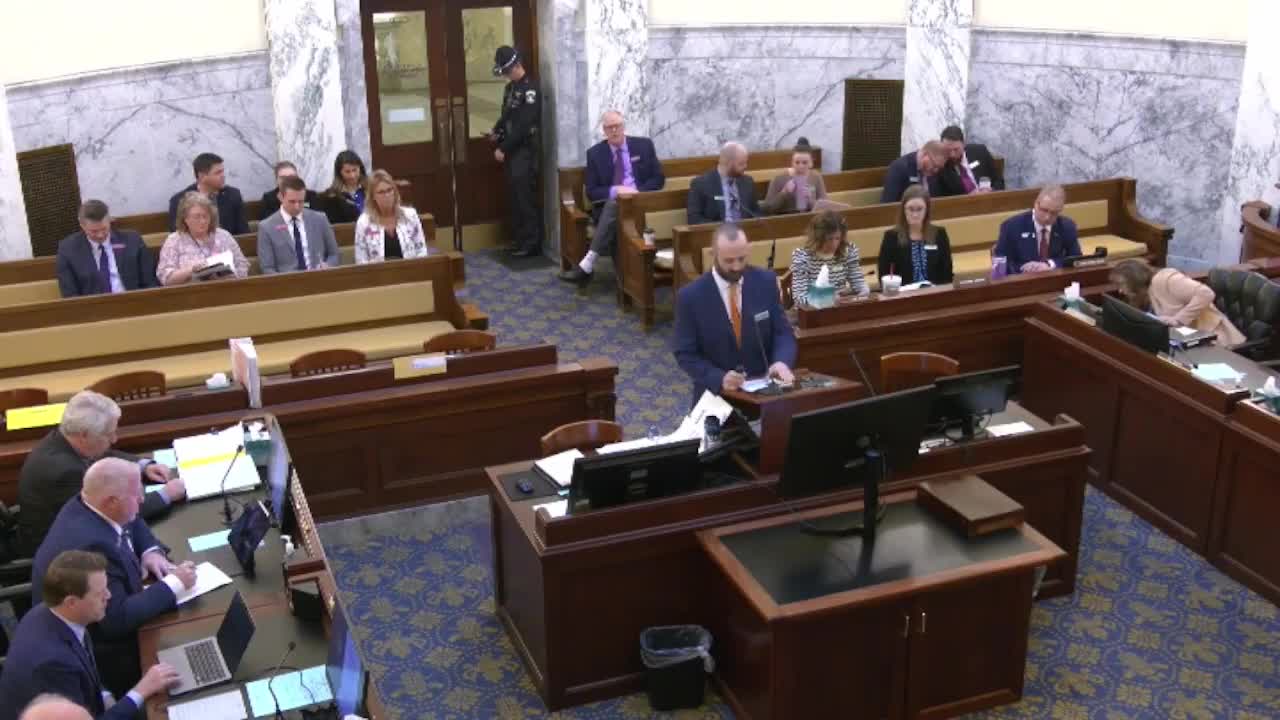
Jared Tetrault, deputy division manager with the Legislative Services Office Budget and Policy Analysis Division, told the Joint Finance-Appropriations Committee on March 4 that the public school support program covers roughly 115 school districts and about 75 public charter schools and that most funding is distributed via statutory formulas in Idaho Code Title 33. "This is what we often refer to as the big sheet," Tetrault said, describing a single-page summary of the program that shows original appropriation, the agency request, the governor's recommendation and statutory distribution rules.
The budget matters because the formulas and demographic measures determine how millions flow to districts and charters across Idaho. The committee was shown that the largest cost drivers are career-ladder salary and benefits for teachers, salary-based apportionment for administrators and classified staff, discretionary funds, transportation, federal grants and health insurance allocations. Tetrault said the state allocates staffing funding through "support units," a formula that funds 1.55 full-time-equivalent positions per classroom unit and noted the state must use average daily attendance (not enrollment) for distributions under Idaho law.
Why it matters: those attendance-based calculations have pushed the state to estimate about 200 fewer support units for the coming year, which reduces formula-driven funding even if raw student head counts remain similar. Tetrault told the committee that a 200-unit drop reduces certain appropriation lines by millions; he also said the average amount allocated per support unit in the current model is about $147,000.
Committee members pressed staff on how the change happened and on the limits of state allocations. A committee member asked why support units fell despite stable enrollment numbers; Tetrault explained that Idaho law requires funding counts be based on average daily attendance and that attendance rates post-COVID have trended below pre-COVID levels (approximately the mid-90s percent range versus a brief spike to 98–99 percent), lowering funded support units.
Lawmakers also discussed one-time federal pandemic funding. Tetrault and Superintendent Debbie Critchfield confirmed that most American Rescue Plan/ESSER funds have been spent and that roughly $99.9 million remained in the public schools budget line tied to ESSER/ARPA for the current year; Critchfield said she declined a federal extension that would have allowed longer use of ESSER funds and warned districts earlier that they should not create ongoing salary commitments tied to one-time federal money.
Facilities and other statutory programs drew questions. Tetrault summarized the school district facilities programs created in recent sessions, including the House Bill 292 school district facilities fund and the separate, one-time $1 billion allocation reported in committee materials as House Bill 521. He said the committee will need to consider statutory changes if House Bill 374 (which would make the facilities fund a continuous appropriation) passes. Districts receive facilities funding on a per-student share and may use it to pay bonds, plant facility levies or, if those are absent, maintenance and renovation.
Tetrault summarized other forthcoming matters: several technical bills related to a weighted student funding formula, a pupil transportation funding formula and a special-needs student fund had hearings or were scheduled in germane committees; the transportation funding request referenced Idaho Code 33-1006 and a formula that partly reimburses districts based on prior-year actual expenditures.
Committee members asked for follow-up data on several items during the hearing: (1) how many district employees are not covered by state health plans and how that compares to allocations by support unit; (2) detail on district-level distributions from the facilities funds and the projects each district is proposing; and (3) a breakdown of the share of local revenue (levies) in total school funding. Critchfield and staff agreed to supply the requested district-level distributions and to work with the department to provide details on local levy shares.
The presentation also noted the Public Education Stabilization Fund (PSIF), which can be drawn from when appropriations and distributions diverge; the committee heard that last year JFAC repurposed roughly $105 million through discretionary distributions rather than depositing it to PSIF, and that some one-time facility funds and ESSER balances were counted separately when budgeting.
Tetrault closed by reiterating that the state's appropriation package mixes base maintenance adjustments (cost-of-doing-business changes such as compensation and benefits), ongoing enhancements and one-time items; he flagged a possible endowment-fund shift request to move $5.2 million from the general fund to endowment sources for 2026.
Looking ahead, committee members and staff agreed to follow up with data on attendance-driven support-unit estimates, detailed facility-distribution lists by district, and any available counts of district employees who are covered or not covered by state plan enrollments. The presentation transitioned to the Idaho Digital Learning Academy hearing after committee questions concluded.