Get Full Government Meeting Transcripts, Videos, & Alerts Forever!
Get email alerts on the Education Scholarships Grants topic
No spam. Unsubscribe anytime.
Scholarships and grants office seeks funding for underserved‑educator incentive, requests tech staff to maintain systems
Summary
The Office of the State Board of Education’s Scholarships and Grants program told the Joint Finance-Appropriations Committee it administers five scholarship programs, spends nearly all funds as trustee/benefits, and requested $1.375 million for the Bridg
The Office of the State Board of Education’s Scholarships and Grants program briefed the Joint Finance‑Appropriations Committee on Wednesday about a request to support the Bridg and Underserved Educator Incentive program and on a technical staffing request to maintain scholarship application systems.
Why it matters: scholarships and grant programs provide financial aid that influences students’ ability to enroll in and complete postsecondary education; the Bridg and Underserved Educator Incentive program targets recruiting and retaining teachers in rural and underserved districts.
Kevin Campbell, budget and policy analyst with the Legislative Services Office, said the program is largely trustee and benefit payments (about 99.5% of spending) and that spending varies with award cycles and applicant numbers. Campbell noted the program’s FTP is 1.35 and that timing of awards can cause year‑to‑year fluctuation in expenditures.
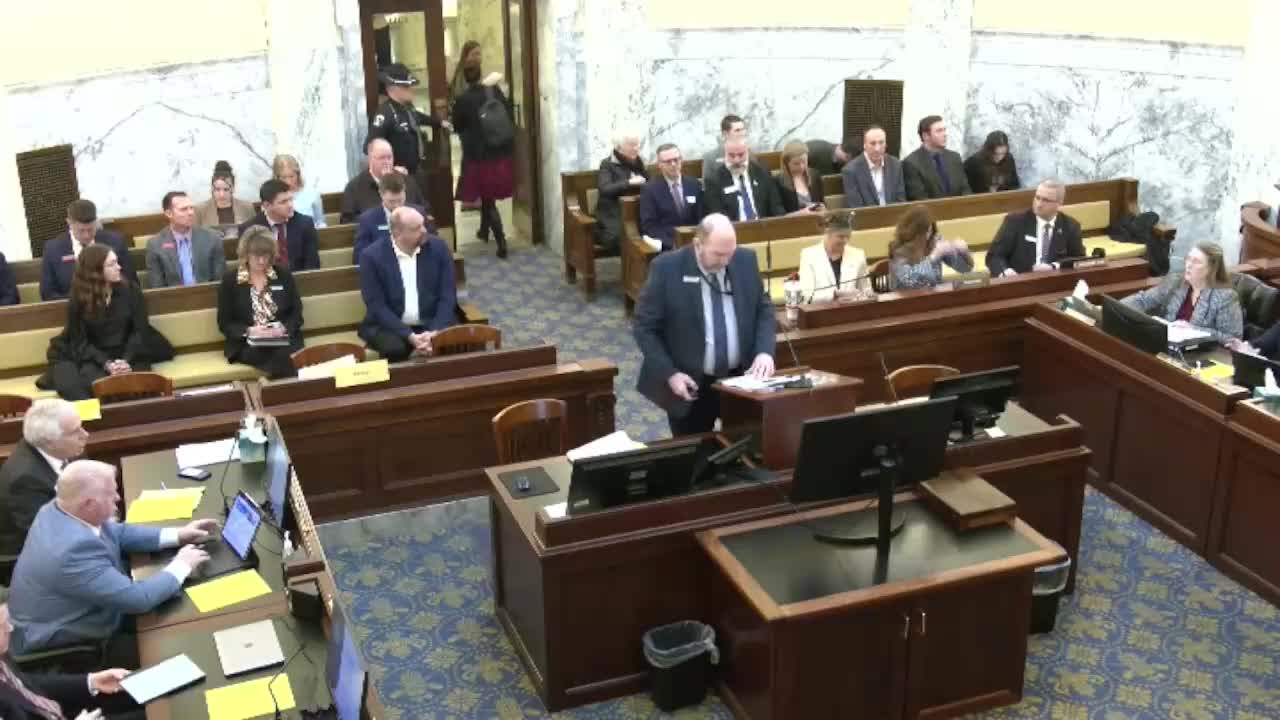
The program requested $1,375,000 for the Bridg and Underserved Educator Incentive program in FY2026 and an additional $124,000 for a software engineer to maintain public‑facing scholarship and grant systems. Josh Whitworth, executive director of the State Board of Education, told the committee the program maintains public databases that require ongoing maintenance and security updates; he said staff capacity does not match the backlog of work.
Committee members asked for outcome data. Whitworth said he has not yet compiled a full performance review but will provide information. Chairman members requested breakdowns of rural and underserved designations and outcome measures such as recruitment and retention in targeted districts. Whitworth supplied immediate cohort counts: roughly 390 teachers in the first cohort and about 231 in the second cohort of the rural/underserved incentive program and said staff would return with more detailed analysis about retention and district placements.
No committee vote was taken at the hearing. The office agreed to provide more detailed performance measures and district‑level reporting to support legislative review of the incentive program and the request for technical staffing.