Get Full Government Meeting Transcripts, Videos, & Alerts Forever!
Get email alerts on the Public Defense Appellate topic
No spam. Unsubscribe anytime.
State Appellate Public Defender requests permanent deputy slot to curb contracting costs
Summary
The State Appellate Public Defender asked IdahoJoint Finance-Appropriations Committee to fund an additional attorney position, saying hiring in-house would be cheaper than continuing to contract overflow appeals work.
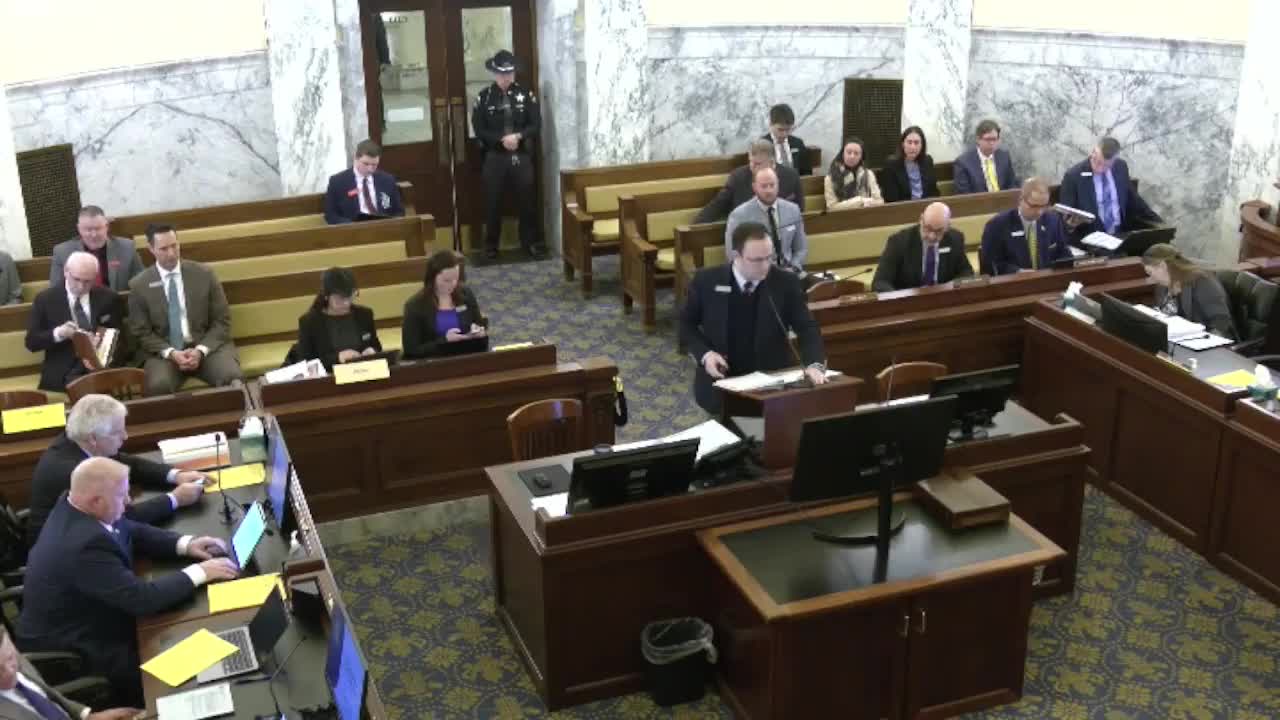
Christopher Lahoset, a budget and policy analyst with the Legislative Services Office, began the Joint Finance-Appropriations Committeebriefing by outlining the Office of the State Appellate Public Defenderand its funding and staffing profile.
The office has 26 authorized full-time positions and reported no vacancies as of Dec. 15, with average personnel appropriations of about $2.8 million over five years. Lahoset told the committee the office spent about 85% of total expenditures on personnel and that a legislatively authorized supplemental in 2023 for a large influx of cases remains reappropriated but not part of the base budget.
Eric Leighton, director of the State Appellate Public Defender, told committee members the agencyhas seen a post-pandemic increase in caseloads and has struggled with turnover this year after the creation of the State Public Defender and departures of experienced staff. "It has been a challenging year. It's been a challenging couple of years because first of all, we have had a significant increase in our caseload over the last 3 years," Leighton said. He also said the office is "for the moment, fully staffed," but noted an imminent departure by a staff member.
Leighton and Lahoset described the agency's fiscal 2026 enhancement request for one additional attorney position to serve as a deputy state appellate public defender. The office said contracting overflow cases costs roughly $254,000 per year in fees to outside attorneys, while hiring an equivalent in-house attorney at about a $140,000 salary would yield cost savings.
The office also requested reappropriation authority for about $1.26 million in remaining one-time funds from the 2023 supplemental to continue paying for overflow case costs; Lahoset noted that amount could be spent down over the remainder of the fiscal year.
Committee members asked about turnover, contracting practice, and how new in-house staffing would be assigned. Leighton explained the appellate unit contains roughly a dozen attorneys whose caseloads are distributed by experience and complexity, and that adding a thirteenth attorney would be intended to handle a proportional share of an estimated roughly 650 cases in the current fiscal year. "We sort of tailor the caseload to that attorney," he said, adding that newer attorneys would not immediately handle the most complex murder appeals.
Several members pressed on the agency's current use of outside counsel. Leighton said the office must always contract for conflict cases, and that in addition it has contracted for overflow work: "It is more expensive to contract cases out than to handle them in house," he said. He estimated about 14 overflow cases had been contracted out in the last year and a half.
The agency did not present a formal motion or vote during the hearing. The committee heard the requests and asked follow-up questions about budget details and operational impacts.
The analyst and director said they would provide further detailed breakdowns of contract spending and personnel cost estimates if requested by the committee.