Get Full Government Meeting Transcripts, Videos, & Alerts Forever!
Get email alerts on the State Budget topic
No spam. Unsubscribe anytime.
Lawmakers review governor's FY2025–26 budget as revenue forecasts rise and choices narrow
Summary
Legislative services staff told the Joint Finance-Appropriations Committee the governor's recommended budget projects higher revenues for FY2025 and FY2026 but maintains a roughly $700 million structural surplus that lawmakers must allocate among tax relief, program growth and one-time spending.
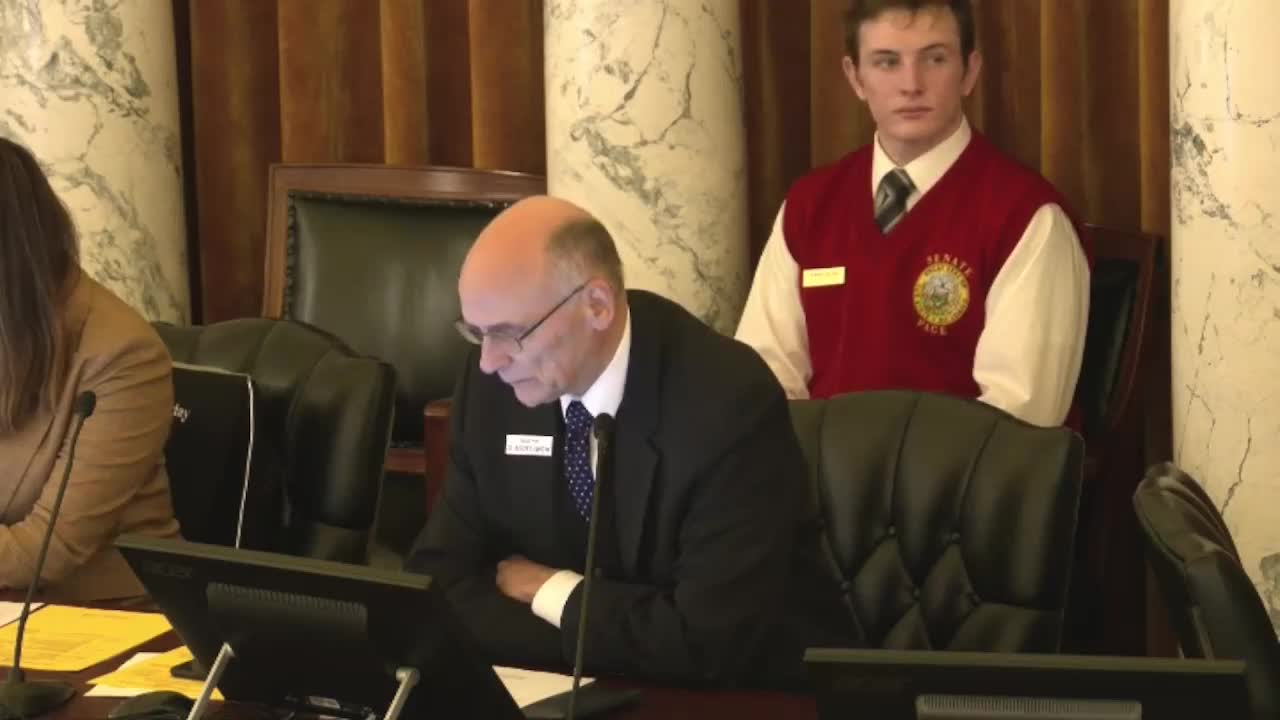
Keith Bybee, the Legislative Services Office division manager for budget policy analysis, briefed the Joint Finance-Appropriations Committee on the governor's FY2025 and FY2026 budget outlook and the Legislative Budget Book materials available on SharePoint. "My presentation ... is going to cover, FY 2025 and FY 2026 budget overview," Bybee said as he opened the briefing.
Bybee said the governor's baseline projects general fund revenues of about $5.9 billion in the near term and showed a persistent gap between projected revenues and projected expenditures across the business cycle. Using the governor's numbers, he said the state sees a structural balance on the order of $600 million to $700 million for 2025 and 2026, a figure the briefing materials repeatedly emphasized as the core policy choice for the session.
Why it matters: the surplus creates competing choices for lawmakers, Bybee said. "How to balance that scale ... between tax relief, between ongoing growth and budgets and supporting the state government that your constituents are looking for," he said. The governor's proposal uses part of that room to propose targeted transfers and spending, including roughly $60 million for fire suppression and about $15 million for workforce housing programs in the 2026 recommendation.
Key numbers and structure: Bybee walked members through the front-end cash reconciliation (Legislative Budget Book pages 6—7). He explained that the starting point is the FY2025 original appropriation and that the recommendation reflects program maintenance plus enhancements. Under the governor's recommendation Bybee summarized: - FY2025 ending cash (governor's projection): approximately $338 million - Governor's FY2026 general fund program maintenance: roughly $5.4 billion (about a 3.4% increase over FY2025 original appropriations) - Governor's FY2026 total general fund recommendation (including enhancements): about $5.65 billion (roughly 7.4% year-over-year) - The front-end summary shows total state spending (all funds) near $14.39 billion under the governor's proposal.
Policy tradeoffs and transfers: Bybee reviewed prior sessions' large transfers to roads and capital projects and noted a continuing request from Idaho Transportation Department for roughly $311 million for surface projects. He said last year's transfers totaled roughly $580 million, largely for roads, and that the governor's recommended transfers out in the FY2026 reconciliation total about $477.3 million.
Revenue drivers and recent history: Bybee traced the post-2020 revenue spike to federal pandemic relief (CARES and ARPA) and population growth that raised personal income collections. He cautioned the committee that long-term projections are being adjusted upward from the pre-pandemic trend and that the new baseline is materially higher than historic pre-2020 levels.
Process and timing: Bybee and Jared Tetrault of the Legislative Services Office explained the decision-unit budgeting model the committee uses (original appropriation, executive carry-forward/reappropriation, program maintenance, and enhancements), and reminded the committee that program maintenance work begins immediately in working groups.
Questions from members ranged from how interest earnings and tax anticipation notes interact with cash management, to how prior bond-levy equalization closeouts affect available cash. Bybee said detailed schedules and the Legislative Budget Book materials are on SharePoint for members to review.
Ending: Bybee urged members to use the schedule and materials to prepare for policy choices this session, describing the financial position as providing significant options but requiring careful legislative choices.