Get Full Government Meeting Transcripts, Videos, & Alerts Forever!
Get email alerts on the Teacher Apprenticeship Rules topic
No spam. Unsubscribe anytime.
State Board rule changes draw prolonged committee scrutiny over teacher apprenticeship and accreditation
Summary
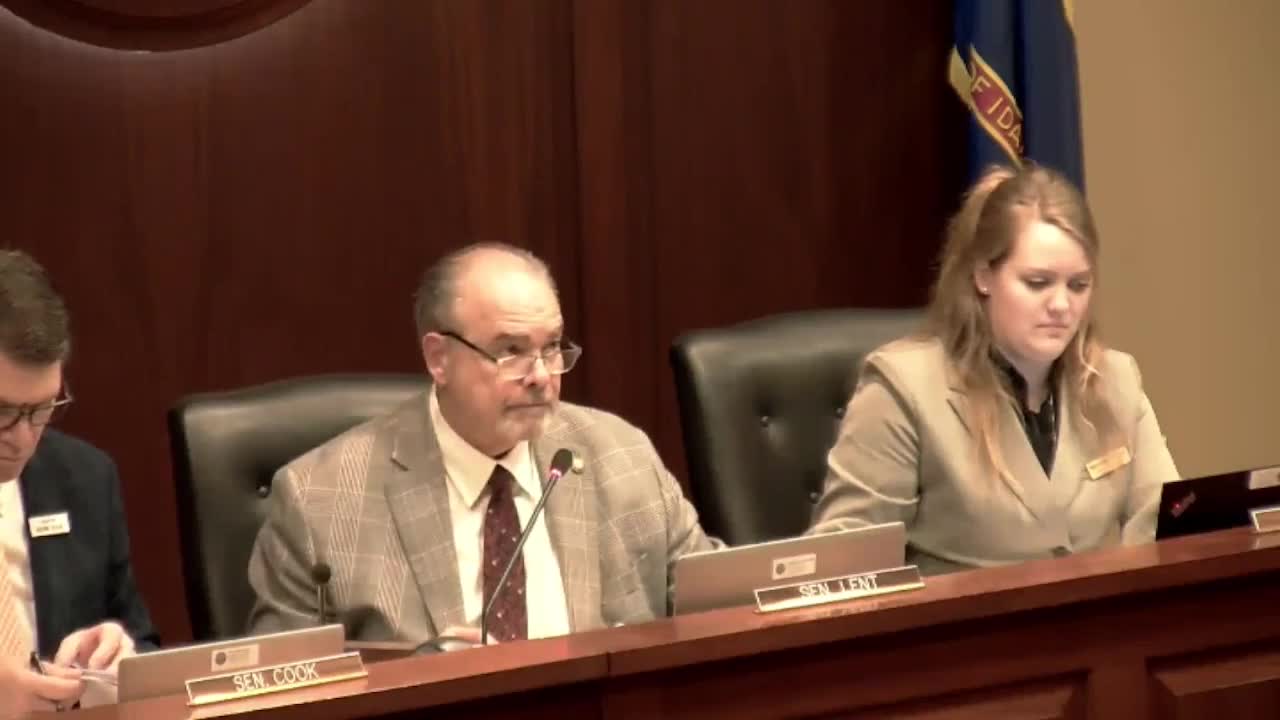
The Senate Education Committee heard a multi-item rules presentation from State Board of Education staff and pressed officials especially on proposed rules for teacher apprenticeship pathways that could allow certification without a baccalaureate degree.
The Senate Education Committee received a multi-part presentation from State Board of Education staff on proposed rule changes covering postsecondary accreditation, Opportunity Scholarship standards, school facilities reporting, new teacher apprenticeship pathways, Idaho Digital Learning Academy (IDLA) assessments and vocational rehabilitation rules.
Matthew Ryber, who identified himself as representing the State Board of Education, walked the committee through several dockets, citing prior legislation and the agency’s effort to align rules with code and federal guidance. Among the rule proposals discussed were: opening private postsecondary accreditation recognition to accreditors approved by the U.S. Department of Education; aligning Opportunity Scholarship renewal credit requirements to recent statutory changes; clarifying data the State Department will report for school facilities funding; and adopting rules to implement teacher apprenticeship and nontraditional educator preparation pathways enacted in recent legislation.
Much of the hearing centered on teacher preparation. Senators pressed staff over proposed language that, as written, would allow educator-apprenticeship pathways to lead to a standard instructional certificate without a baccalaureate degree. Senator Semeroth asked what quality assurances would apply to “alternative or nontraditional” programs that are “approved” rather than accredited; staff said programs are vetted by the State Department of Education and the State Board and that the board intends to apply ongoing oversight similar to other educator preparation programs.
Senators raised additional concerns: how the board will monitor nontraditional programs over accreditation cycles (three- to seven-year reviews for traditional programs), whether mentorship and clinical supports will be sufficient for apprentices, and the risk of diluting certification standards. Staff responded that apprenticeship models are federally recognized programs (they noted U.S. Department of Labor and U.S. Department of Education involvement), that other states (notably Tennessee) have larger-scale apprenticeship implementation, and that the State Board plans ongoing monitoring and alignment with the statute that created the apprenticeship pathway.
Other rule items drew limited questions. State Board staff described updates to IDLA rules to allow comprehensive final projects, rather than only proctored exams, and smaller federal-alignment edits to vocational rehabilitation rules. Staff also explained Opportunity Scholarship rule edits that mirror legislative adjustments to renewal credit requirements.
Committee members requested more time to review the materials. Senator Sumnerall asked to postpone voting to allow additional questions. The committee agreed to defer formal action on the docket and voted to hold the rules at the call of the chair; the vice chair said the committee would tentatively revisit the rules later in the week.
No rule changes were adopted at the hearing; committee members directed staff and the State Board to provide clarifications before the next meeting.