Get Full Government Meeting Transcripts, Videos, & Alerts Forever!
Get email alerts on the Psychiatric Hospitalization topic
No spam. Unsubscribe anytime.
State hospitals accredited; committee hears rising civil-commitment costs and funding requests
Summary
Officials said all three state psychiatric hospitals are now accredited and are billing Medicaid, producing some federal receipts, but civil-commitment costs have risen since 2022 and the department requested a supplemental and fund shifts to cover higher obligations.
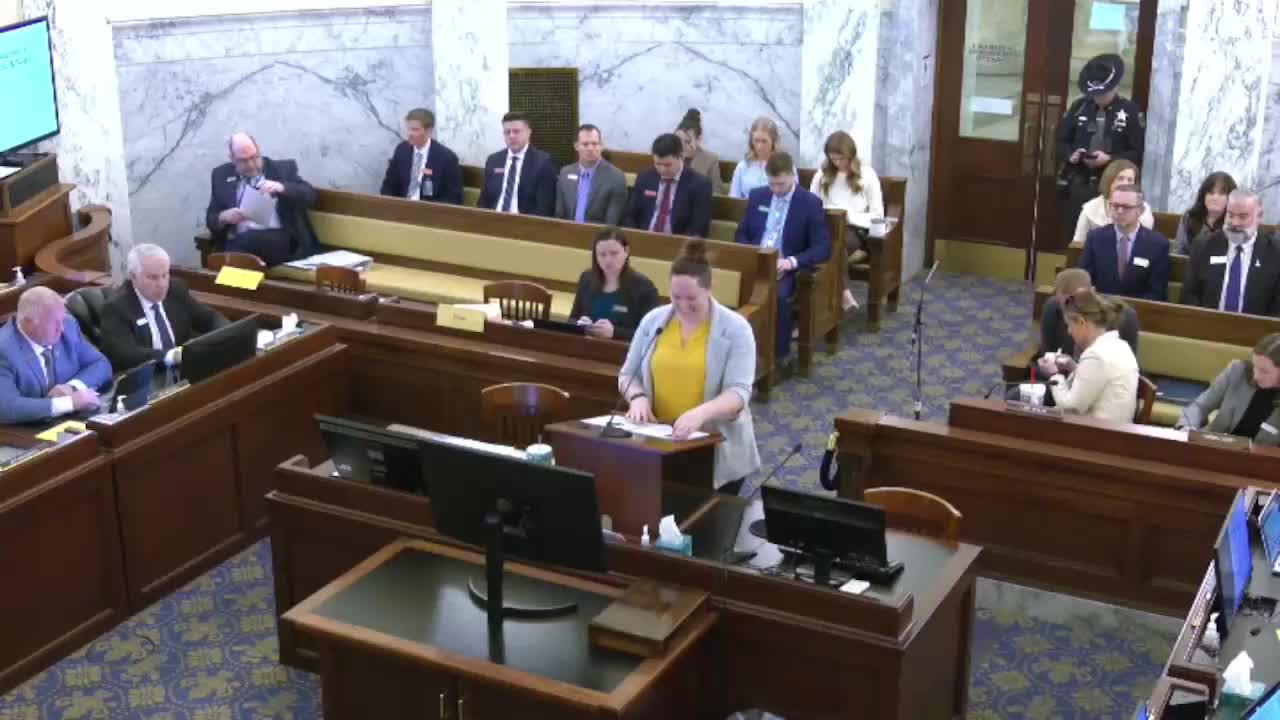
Alex Williamson, budget and policy analyst with the Legislative Services Office, told the Joint Finance-Appropriations Committee that psychiatric hospitalization is organized into community hospitalization and three state hospitals (State Hospital South in Blackfoot, State Hospital North in Orofino, and State Hospital West in Nampa) and that the division is authorized 467 FTP.
Williamson said the department requested a one-time $2,600,000 General Fund supplemental for civil-commitment expenditures in fiscal year 2025. The request responds to increased costs that followed a 2022 statutory change she identified as Senate Bill 1327 (2022), which shifted financial responsibility for certain mental-hold and commitment costs to the state.
Alex Adams, director of the Department of Health and Welfare, told the committee that all three state hospitals have now received accreditation. He said accreditation allows the hospitals to bill Medicaid and that billing has generated federal receipts for the state; State Hospital West had billed roughly $1.6 million and received about $1.3 million in receipts, Adams said.
But the committee heard that civil-commitment costs have grown. Director Adams explained the statutory change in 2022 moved costs from counties to the state. “The Department of Health and Welfare has 0 control over holds,” he said, describing how holds initiated by law enforcement or health-care providers create entitlement obligations that the department must pay regardless of how many people meet the statutory criteria.
Ross Edmonds, administrator for the Division of Behavioral Health, told the committee that holds from law enforcement and health providers increase each year and that the number of commitments has remained relatively flat. He said restoration-to-competency cases have driven notable growth: “Over the last 10 years, we've seen about a 600% increase in the restoration-to-competency increases,” Edmonds said. He added that restoration cases now occupy a large share of beds at State Hospital North.
Williamson also described shifting fund sources in the department’s requests: State Hospital West is seeking a shift of $2,200,000 from federal funds to dedicated funds, and State Hospital South a shift of $4,800,000 from federal funds to a split between general funds and dedicated funds (details in the budget book). The department requested a transfer exemption for psychiatric hospitalization similar to other division requests to allow transfers beyond the statutory 10% program limit in Idaho Code §67-35-11.
Committee members asked about the relationship between staffing, accreditation and billing. Adams said accreditation and higher staffing enable the hospitals to bill Medicaid, reducing general-fund pressure, but that clinical decisions — particularly the federal 60-day rule tied to Medicaid billing — sometimes keep patients in care longer than 60 days. He explained that if a stay exceeds 60 days Medicaid will not reimburse that stay, making the state pay the full cost.
Representative Miller asked about waitlists and capacity. Edmonds reported waitlists of about 8 at State Hospital North and about 18 at State Hospital South; filling beds depends on staffing and licensing.
Ending
Agency staff said they will provide more detailed budget documentation in follow-up materials and that the department will continue to brief the committee on accreditation billing receipts and civil-commitment cost trends.