Get Full Government Meeting Transcripts, Videos, & Alerts Forever!
Get email alerts on the Industrial Commission Budget topic
No spam. Unsubscribe anytime.
Industrial Commission requests IRIS maintenance, staff and vehicle funding amid rising caseloads
Summary
The Industrial Commission presented a FY2026 budget request focused on ongoing support for the IRIS case-management project, several staff reclassifications and hires, replacement vehicles and IT replacements. Officials said IRIS increased data and caseload volume and that some reverted funds are restricted to trustee/benefit uses.
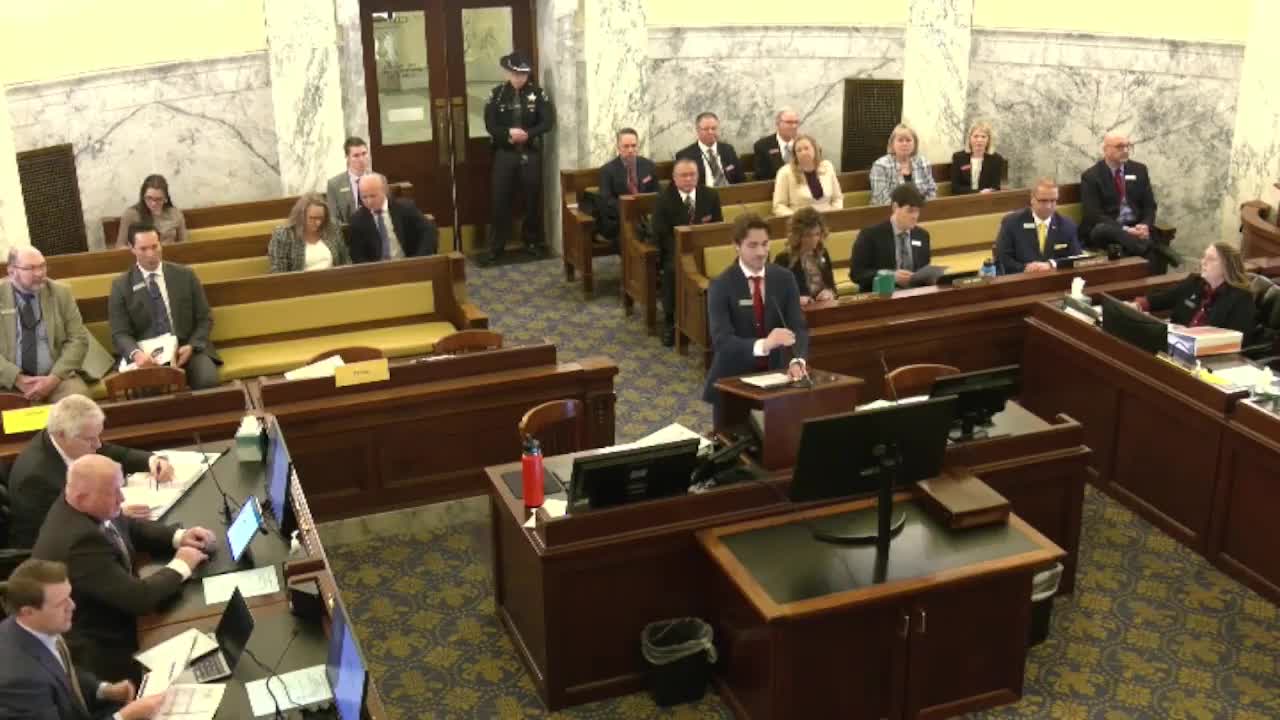
Boise — The Joint Finance Preparation Committee heard testimony Jan. 23 from the Industrial Commission on its fiscal 2026 budget request, which centers on continued maintenance for the IRIS case-management system, several personnel changes and replacement vehicles.
Noah Peterson, budget and policy analyst with the Legislative Services Office, told the committee the Industrial Commission has 130.25 authorized full-time positions, with 12 vacancies reported as of August, and that the agency is funded completely from dedicated funds rather than the general fund. Peterson said the commission reverted $4,555,000 in fiscal year 2024, including about $2,400,000 from the Crime Victims Compensation Fund, and that the agency has spent on average just under 80% of appropriations over the prior four years.
The request for fiscal 2026 includes 10 enhancement items totaling $298,200 in ongoing increases and $554,200 in one-time requests, all from the Industrial Administration Fund. Key requests include: $288,000 one-time to contract for long-term IRIS technical support; a $66,500 ongoing senior financial technician to help the crime victims compensation payment backlog; a $111,600 ongoing referee position to adjudicate workers' compensation and crime victim appeals; reclassification of five adjudication associates (an ongoing $25,500); a $62,300 technical records specialist; a $32,300 ongoing rehabilitation field consultant for the Twin Falls/Burley region; a $30,000 one-time IRIS contingency; four replacement sport-utility vehicles for field staff; and $104,200 in IT replacement items (laptops, monitors, docking stations).
Peterson said the IRIS modernization (an agency project begun in FY2021) has been supported with one-time appropriations totaling $12,874,000 through FY2025 and that the FY2025 budget included a $3.5 million one-time appropriation largely for IRIS development and contracted technical support.
George Gutierrez, director of the Industrial Commission, said the IRIS rollout has increased both the volume of data the agency receives and staff visibility into cases, which has in some areas produced a 35% to 70% increase in identified caseloads. ``We are now identifying nearly 60% more cases,'' Gutierrez said, explaining that better data sourcing is pushing more matters into the enforcement and adjudication pipelines. He also described how some administrative tasks shifted to legal-support staff after IRIS reduced paper-handling work for referees.
Committee members asked why improvements to a digital system led to increased staffing requests. Gutierrez said IRIS removed many manual steps but also consolidated responsibilities: tasks that previously were passed to referees now require legal associates to verify records meet statutory requirements before a case is set for hearing. He told the committee the volume of employer noncompliance cases the commission now identifies is larger because of the new data sources IRIS brings in.
Representative Petzke asked whether reverted funds (including about $1,800,000 from the Industrial Administration Fund last year) could be used to hire staff rather than asking for enhancements. Peterson and Gutierrez replied that the majority of the reversion was trustee and benefit payments (fines and funds earmarked for specific statutory purposes) and that reassigning those monies would require legislative approval and possibly statutory changes.
Senator Cook pressed for details on the $288,000 IRIS maintenance contract, asking whether it was for maintenance versus new functionality. Peterson said the request represents contracted maintenance/support the Office of Information Technology Services (OITS) cannot yet provide and that the analyst would supply more specifics upon request. Gutierrez added the appropriation is intended to fund ongoing technical support while ITS builds capacity to assume the work.
Peterson and Gutierrez outlined several fund mechanics: the Peace Officer Temporary Disability Fund receives a $3 fine per conviction and reimburses employers for costs above workers' compensation for injured peace officers; the Crime Victims Compensation Fund is supported by fines (transcript figures cited $37 for misdemeanors and $75 for felonies) and pays victims or dependents up to a statutory maximum of $25,000 for non-property-related, otherwise uncompensated expenses; the Industrial Administration Fund receives premium taxes collected from sureties that provide workers' compensation and supports compensation and rehabilitation programs. Property damage is excluded from the Crime Victims Compensation Fund payments, per the presentation.
On fleet requests, Gutierrez said the vehicles proposed for replacement have high mileage (82,000–98,000) and some recurring mechanical failures; replacements are for field staff who regularly travel in rural parts of the state. The governor's recommendation included a 5% compensation increase for commissioners (about $22,400) and did not include the contingency enhancement for IRIS.
The commission's representatives told the committee they will provide a more detailed breakdown of IRIS development and maintenance costs and of their vehicle inventory and replacement needs. Gutierrez closed by asking for the committee's support for the FY2026 budget requests.
Discussion vs. decision: the hearing recorded questions and agency answers; no formal committee actions or votes were taken during this presentation.
Ending: Committee members asked for further written breakdowns of IRIS costs, vehicle inventories and clarification on use of reverted funds; the agency agreed to provide additional detail.