Get Full Government Meeting Transcripts, Videos, & Alerts Forever!
Get email alerts on the Behavioral Health Plan topic
No spam. Unsubscribe anytime.
Health and Welfare director cites legal challenges, seeks transfer exemptions to access behavioral health grant funds
Summary
Department of Health and Welfare officials told the Joint Finance-Appropriations Committee that delays and legal challenges slowed the Idaho Behavioral Health Plan contract, and the department requested supplemental federal dollars and exemptions to program-transfer limits so it can move funds across accounts to cover unmet needs.
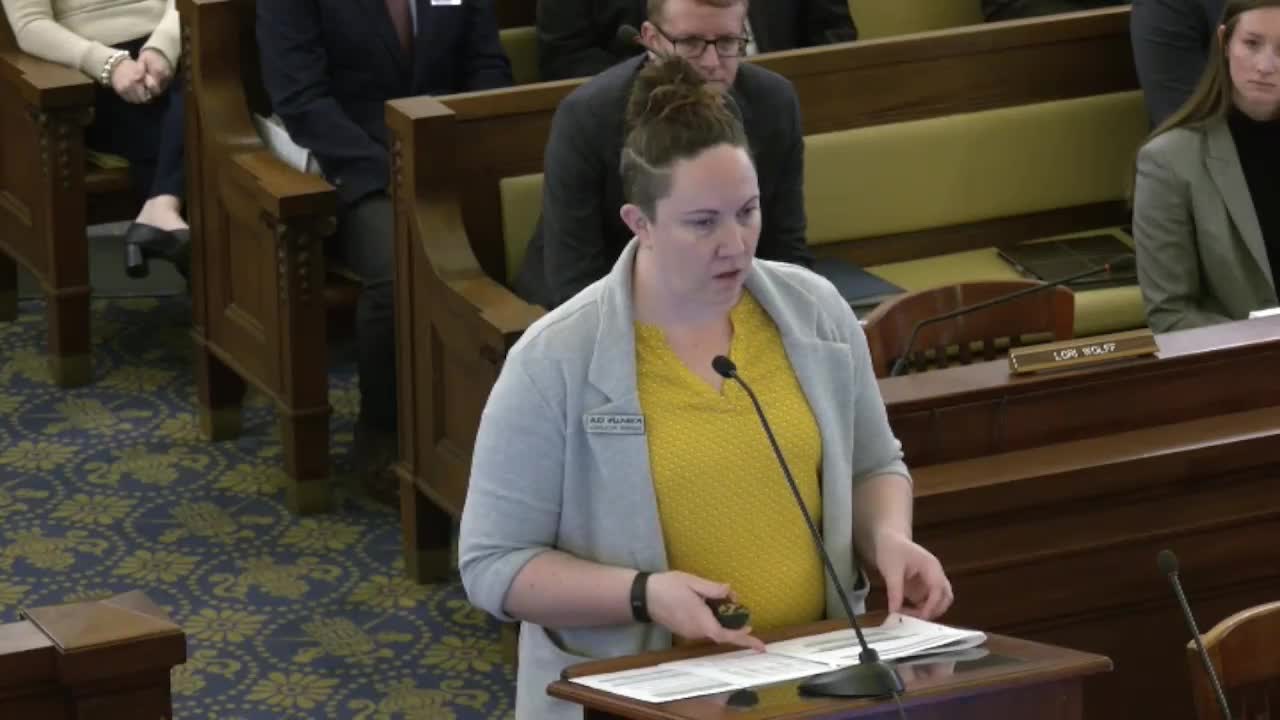
Alex Williamson, budget and policy analyst with the Legislative Services Office, told the Joint Finance-Appropriations Committee that the Department of Health and Welfare is requesting one-time federal authority and ongoing federal operating funds tied to the Idaho Behavioral Health Plan (IBHP).
The department is seeking a one-time federal supplemental of $6,700,000 to allow the agency to access federal grants linked to the IBHP and an ongoing federal operating enhancement of $261,400 to support federal grants administered by the Substance Abuse and Mental Health Services Administration, Williamson said.
The department also has requested an exemption from the 10% program-transfer limitations in Idaho Code section 67-35-11 for fiscal year 2025 and asked that the governor’s recommendation allow no further restrictions beyond those statutory limits in 2026. Williamson described the transfer-exemption request as allowing the department to move resources department-wide into adult and children’s mental health for unforeseen expenditures.
Alex Adams, director of the Department of Health and Welfare, told the committee the IBHP contract was delayed in part by legal challenges. “This was, I believe, the largest contract in the history of the state, so I do think it is wise and prudent for the department to do it right versus to do it quickly,” Adams said. He added that the process faced about a year of legal challenges that “delayed it as well.”
Adams said the IBHP went live in July 2024 after earlier plans to implement in 2022, and that federal grants issued around the go-live were not accessible under the appropriation timing — hence the current supplemental request to authorize use of those federal funds.
Senators on the committee pressed for more detail on the delay and its consequences. Senator Cook asked why the RFP and award took so long and whether outside agencies should be called in to explain delays. Director Adams reiterated the legal challenges and stressed the department’s preference to resolve procurement and implementation issues thoroughly to avoid contracting problems that could interrupt services.
Senator Wintrow asked what has gone well with the IBHP and what challenges stakeholders reported. Adams said he expected a broader Medicaid discussion in the Medicaid budget hearing but flagged budget estimates as a major challenge, saying the IBHP’s budget projections were “off by a factor of about 60%” and that will require significant conversations as the Medicaid budget is considered.
Adams and Williamson said the requested transfer exemptions are intended to let the department move funds to cover services that are not Medicaid entitlements (for example, respite care or services for non‑Medicaid-eligible people) and to place funds where gaps have emerged during the IBHP go‑live and implementation period.
No committee vote on the department’s requests was recorded during the discussion. The requests are presented to the committee for consideration in the current budget process.
Ending
Agency staff said they will return with more detailed information in subsequent hearings, including the Medicaid budget session, and that they will follow up on questions about implementation timing and the source of legal delays.