Get Full Government Meeting Transcripts, Videos, & Alerts Forever!
Get email alerts on the Corrections Budget topic
No spam. Unsubscribe anytime.
JFAC approves most Idaho Department of Correction funding requests, rejects several in Senate roll calls
Summary
The Joint Finance‑Appropriations Committee voted on multiple Idaho Department of Correction (IDOC) supplementals and fiscal 2026 enhancement requests, approving most but failing to secure Senate majorities on several items including the year‑one body‑worn camera supplemental and some FY2026 management and community corrections enhancements.
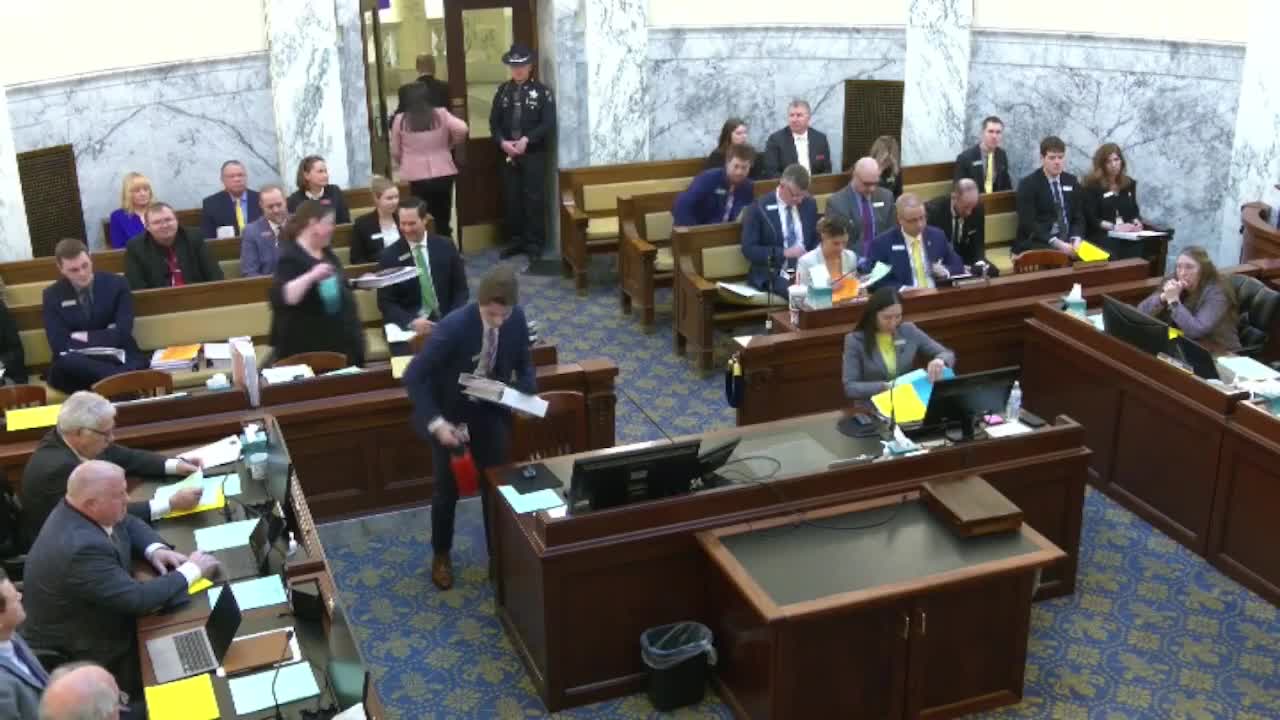
The Joint Finance‑Appropriations Committee (JFAC) considered a package of supplemental requests and fiscal 2026 enhancement proposals for the Idaho Department of Correction (IDOC) and approved the majority of the requests, while several measures failed to win a majority in Senate finance votes.
JFAC heard IDOC analyst Noah Peterson explain that several FY2025 supplemental requests were prompted by operational vulnerabilities revealed after a March 2024 shooting and escape attempt and by population pressures across the prison system. Peterson told the committee that supplemental requests included technology to reduce security vulnerabilities, expanded transport capacity, and higher-than-expected county and out‑of‑state placement and medical costs.
The committee approved most of IDOC’s fiscal 2025 supplemental requests. A one‑time $795,000 general fund supplemental to install “advanced surveillance technology” (digital mail scanning, drone detection, and phone transcription/analysis) passed after a roll call that produced a Senate vote of 9–1 (one absent excused) and a House vote of 8–2, for a combined committee tally of 17 ayes and 3 nays.
A one‑time $1,148,000 general fund supplemental to expand the agency’s transport safety capacity (12 new positions, seven vehicles, and outfitting) also passed; the committee recorded a combined tally of 15 ayes and 5 nays. IDOC said the expansion would allow the transport bureau to handle emergency inmate transports in addition to scheduled, non‑emergent moves.
A federal‑grant funded, three‑year pilot for body‑worn cameras prompted more divided votes. Year‑one implementation costs (total supplemental $1,051,000, including $27,000 state funds and $1,024,000 federal funds for the first‑year equipment/licenses) received a House majority but did not secure a majority in the Senate finance committee; the committee roll produced a 5–5 split in the Senate and a 7–3 House vote, leaving the request short of a Senate majority.
Population‑driven supplementals to cover county and out‑of‑state housing (one‑time $5,939,400 general fund) and medical services ($5,957,200 general fund) passed. When asked why county jails held inmates for extended periods, Peterson said it was “multifaceted,” and pointed to population growth and lack of space, particularly on the women’s side; he noted a women’s facility is under construction with a projected opening in 2028 or 2029.
On fiscal year 2026 maintenance and enhancement requests, the committee considered multiple division‑level packages:
- Management services: a $3,366,700 package combining general fund and dedicated requests (case management software, transparency software, IT replacement, training equipment and a governor’s initiative). That package won a House majority but failed to achieve a Senate finance majority (Senate 5–4 with one absent), so it will be carried forward to the Senate for further consideration.
- State prisons: ongoing costs to implement the advanced surveillance and transport expansions plus IT and replacement needs were packaged as a $10.75 million enhancement request (including 12 FTE). That motion passed the committee on a combined tally reported as 13 ayes, 6 nays and 1 absent/excused.
- County and out‑of‑state placement (FY2026): a $4,527,900 population‑driven adjustment passed the committee with a combined tally of 13 ayes, 6 nays and 1 absent/excused.
- Community corrections (annualization for the Pocatello reentry center, inflation and replacement items): the package won a House majority but failed to secure a Senate majority and will be taken up again in the Senate.
- Medical services (FY2026 population adjustment): a $2,727,900 general fund increase passed on a combined vote that included Senate and House majorities.
Committee members asked operational questions about the surveillance technology and transports; IDOC representatives said the technologies respond to specific vulnerabilities identified after the March 2024 incident and that expanded transport staffing is needed to handle emergency transfers. Peterson also emphasized that some costs are driven by population projections and the timing of a new women’s facility.
The motions that passed will be forwarded with due‑pass recommendations to each chamber for floor consideration where required.
Ending: The Department of Correction package will move on to the full Senate and House floors where fiscal and policy bills may be required to implement ongoing or statutory changes, and several items that failed to secure a Senate majority will be revisited in further floor or conference action.