Get Full Government Meeting Transcripts, Videos, & Alerts Forever!
Get email alerts on the Veterans Services topic
No spam. Unsubscribe anytime.
Veterans services seeks staffing pilot to reduce contracted nursing costs, awaits federal waiver on Boise rebuild
Summary
The Idaho Division of Veterans Services asked the Joint Finance-Appropriations Committee for authority to shift $1.2 million from operating to personnel to create a temporary nursing pool of 22 benefited state employees, aiming to reduce reliance on costlier contracted nurses.
The Idaho Division of Veterans Services asked the Joint Finance-Appropriations Committee to approve a net transfer from operating to personnel to create a pilot pool of 22 temporary benefited state employees for nursing roles, aiming to reduce reliance on higher-cost contracted nursing agencies.
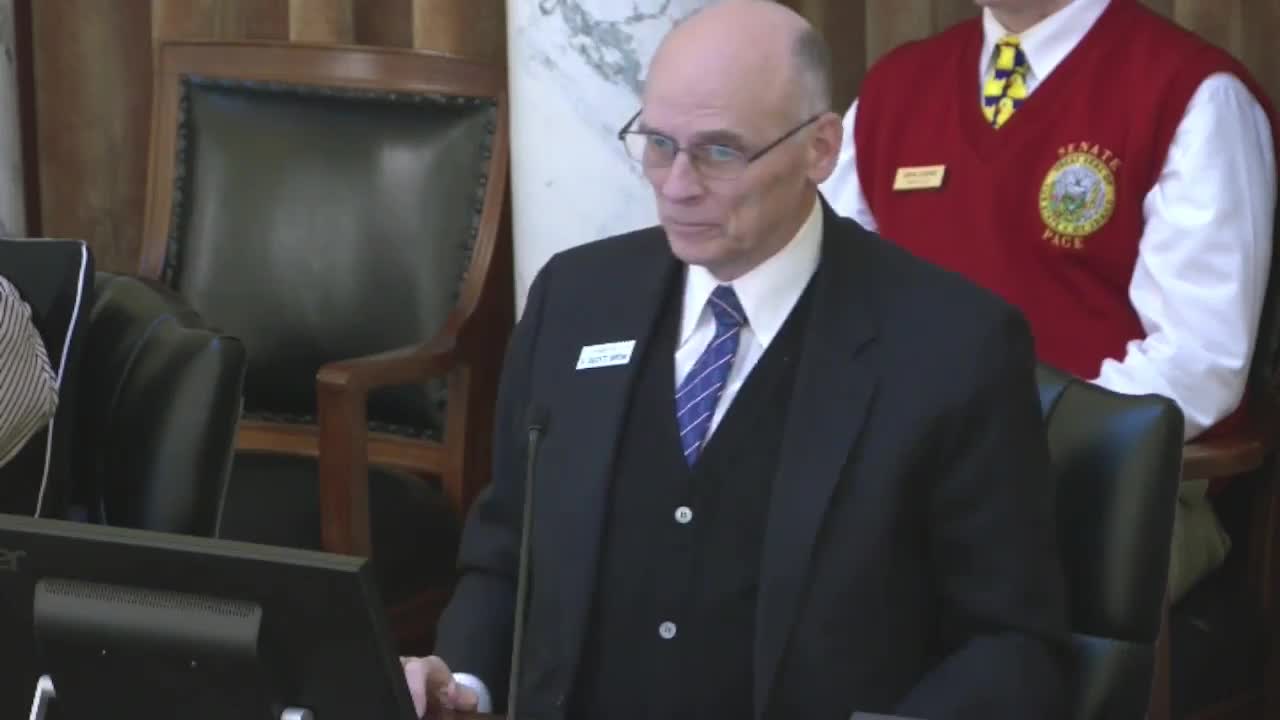
Administrator Mark Shampel and Legislative Services analyst Frances Lippett presented staffing, expenditure and capital requests and answered lawmakers’ questions about turnover rates, federal grant constraints and construction timelines.
Lippitt outlined the division’s budget structure and noted that the division spends a smaller share of appropriated personnel dollars because many dedicated funds are appropriated at higher levels than actual revenues. She highlighted a 35% turnover rate for skilled nursing staff in FY2024 and said the division expended about $50.2 million in FY2024, with personnel accounting for 62.4% of that total. The division requested a net transfer of $1.2 million from operating to personnel to convert roughly one-third of current contracted nursing work into a pool of 22 temporary state employees; the goal is to reduce premium contract costs and capture savings over time.
Administrator Mark Shampel said veterans homes remain near capacity; he told the committee the temporary-pool approach responds to repeated feedback from candidates who are unwilling to accept full-time positions but would work shifts or part time. Shampel said contracted staff typically cost about three times more than state employees and that bringing some work in-house could reduce annual contracted staffing expenditures by an estimated $600,000. He described progress filling positions at the Post Falls home and said the division remains competitive on wages after regular market analysis, noting the national turnover average for comparable facilities is much higher than Idaho’s rate.
On capital projects, Lippitt and Shampel discussed federal Department of Veterans Affairs funding (approximately 65% federal / 35% state) to replace the Boise veterans home and renovate the Lewiston home. Work has been delayed because the VA has required compliance with the Build America, Buy America Act; the division said it has demonstrated that many required components are not currently available from U.S. manufacturers and has sought a waiver. Shampel said the division has not yet received the federal waiver but continues to press the VA and hopes to begin construction once the waiver is granted.
Other FY2026 requests included modest IT maintenance/licensing costs recommended by ITS, one-time replacement items (vehicles, medical equipment, kitchen appliances), and re-appropriation authority for federal grant construction funds for Boise and Lewiston. Lippitt said the division fully expended its general-fund personnel cost appropriation in FY2024 and highlighted investments and cemetery activity; Administrator Shampel noted veteran-advocacy work that generated benefit claims and an expansion of outreach services.
Committee members asked for wage comparisons between contracted nurses and state-employed nurses; Lippitt committed to providing pay-differential information. There was no formal vote; the committee requested supplemental details including the estimated cost comparison between contract and state staff and the likely savings from the 22-person pilot.