Get Full Government Meeting Transcripts, Videos, & Alerts Forever!
Get email alerts on the Military Emergency topic
No spam. Unsubscribe anytime.
Idaho Military Division requests supplemental to clear vehicle/communications backlog, funding for hazmat regional teams
Summary
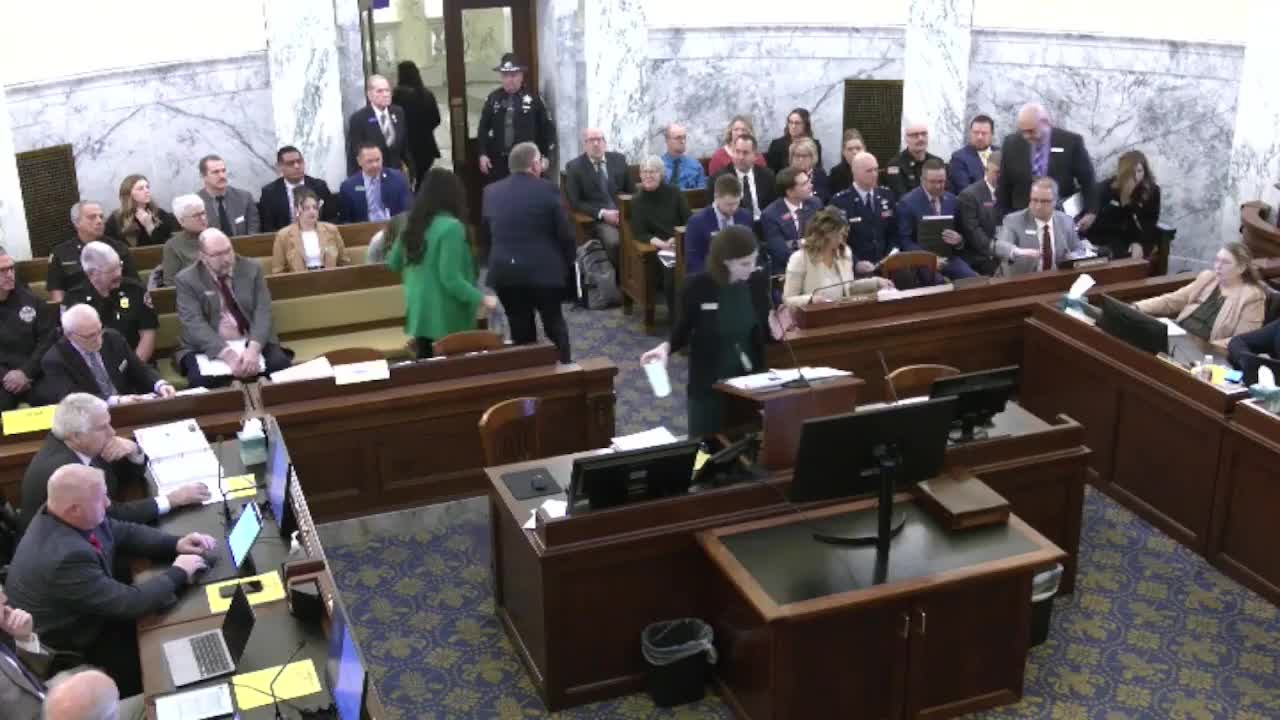
The Idaho Military Division told the Joint Finance-Appropriations Committee it needs supplemental funding to clear a vehicle and communications backlog, modernize IT for public-safety communications, and replace over-20-year-old hazardous-materials response equipment.
The Idaho Military Division told the Joint Finance-Appropriations Committee it needs supplemental funding to address a backlog of state vehicles that cannot be used until critical communications equipment is installed, to modernize IT and public-safety communications infrastructure, and to replace aging hazardous-materials response equipment.
Analyst Frances Lippett reviewed the division’s budget history and the items the governor recommended; Major General Timothy Donnellan (Adjutant General) and division staff answered committee questions about timing and execution.
Lippitt described appropriation patterns that vary widely because of federal project funding and noted a FY2025 deficiency warrant request of $34,200 related to hazardous substance response costs the division could not recoup from incident originators. She highlighted a governor-recommended supplemental to enable installation of communications equipment in 40 Dodge Durango vehicles owned by the Idaho State Police (estimated private-contract costs of roughly $240,000 and construction costs near $300,000 to add installation bays), and $759,200 for IT infrastructure and licensing so the public-safety communications group could operate an independent network for improved security.
Major General Tim Donnellan explained the supplemental timing to the committee: delayed vehicle procurement and a later influx of vehicles with embedded computer chips created a backlog that needs clearing now; the division expects contractors to help clear the backlog while funding expanded installation capacity to prevent future backlogs. He said the IT work includes replacing aging servers and hardware and separating the public-safety microwave network from the state ITS network so public-safety communications can operate independently; he clarified that ITS does not have purview over the microwave network and that hardware and installation costs are required to complete the separation.
Representative Petzke asked about an $8.6 million governor-recommended cash transfer from the state emergency relief fund to support regional hazardous-materials teams. Donnellan said hazmat equipment purchased in 2005 is over 20 years old and the seven regional response teams require modernization; the Office of Emergency Management would purchase and distribute equipment to the regional teams. He cited a large propane spill on Highway 95 as an example that strained old equipment and justified update funding.
Committee members questioned execution risk: Senator Cook and Representative Handy asked whether the IT and licensing can be implemented in time to spend supplemental funds before fiscal year end; Donnellan said the division is prepared to move quickly on the contractor work to clear the vehicle backlog and on facility expansion and server/hardware modernization. Donnellan also said the division is prepared to execute hazmat procurements through the Office of Emergency Management and distribute equipment to the seven regional teams.
On staffing and vacancies, the division reported a 15% turnover rate and 10% vacancy rate in FY2024 for funded positions; the federal-state program (Army and Air National Guard work) accounts for the majority of spending and the largest portion of vacancies (many positions in the hiring pipeline due to federal continuing resolutions and hiring-authority timing).
The committee asked about long-term staffing and facility needs; the division said additional installation bays will allow simultaneous work on multiple vehicles and that manning needs will be reconsidered after expanding physical capacity. No formal vote was taken during the briefing; committee members generally supported expedited action to clear vehicle and communications backlogs and to modernize hazmat equipment, and requested further fiscal details on timing and contract execution.