Get Full Government Meeting Transcripts, Videos, & Alerts Forever!
Get email alerts on the State Liquor Division Budget topic
No spam. Unsubscribe anytime.
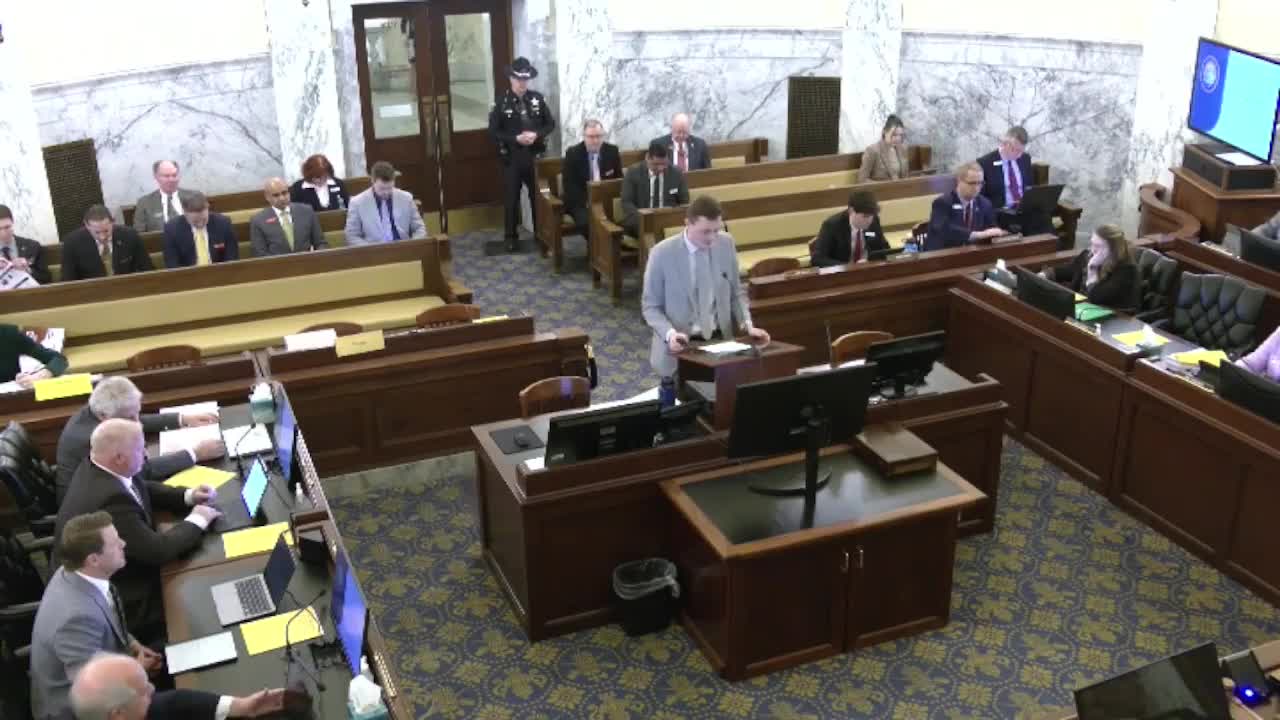
Idaho Liquor Division asks JFAC for store, IT and accessibility funding amid high turnover
Summary
The Idaho State Liquor Division told the Joint Finance-Appropriations Committee it distributed about $118.3 million in FY2024 and is seeking a mix of ongoing and one-time appropriations for staff pay, store repairs, IT modernization and website accessibility.
The Idaho State Liquor Division told the Joint Finance-Appropriations Committee on a presentation that its FY2024 distributions totaled $118.3 million and it is requesting a package of ongoing and one-time dedicated funds for store upgrades, information-technology modernization and website accessibility.
The request is part of a broader budget presentation by Kellen McGurkin, a budget and policy analyst with the Legislative Services Office, and by Director Andrew Arulanandam. McGurkin told the committee that FY2024 total sales were about $319.1 million and reported net income — the portion available to return to the state after operating costs — was $116.6 million, while total distributions were $118.3 million. He said accounting adjustments explain the roughly $1.6 million difference between net income and distributions.
The liquor division outlined a series of FY2026 requests that include: an ongoing $57,400 increase to raise the hourly rate for temporary retail staff from $15.00 to $15.45; an ongoing $72,000 request to cover pallet shrink-wrap costs tied to a new freight contract; a one-time $200,000 request to buy 70 network firewalls and 70 network switches for stores; a one-time $980,300 request for retail store replacement items (shelving, lighting, flooring, signage and similar); and a one-time $235,000 request for IT and security replacement items such as servers, battery backups and store security systems. The division also described a multi-year software implementation request recommended by the Office of Information Technology Services (OITS).
Why it matters: the Liquor Division operates retail stores and wholesale distribution that fund statutory distributions to court services, cities, counties and other recipients. Committee members focused on employee turnover in retail operations, store readiness, and the cost and scope of IT and accessibility work.
Details from the presentation - Personnel and turnover: McGurkin said the agency maintains an FTP cap of 257.25, with retail operations concentrated in roughly 210 full-time positions plus ~185 part-time store clerks. The division reported it currently maintains a filled FTP rate of about 93% and historically spends about 96% of appropriated personnel costs. Director Arulanandam said the division reduced annual turnover among temporary retail staff from about 140% to roughly 84% after earlier pay increases.
- Revenues and distributions: McGurkin summarized statutory and accounting flows: a 2% surcharge on liquor sales funds the court services fund (about $6.7 million in FY2024), and available funds are split with half going to cities, counties and magistrate courts (about $56.3 million in FY2024). He said 1.5% of the remaining half goes to the Peace Officer Standards and Training Fund, with remaining balances transferred to the general fund per Idaho Code.
- IT and security: the division described a plan to modernize store network connectivity by moving from DSL/T1 connections to cellular Cradlepoint routers paired with firewalls and managed switches. The division said a pilot showed this approach should save about $100,000 in upfront hardware costs and reduce monthly expenses by about $10,000 compared with a hardwired solution. OITS reviewed and recommended aspects of the plan, the division said.
- Website accessibility: Senator Cook asked why the division requested $100,000 to fix the website’s compliance with web content accessibility guidelines (WCAG). Director Andrew Arulanandam responded: “There are indeed other items. I do not have the exact list. We did consult with an expert and he gave us a list of items that we would need to upgrade to be in full compliance,” and added that “attorneys across the country who scour these websites … use it as a means to sue agencies and entities that aren't ADA compliant.” He called the work a “prudent one-time expenditure.”
- Temporary clerks and pay: Tony Grama, chief deputy and chief financial officer for the Liquor Division, told the committee: “Our temporary, store clerks are state employees. We don't hire them through an agency,” and noted temporary clerks are not subject to automatic cost-of-living adjustments, which is why the division seeks a line-item enhancement to raise hourly pay.
Committee exchange and context Committee members pressed on whether incremental pay increases will meaningfully reduce turnover and whether temporary hours should be converted to permanent positions. The division said prior conversions of part-time hours to full-time roles were approved in recent legislative cycles to address turnover. The division also said the high level of capital outlay in recent years related primarily to store lease improvements and replacement of physical store equipment.
Where the proposal stands The division presented the requests and answered committee questions; committee members did not take a formal vote during the hearing. Director Arulanandam concluded by reminding the committee the division is a revenue-generating agency with front-line employees who act as ambassadors for the state and said the division stands ready to provide further information.
Ending The presentation closed without an on-the-record committee decision; analysts and the director said they would provide further detail if the committee requested it.