Get Full Government Meeting Transcripts, Videos, & Alerts Forever!
Get email alerts on the Environment Wetlands topic
No spam. Unsubscribe anytime.
Committee approves wetlands reform bill after hours of testimony from environmental and business groups
Summary
House Bill 541, a contentious measure narrowing state regulation of isolated wetlands, passed the House Agriculture Committee 13-3 after extended testimony from conservation groups warning of water-quality and flood risks and business and housing representatives arguing the bill would reduce permitting costs that hinder development.
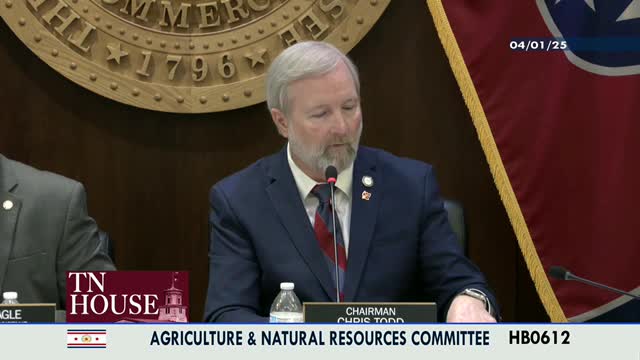
The House Agriculture and Natural Resources Committee voted to advance House Bill 541, a bill that would narrow Tennessee’s state regulatory authority over certain isolated wetlands and change mitigation and permitting requirements. The committee approved the bill as amended, 13-3, after several hours of testimony and questions from legislators.
Sponsor Representative Mark Vaughn said the bill is intended to reduce regulatory costs and clarify permitting thresholds for wetlands with lower resource value; it would require annual reporting on mitigation recipients and create tiers of permitting tied to wetland resource value. Vaughn framed the bill as a property-rights measure that would align Tennessee with other states while preserving protections for higher‑value wetlands.
Environmental groups and scientists gave extended testimony urging caution. Sarah Houston, executive director of Protect Our Aquifer, warned that wetlands support groundwater recharge and help keep drinking water clean; she said recharge varies by geology and that removing protections could harm aquifer recharge in parts of West Tennessee. Ryan Jackwood, a wetland scientist with the Harpeth Conservancy, described regional examples of harmful algal events and urged legislators to consider the long‑term costs to water quality and public health. George Nolan of the Southern Environmental Law Center said Tennessee’s wetlands protections have helped maintain water quality while the state grew, and argued the bill would weaken guardrails that protect drinking water and reduce flooding.
Business and development representatives told the committee permitting costs and high mitigation ratios can make projects infeasible. Mallory Kirby of Build Tennessee Housing said mitigation can cost $100,000–$160,000 per acre in typical cases and recounted projects that did not proceed because of high mitigation burdens; RJ Gibson of the Tennessee Chamber said the bill is a “limited deregulatory” measure aimed at lowering development costs and bringing Tennessee closer to peer states.
Several members pressed for technical clarifications. Critics highlighted provisions that would exempt isolated wetlands under an acreage threshold from mitigation and reduce cumulative-impact accounting for multiple small wetlands on a site; supporters said those changes were targeted at low‑value and artificial wetlands and that higher‑value wetlands would remain protected. Representative Jones and others raised concerns that the bill could remove buffers and reduce protections that prevent downstream flooding and contamination.
After the hearing, the committee adopted the amended text and voted 13-3 to advance the bill to finance and ways and means. Sponsors and supporters characterized the bill as a compromise to reduce housing and development costs; opponents said the measure risks water quality, flood protection and wildlife habitat and urged more targeted fixes and data transparency before substantial changes to the regulatory framework are enacted.